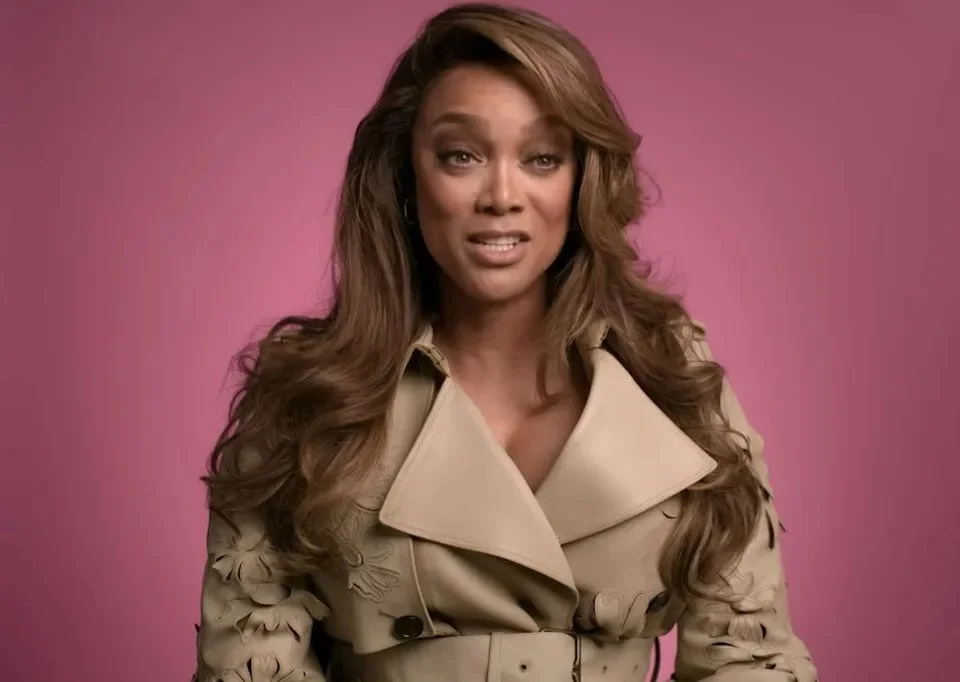
Is Tyra Banks Okay?
Netflix dropped a glossy retrospective on America’s Next Top Model and positioned it like a cultural unpacking. Archival footage. Soft lighting. Reflective interviews. The usual “we’ve all evolved” tone that streaming platforms love when revisiting messy legacies.
The documentary frames itself as a long-overdue look at what really happened behind the scenes of one of the most influential reality shows of the 2000s. It revisits the iconic moments, the controversies, the tears, the smizing, the meltdowns, and yes, the backlash.
And for about ten minutes, you think this might actually be a reckoning.
But then something shifts.
Instead of sitting fully in the damage, the documentary leans into context. It offers explanations. It reframes decisions as products of their time. It reminds you how big the show was. How groundbreaking it felt. How the industry worked back then.
It feels less like accountability and more like brand management with better editing.
The problem is not that Tyra Banks shouldn’t tell her side of the story. Of course she should. She built the empire. She gets to speak.
The problem is that the documentary sells reflection and delivers repositioning.
And audiences in 2026 are not confused about the difference.
Tyra Banks Addresses the ANTM Backlash
When Tyra Banks addressed the backlash around ANTM, many viewers expected a clear apology. Instead, what they received felt measured and cautious.
In coverage from Allure, critics pointed out that viewers hoping for a full reckoning might leave disappointed. The tone of Tyra’s reflections leaned heavily on context. There was acknowledgment that certain moments aged poorly, but that acknowledgment was almost always followed by explanation. The explanation usually centered on the industry, the era, or the demands of television.
In her Vanity Fair interview discussing the show’s legacy, Tyra addressed the infamous moment when she pressured Danielle Evans to close the gap in her teeth. She later apologized to Evans, but framed the original decision as being caught between industry expectations and wanting Danielle to succeed. That framing matters. It shifts the focus from the pressure placed on a contestant to the pressures placed on Tyra.
Real accountability centers the person harmed. Context centers the decision-maker.
The documentary repeatedly chooses context.
The Most Controversial ANTM Photoshoots and Why They Were Problematic
The race-swapping shoots are the most widely criticized. Contestants were styled and painted to represent different ethnicities in what the show framed as artistic exploration. Entertainment Weekly later revisited those episodes and included former contestants describing the experience as blackface. That language is not accidental.
Business Insider reported on Jay Manuel’s more recent comments claiming he asked to be excused from one of the race-swapping shoots. He expressed discomfort. But the shoot happened. The images aired. The show moved forward.
Discomfort is not the same as accountability. If you were creative leadership and the concept went forward, you were part of it.
But race-swapping was not the only issue.
The “Hapa” Shoot
The so-called “Hapa” shoot, where contestants were styled to appear mixed-race, blurred identity into costume. Instead of celebrating diversity by casting diverse models, the show altered existing contestants’ appearances. That is not cultural appreciation. That is aesthetic appropriation.
The “Got Milk” and Body Image Shoots
There were episodes where contestants were pushed into hyper-sexualized concepts under the guise of empowerment. At the same time, they were critiqued for weight fluctuations, body shape, and “marketability.” The show often framed body shaming as professional realism. It was not. It was entertainment.
The Homeless and “Edgy” Trauma Concepts
There were photoshoots that turned homelessness, addiction, or mental health themes into stylized aesthetics. When trauma becomes a prop, something is wrong. These concepts were rarely treated with nuance. They were treated as mood boards.
The Greek Salad Era and Prop-Based Spectacle
The Greek salad-type shoots and other absurd prop-heavy concepts deserve serious criticism. Contestants were styled like literal objects or placed in ridiculous setups that prioritized shock value over portfolio value. If the show’s stated goal was to build real modeling careers, why were so many images closer to parody than professional editorial work?
A contestant photographed inside a gimmick is not learning industry technique. She is learning how to survive humiliation on camera.
That was the creative philosophy. Spectacle first. Skill second.
Jay Manuel and Creative Responsibility
Jay Manuel was not a stylist taking instructions. He was Creative Director. That title implies authority over visual concepts.
In interviews covered by Business Insider, Manuel said he asked to step away from controversial shoots. But asking to step away does not undo the shoot. The episode aired. The concept was executed.
If the documentary wanted to be a true reckoning, it would have pressed harder on creative responsibility. Instead, the tone around leadership feels softened. There is more discussion of “the time” than of personal decision-making.
Creative direction is not passive. If the vision was flawed, the leadership must own that.
The Broader Toxic Culture of ANTM
The controversy is not limited to photoshoots. The show consistently blurred empowerment with humiliation.
Allure revisited how contestants were critiqued on weight, skin tone, hair texture, personality, and “marketability.” These critiques were often framed as tough love. In reality, they were packaged insecurity.
Yahoo Entertainment reported on Tyra apologizing for not protecting a contestant who experienced sexual harassment during filming. That moves the conversation beyond aesthetic controversy into duty of care. When you isolate contestants, heighten emotional stakes, and control their environment, you are responsible for their safety.
The documentary references growth. It does not deeply interrogate systemic failure.
What ANTM Could Have Done Instead
If the show truly wanted to build models, it had options.
Instead of race-swapping, it could have simulated real beauty campaigns similar to those run by major global brands. Real casting calls. Real brand briefs. Real feedback cycles. That would have taught contestants how commercial modeling actually works.
Instead of absurd prop shoots, it could have built strong editorial stories focused on expression, movement, and versatility.
Instead of humiliation-based judging panels, it could have delivered critique without theatrics.
Instead of turning trauma into aesthetics, it could have centered skill.
The show chose spectacle because spectacle sells.
Why the Documentary Feels Defensive
The issue is not that Tyra Banks is incapable of growth. The issue is that the documentary feels like a careful balancing act between acknowledgment and brand preservation.
In People magazine coverage, Tyra has described her on-screen persona as heightened for television. That may be true. But personas still cause harm. A “character” humiliating someone on camera does not reduce the humiliation.
The defensiveness is subtle. It appears in phrasing. It appears in the reliance on context. It appears in the refusal to sit fully in regret without immediately reframing it.
Audiences in 2026 are media literate. They can distinguish between evolution and spin.
Final Thoughts on Tyra Banks and the ANTM Legacy
America’s Next Top Model shaped pop culture. It also shaped harmful beauty narratives, normalized cultural appropriation in fashion storytelling, and blurred empowerment with exploitation.
The documentary had the opportunity to be uncomfortable. It could have said clearly: “We built something influential and flawed. We harmed people. We benefited from it. We would do it differently.”
Instead, it feels like a reputation reset.
If you built an empire on judging other people’s flaws, you do not get to be surprised when your own are examined.
Real growth is not careful.
Real growth is uncomfortable.
And that is what the documentary is still avoiding.