The Onion CEO Finally Confirms The Onion Is Fake News
CEO Confirms The Onion Is Not Real;
Nation Pretends It Always Knew
A satirical news outlet was compelled to announce it does not report real events. The internet reacted with performative shock. Here is what the moment actually reveals about us, our media habits, and why the line between fake news and fake fake news has fully collapsed.
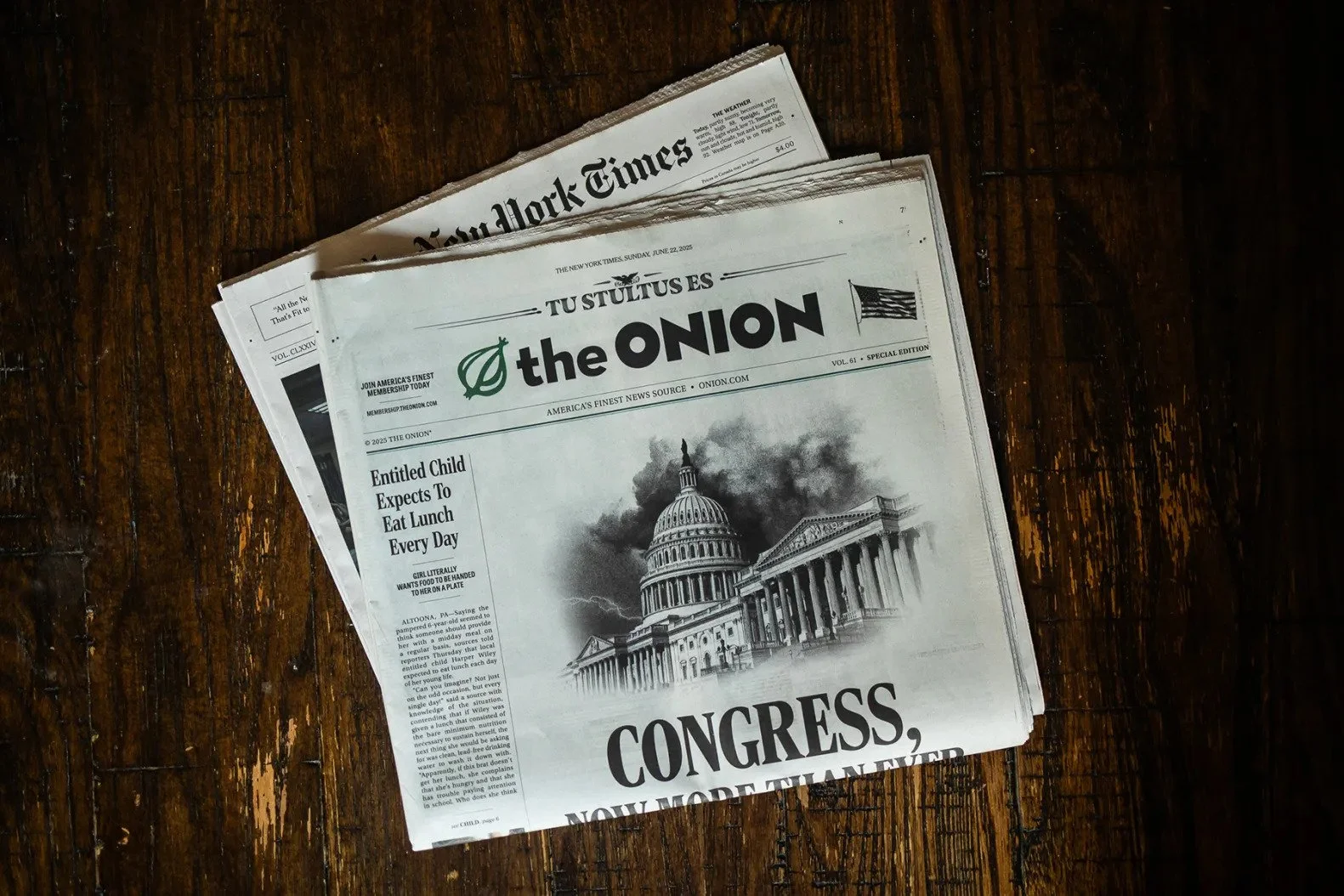
When the CEO of The Onion stepped up to a microphone and announced, with complete seriousness, that The Onion is not real news, the world reacted with the kind of performative shock usually reserved for celebrity divorces or limited-edition Stanley cups. People gasped. People tweeted. One TikTok creator stitched the announcement and whispered, "I always suspected."
This is where we are now. A satirical news outlet had to clarify that it does not, in fact, report real events. Apparently the obvious is no longer obvious unless someone in a suit reads it into a microphone.
But the announcement wasn't really about The Onion. It was about us. Our confusion. Our media habits. Our willingness to believe anything if the font looks sufficiently official and the headline feels dramatic enough.
Within seconds of the CEO's declaration, the internet exploded — not with outrage, but with denial. Everyone suddenly claimed they always knew The Onion was satire. Everyone was a seasoned media critic now. Not a single person admitted to believing even one headline.
The Nation Pretends
It Never Thought
The Onion Was Real
Which is fascinating, because we all remember the chain emails from 2008 where someone forwarded an Onion article about congress replacing chairs with bean bags and insisted the country was collapsing. We remember uncles on Facebook sharing Onion stories with captions like "See?!" We remember politicians quoting Onion pieces with the confidence of someone who reads everything except context.
The CEO didn't expose The Onion. He exposed the culture that kept mistaking parody for journalism — and journalism for parody.
This is the real message for satire blogs today: you are writing into a world where people no longer know if the joke is the joke. And that, this publication would argue, should thrill you.
Satire Isn't About
Fooling People.
It's About Revealing Them.
When someone believes an Onion article, that isn't failure. It's data. It tells you what anxieties people already carry. It tells you which institutions people distrust. It tells you how fragile our collective information literacy has become.
Good satire doesn't trick readers. It exposes the cracks in their assumptions. If someone believes a satirical story about billionaires buying the moon, that tells you something about wealth inequality. If they believe a parody headline about toddlers in leadership roles, that tells you something about how infantilized decision-makers feel.
The CEO's announcement did not protect readers from confusion. It simply confirmed how much confusion they were already navigating — and revealed, to anyone paying attention, that the line between satire and reality had not merely blurred. It had dissolved entirely.
The Onion Simply Filed The Paperwork."
The Press Conference
Was a Gift to Satire
Writers Everywhere
Satire isn't supposed to need footnotes. If it does, the joke is dead on arrival. But when the public starts confusing parody for reporting, satire writers get to play in a considerably larger sandbox.
It used to be simple. News was news. Comedy was comedy. Satire was the exaggerated mirror of society. Now all of it blends together in a single scroll. A politician posts something absurd on social media, and suddenly your carefully written satire headline looks almost reasonable. A celebrity launches a skincare line promising "frequencies," and your parody wellness article feels like journalism.
This publication wishes to confirm that it does not report real events either. We report things that feel real, which is considerably more alarming.
The Onion CEO's announcement created the perfect cultural moment: a moment where people confronted the unsettling truth that satire feels real because reality has been performing satire for years.
Why the Announcement
Hit a Nerve
The CEO wasn't clarifying for clarity's sake. He was reacting to a culture starved for certainty. People want content with labels. Real. Fake. Parody. Sponsored. Opinion. Deepfake. AI-generated. Human-written. Verified. Unverified. People want instructions about how to interpret what they're seeing.
So when the CEO confirmed The Onion is satire, it comforted people in the strangest way. It gave them permission to laugh again without wondering whether they were supposed to feel outraged.
Then: News was news. Comedy was comedy. Satire was the exaggerated mirror. The context was clear. You knew The Onion was a joke because reality hadn't yet started acting like one. Parody required obvious exaggeration to work. The gap between absurd and real was measurable.
Now: Tech CEOs renounce deodorant. Politicians tweet their confessions. Wellness brands sell frequency-infused water. Every day the real headlines read like rejected Onion drafts. Satire no longer needs to exaggerate — it only needs to tilt reality two degrees sideways.
The Shift: The culture that used to understand tone now requires explicit labeling. People want the disclaimer. They want the footnote. They want someone in authority to confirm what they're looking at before they decide how to feel about it. The CEO was that confirmation.
What This Means
For Anyone Running
A Satire Blog
Satire is not a genre. It is a lens. And the moment The Onion CEO confirmed the obvious, the lens sharpened. Here is what the moment teaches anyone creating satirical content right now.
- I. Your audience is primed. People want relief from real headlines. Satire gives them permission to laugh at the mess without guilt.
- II. You do not need to exaggerate much. Reality does half the work. Tilt it three degrees, do not reinvent it.
- III. Deadpan is more powerful than chaos. The more serious the tone, the harder the punchline lands.
- IV. Satire hits hardest when it reveals truth. Point jokes toward real cultural tensions. That is where readers feel the sting, and the humor.
- V. Use ambiguity, do not remove it. Your job is to show readers what confusion already exists — not to add disclaimers explaining the joke.
The Onion CEO didn't break the internet. He revealed it. He showed how badly people need satire to make sense of nonsense. The world is ready. The confusion is endless. The audience is hungry. And satire blogs are the only ones honest enough to say the quiet part out loud.