Ozempic Face Is Officially an Epidemic
By Sara Alba · Beauty Unfiltered
Let me say something that nobody in a press release is willing to say.
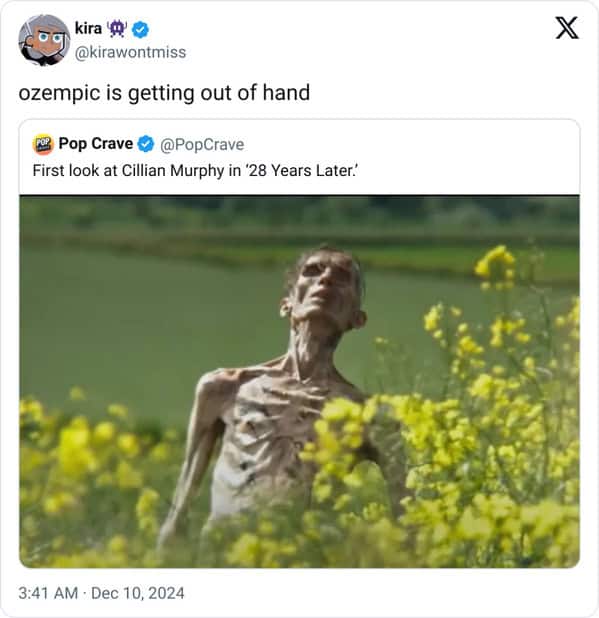
Ozempic face is real. It is everywhere. It is walking red carpets, accepting awards, and showing up at charity galas looking like a slightly deflated version of someone we used to recognize. And the strangest part? We are all just standing here watching it happen, nodding politely, and writing headlines like "radiant!" and "glowing!"
She is not glowing. She has lost the fat that was doing the glowing for her.
Let's talk about it. Brewtifully.
What Is Ozempic Face, Exactly?
Ozempic face is what happens when you lose weight very quickly — specifically the kind of quick, dramatic weight loss that GLP-1 medications like Ozempic and Mounjaro produce — and your face loses the volume that was keeping it looking youthful, plump and alive.
The dermatologist who literally invented the term, Dr. Paul Jarrod Frank, explained it simply: when we lose weight rapidly, we don't get to choose where we lose it from. And the face — which relies on fat pockets to maintain structure, lift and that general "I am a living person with good skin" appearance — tends to give up its volume faster than anywhere else.
What you're left with is hollowed temples. Prominent cheekbones that weren't prominent before. Sharper jawlines that read less as defined and more as depleted. Skin that has lost its padding and now sits slightly loose on a frame it no longer fits. It is — and I say this with the full weight of someone who has watched it happen in real time across multiple award seasons — not a good look. For anyone.
The 2026 Award Season Was a Horror Show
I mean this respectfully.
By early 2026, as red carpets rolled out, a new wave of noticeably leaner celebrity looks — from Kelly Osbourne to Demi Moore — pushed the conversation into overdrive. International Business Times What was once a quiet whisper about individual celebrities became a full volume conversation nobody could avoid.
Kelly Osbourne showed up to the BRIT Awards in a black sequinned dress and the internet collectively lost its mind. Photos highlighting her slimmer frame and sharper features spread almost instantly, with side-by-side comparisons picking up traction. House and Whips She denied Ozempic. She blamed lifestyle changes. The photos disagreed politely.
Sharon Osbourne — Kelly's mother, which makes this a whole family saga — has been one of the most honest celebrities about what went wrong. She admitted she went too far, dropped to under 100 pounds, and even after going off GLP-1s has struggled to regain weight, saying "I'm too gaunt and I can't put any weight on. I want to, because I feel I'm too skinny." Women A source reportedly told Radar Online that the weight loss drugs had wrecked her metabolism with no going back. She is over 70. This is not a wellness journey. This is a warning.
Ariana Grande has been dealing with "skeletal" concerns for the better part of a year. She grew emotional when asked about it, describing herself as "a specimen in a petri dish" since she was 16 or 17, saying "I have heard it all." Bored Panda Which is genuinely sad. And also — the concern is not unfounded, Ariana.
Oprah Winfrey has admitted to using Ozempic and has been photographed looking dramatically different at multiple 2026 events. The woman who once represented something warm and full and powerful now looks like she is being carefully managed by a team of people who are afraid of what happens if she eats a sandwich.
The Part Nobody Wants to Say
Here is the thing about Ozempic face that the wellness content and the glowing press coverage consistently refuses to acknowledge:
These women were beautiful before.
Not beautiful "for their size." Not beautiful "despite" anything. Just beautiful. Full faces, present and alive. The kind of beauty that reads as health because it is health. And somewhere along the way — between the Hollywood sample sizes that still run small, the red carpet scrutiny that never stops, and the sudden availability of a drug that makes dramatic weight loss feel medically sanctioned — they decided that was not enough.
Experts warn that the normalization of Ozempic face during award season and similar aesthetic markers may influence how beauty is interpreted and pursued. The concern is not only physical health, but psychological impact — particularly as social media accelerates comparison. Runway Magazine One fashion industry commentator drew the comparison plainly: the parallels to the 1990s are difficult to overlook. The "heroin chic" era similarly elevated fragility and angularity as markers of high fashion.
We did this before. We watched Kate Moss. We watched what happened after. We said never again.
And here we are.
And Then There's Meghan Markle
I already wrote about this at length — What On Earth Is Meghan Markle Doing? — but it belongs here too because it is the Beauty case study of 2026.
There was a version of Meghan Markle that was genuinely, undeniably beautiful. Healthy. Plump in the way that reads as alive. She spent years building a wellness brand on the back of that image — green juices, breathwork, the suggestion of sustained spiritual equilibrium.
And then the Ozempic face arrived. The jawline sharpened. The cheeks hollowed. The glow became something that requires considerably more lighting equipment to produce. The woman who told us wellness was a lifestyle now looks like the aesthetic casualty of the very culture she claimed to have transcended.
The irony is almost too much. Almost.
What Actually Happens to Your Skin
For the beauty side of this — because this is a beauty column and we should talk about what is actually happening physiologically:
Rapid weight loss depletes the fat compartments of the face that act as structural support. These fat pads — in the cheeks, under the eyes, along the jawline — are what give skin its lift and fullness. When they disappear quickly, skin can't retract fast enough to compensate. The result is sagging, fine lines appearing more pronounced, hollowing under the eyes, and what dermatologists are now calling "Ozempic neck" — where the loss of fullness in the lower face and neck creates visible muscle definition and loose skin in ways that read as significantly older than the person's actual age.
You can try to counteract it with fillers. Many celebrities clearly are. But fillers on a deflated face have a specific look — pillow-y in the wrong places, slightly off-balance — that is becoming its own recognisable aesthetic. You cannot simply reinflate what was lost. Biology doesn't work like that.
The cruelest part? Facial plastic surgeon Dr. Donald B. Yoo explained that a person's face might look different after taking diabetes drugs because the rapid weight loss could make the signs of facial aging more pronounced. Women You took the drug to look better. The drug made you look older. And now you are considering fillers to fix what the drug did, which may make you look stranger still.
It's a very expensive way to look worse.
The Honest Verdict
I am not here to tell anyone what to do with their body. That is not the point of this piece and it is not what Brewtiful Living is for.
But I am here to say — loudly, clearly, with my oat milk latte and zero apologies — that what is happening across Hollywood right now is not a wellness revolution. It is not empowerment. It is not "health at every size" or "body autonomy" or any of the other phrases that get deployed to shut down this conversation before it gets uncomfortable.
It is the same pressure that has always existed, now equipped with a medical delivery mechanism.
The women who are disappearing on our red carpets were not unhealthy before. They were not in need of intervention. They were full and present and visible.
And now they are not.
That is worth saying. Even if nobody in a press release will. ☕