BEAUTY
UNFILTERED.
Honest takes on beauty — the good, the bad & the deeply unnecessary.
We Spent a Decade Erasing Our Noses. Now We Want Them Back
The Barbie nose is over. Revision rhinoplasty is booming. And somewhere, a whole generation of women is reckoning with the face they paid to lose.
Let's set the scene. It is approximately 2015. Your Instagram feed is a curated gallery of identical faces — poreless skin, overlined lips, and noses so small, so narrow, so surgically precise that they appear to have been selected from a dropdown menu. The tip is lifted. The bridge is straight. The nostrils are mathematically even. It is called the Barbie nose, and it is everywhere, and it is aspirational, and approximately one decade later, the people who got it are paying to have it undone.
This is where we are in 2026. And it is, genuinely, one of the more interesting places we could be.
What the Barbie Nose Actually Was (And What It Did to Everyone's Face)
The Barbie nose trend refers to a highly stylized rhinoplasty outcome characterized by a small, narrow nose with an elevated tip and pronounced curvature. This look gained popularity through social media and celebrity influence, often promoted as an idealized standard of beauty. While visually striking, the Barbie nose trend quickly became controversial due to concerns about uniformity and long-term consequences.
The uniformity is the key word. What the Barbie nose era produced, at scale, was a generation of faces that all made the same decision — noses trimmed to the same specification, tips lifted to the same angle, bridges narrowed to the same width. The individuality that lived in the architecture of a face, the specific slope or bump or breadth that made a nose belong to one particular person, was edited out. Removed. Replaced with something that looked good in photos and belonged to everyone and no one simultaneously.
Beauty trends in rhinoplasty move like a pendulum — from the shapely sculpted noses of the 60s and 70s to the fuller, more natural look of the late 90s and 2000s, and back again. The pendulum, it seems, has swung again. Cosmetics Business
And this time it is swinging toward something that sounds radical only because we forgot it was the default: keeping the nose you were born with, or something that looks convincingly close to it.
The Revision Boom Nobody Is Talking About Loudly Enough
Patient dissatisfaction with overly sculpted noses drove a corrective wave. Revision rhinoplasty rates climbed, and surgeons began advocating for anatomy-first approaches that respect each patient's unique nasal structure, skin thickness, and ethnic features. Fashionista
Let that land for a moment. People are paying, a second time, sometimes a third time, to undo what they paid the first time to achieve. The Barbie nose has a return policy, and it is expensive, and the waiting rooms are full.
Over-defined results, once popular, are now often associated with outdated techniques and unrealistic beauty ideals. Sharp edges, overly narrow bridges, and excessively lifted tips can draw attention away from the face as a whole. Many patients who pursued these results in the past now seek revision procedures to restore balance and softness.
This is the part that does not get discussed in the trend pieces because it is uncomfortable: the Barbie nose was sold as a beauty upgrade. It was presented as an improvement on what you had. The standard was narrow enough that most people's natural noses fell outside it, and the solution being marketed was surgical. Thousands of people bought the solution. And now thousands of people are in consultations explaining that the solution changed their face in ways they did not anticipate and cannot fully reverse.
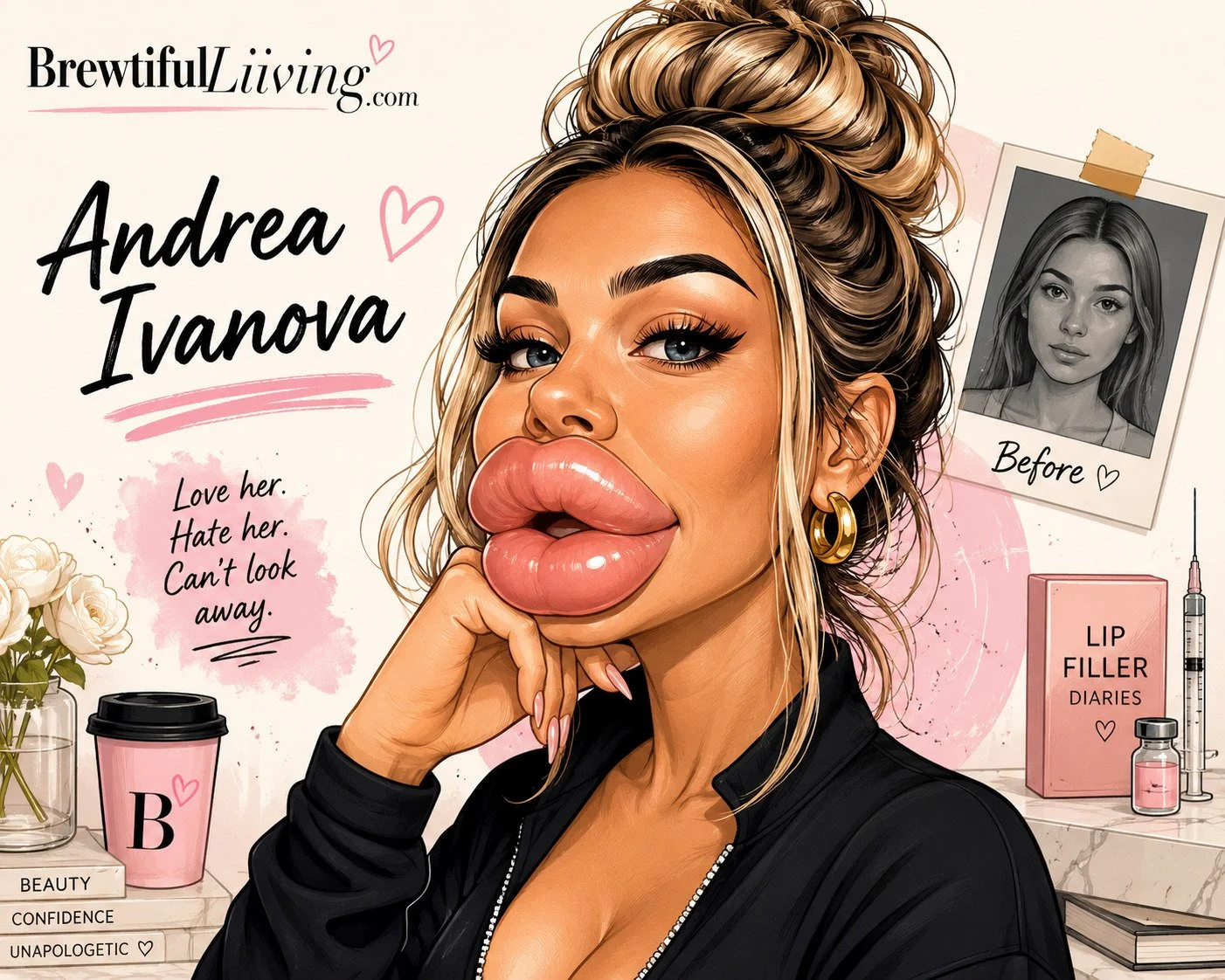
We wrote about where this logic leads in our open letter to Andrea Ivanova — the woman who took the "more is more" philosophy of cosmetic enhancement to its absolute, unambiguous conclusion and became, in the process, a mirror for everything the culture has been quietly doing at a smaller scale. Andrea didn't invent the logic. She just refused to stop applying it. The Barbie nose is the same logic, applied with more restraint, by more people, with the same fundamental premise: your face as it is is not enough.
What's Actually Replacing It
Rhinoplasty trends for 2025 and 2026 reflect a major shift in aesthetic preferences. Patients are asking for results that enhance their natural facial balance rather than dramatically altering their appearance. Social media, greater access to education, and rising demand for authenticity have made natural rhinoplasty the preferred approach for both men and women. Instead of cookie-cutter results, patients want a nose that fits their face — not someone else's.
The phrase doing the most work in that sentence is "fits their face." Not a better nose in the abstract. Not a nose from a reference photo. A nose that belongs specifically and visibly to the face it is on — that works with the eyes and the jaw and the proportions that already exist, rather than against them.
"Asking for a nose similar to a celebrity's is common, but it's not usually ideal. Individualized procedures allow for a natural look that best suits your personal facial features," Wallpaper* as one board-certified plastic surgeon put it. The surgeons themselves are now pushing back on the reference photo. The reference photo, for a decade, was the entire consultation. Now it is a starting point for a conversation about why it probably should not be the goal.
Natural results maintain subtle asymmetries that make a face look human rather than manufactured. That sentence, from a 2026 rhinoplasty trend analysis, is quietly extraordinary. We have arrived at a moment in cosmetic medicine where "human rather than manufactured" is a selling point. Where the slight imprecision of a real face — the asymmetry, the individuality, the specific character of features that were never designed by committee — is being marketed as the outcome to aspire to.
This is either a genuine cultural correction or the beauty industry finding a new way to sell you back what you already had. Possibly both.
The Nose You Have Is the Trend Now, Apparently
Here is what none of the surgical trend reports will say plainly but what the data collectively implies: the nose you were born with — the one that perhaps has a bump, or a width, or a tip that does not sit at the precise angle that Instagram decided was correct circa 2016 — is, in 2026, the aesthetic goal.
Not because big noses are suddenly "in" in the way that blush placement is in, here for a season and gone by autumn. But because the entire framework of there being a single correct nose is collapsing. The philosophy now is enhancing harmony while preserving identity — ensuring that the nose belongs to the face and the face belongs to the person, rather than both belonging to a trend that will date as badly as anything else from that era.
This is, if you have read our Wabi-Sabi piece — about finding beauty in imperfection rather than erasing it — the same philosophy applied directly to your face. The bump is not a flaw requiring correction. It is the specific, irreplaceable feature that makes your nose yours and nobody else's. The asymmetry is not an error in the design. It is what makes the design look alive.
The Japanese have a word for this. Cosmetic surgeons in 2026, apparently, have a whole consultancy framework for it.
The Cultural Shift Underneath the Surgical One
What is actually happening here is bigger than noses. The emphasis is on embracing the natural look with some enhancements and simultaneously owning the fact that a change was made and being fully transparent about it — the shift is as much about honesty as it is about aesthetics. Wallpaper*
The clean girl era tried to sell effortlessness while requiring enormous effort. The Barbie nose era tried to sell naturalness while surgically removing it. Both were premised on the same sleight of hand — the idea that the goal was to look like you had always looked this way, that the best version of beauty was one where the work was invisible and the result looked inevitable.
What 2026 is doing, tentatively and imperfectly, is asking whether the work needs to be invisible at all. Whether the nose with the bump is not a before photo awaiting its after. Whether the face with its specific, inherited, culturally particular architecture is not a problem to be solved but a thing to be worked with.
This is not a revolution. Beauty standards do not have revolutions. They have slow, commercial, interest-driven evolutions that circle back on themselves and charge you for the return trip. We have been here before — the clean girl's sleaky successor is already in the room, and she too will eventually be replaced by something that claims to be more authentic.
But right now, in this specific moment, the trend is your face. The actual one. The one with the features you inherited and the proportions that are specific to you and the nose that perhaps you have spent years looking at sideways in bathroom mirrors with a specific feeling.
That nose, apparently, is now the reference photo.
Sit with that for a moment.
— BrewtifulLiving.com | Brutal truths, Brewtifully packaged.
Open Letter to Andrea Ivanova — A Study in the Art of Excess
Editor’s Note: The following piece discusses extreme cosmetic procedures and body modification. It’s not medical advice, not an endorsement, and definitely not encouragement. If you’re thinking about filler, Botox, or anything that involves a syringe, talk to a doctor. Not a columnist.
LIP SERVICE: THE WOMAN WHO OUTGREW HER FACE
There are trends, there are obsessions, and then there’s Andrea Ivanova.
She’s the woman with the world’s biggest lips — a title that sounds like a Guinness category nobody asked for.
Over $26,000 spent. More than thirty injections. A new face built from old insecurities.
In her words, “natural beauty is boring.”
In ours, this is what happens when the mirror stops being a reflection and becomes a stage light.
THE ERA OF EXTREME: 1998 CALLED, IT WANTS ITS RESTRAINT BACK
Back then, beauty was minimalism. Nude lip, brown mascara, subtle confidence.
Now, confidence comes in syringes.
Andrea started small in 2018. One harmless tweak. A touch of gloss to the ego.
Then another. Then another. Somewhere between the tenth and the thirtieth, the word “temporary” lost all meaning.
What’s left is not a woman — it’s a warning label wearing lipstick.
"THE LIPS AREN’T THE STORY. THEY’RE THE SYMPTOM."
ATTENTION IS THE NEW FACE CREAM
The 90s had tabloids. Today has TikTok.
Andrea’s face is her brand. Every headline, every selfie, every shocked comment — revenue.
The math is simple:
Shock equals visibility.
Visibility equals relevance.
Relevance equals survival.
Beauty? Optional.
In the age of viral deformity, being forgettable is the only sin left.
COVER GIRL OR COVER STORY?
The Daily Mail writes about her like a circus act.
Instagram treats her like content.
The rest of us scroll, judge, share, and feel slightly better about our own reflections.
Andrea gives us what we crave most — distraction.
She’s turned her body into a mirror for our moral superiority.
THE DOCTORS WHO KEEP SAYING YES
In the 90s, cosmetic surgeons still had ethics pamphlets and quiet clinics with fake plants.
Now? It’s influencer medicine.
Ring lights. “Before and After” slideshows.
Some doctors said no. Others said, “how soon?”
Because when aesthetics become commerce, ethics become optional.
Andrea isn’t just a patient. She’s marketing material.
"SHE CALLS IT CONFIDENCE. IT LOOKS LIKE UPKEEP."
WHEN BEAUTY BECOMES A JOB TITLE
Andrea calls her look “empowering.”
But empowerment that requires monthly injections sounds less like freedom and more like freelance work.
Every refill, every “just a little more,” keeps her employed in her own mythology.
She isn’t chasing beauty. She’s maintaining visibility.
And visibility, like rent, is due every month.
THE MIRROR THAT LIED TO EVERYONE
Remember when mirrors told the truth?
Now they come with filters.
Andrea didn’t just use one — she became one.
She turned her face into the physical version of a Facetune filter that never resets.
The result is not ugly. It’s unsettling.
She’s achieved what no tech ever could: permanent digital distortion.
EDITOR’S NOTE: YES, THIS REALLY HAPPENED
Andrea says her lips still look small to her.
That she wants them “much bigger than now.”
Somewhere between delusion and determination lives the new definition of confidence.
THE ADDICTION OF THE AESTHETIC AGE
Addiction doesn’t always look like pills or powder.
Sometimes it looks like a woman scrolling through her own selfies thinking, not enough yet.
Andrea isn’t the only one. She’s just the most visible.
The filtered, the retouched, the reshaped — they all live in the same feedback loop.
The line between maintenance and mania is paper-thin.
"SHE ISN’T THE GLITCH IN THE SYSTEM. SHE’S THE SYSTEM WORKING PERFECTLY."
THE CULTURE THAT BUILT HER
We told women to love themselves — but only after fixing everything first.
We called it empowerment.
We packaged it in pink.
We sold it with free samples.
Andrea didn’t misunderstand the assignment. She completed it.
She’s not the villain. She’s the honor student of consumer capitalism.
THE BODY AS BILLBOARD
Andrea’s not alone.
The filtered teen with the AI jawline.
The influencer adjusting her face every season.
The 40-year-old pretending she’s twenty-two on camera.
They all learned the same lesson: identity is editable.
Andrea just refused to stop editing.
THE DECADE OF NEVER ENOUGH
If the 90s were about minimalism, this decade is about maxing out.
More filler, more followers, more outrage.
Andrea’s story isn’t an anomaly. It’s a prophecy.
Every “just a little tweak” brings us closer to her.
The only difference between us and Andrea is the budget and the nerve.
"POWER ISN’T DOING WHAT YOU WANT TO YOUR FACE. IT’S BEING ABLE TO STOP."
THE AFTERLIFE OF THE IMAGE
One day, Andrea will stop.
Because she’ll have to.
Because her body will tap out before her ambition does.
But her images will live on.
The Internet doesn’t dissolve like filler.
Andrea’s face will float forever — a cautionary ad for a culture that doesn’t believe in stopping.
THE LONELINESS OF BEING LOOKED AT
She’s famous. But fame is not affection.
She’s said relationships are hard. That people stare but don’t stay.
Visibility replaced intimacy.
Everyone looks, but no one sees.
It’s the kind of loneliness that used to belong to starlets and supermodels.
Now it belongs to anyone with a Wi-Fi connection and an identity crisis.
FINAL REFLECTION: THE GIRL WHO SOLD US OUR OWN DELUSION
Andrea Ivanova didn’t destroy beauty standards. She revealed them.
She’s what happens when the culture of “be your best self” forgets to define best.
Her lips are a product.
Her story is a sales pitch.
And her tragedy — if it is one — belongs to all of us.
DEAR ANDREA
You didn’t ruin your face. You just proved how ruinable it was.
You believed the same myth everyone else did: that perfection was purchasable, that attention was love, that more was better.
You’re not a monster. You’re a mirror.
I hope one day you look in it and stop seeing an audience.
Sincerely,
Someone Who Still Misses the 90s, When Faces Looked Like Faces