JASLEEN SINGH: WHO IS AKAASH SINGH'S WIFE AND WHY IS THE INTERNET HOLDING COURT?
JASLEEN SINGH:
WHO IS AKAASH SINGH'S
WIFE AND WHY IS
THE INTERNET HOLDING COURT?
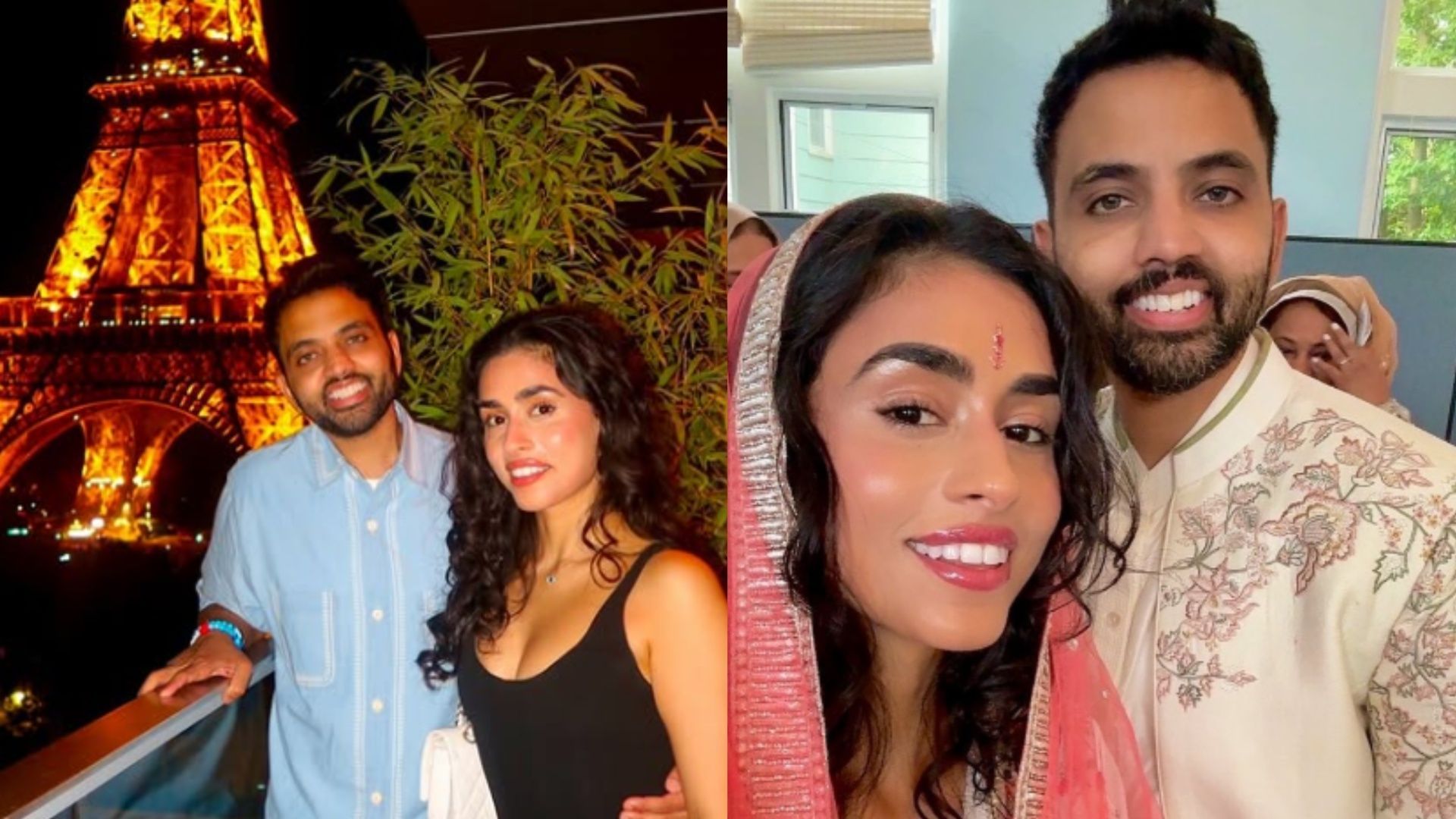
A comedian's energy shifts. His marriage becomes visible. The internet appoints itself coroner. Jasleen Singh did not ask for any of this — but she walked straight into the frame anyway, and the audience had opinions.
This is opinion and cultural commentary based on publicly available interviews, podcast clips, audience reactions, entertainment reporting, and internet discourse. It does not claim private knowledge of Akaash Singh and Jasleen Singh's relationship. When this article discusses whether the brand was "changed," it is analysing public perception and visible shifts in audience reception — not rendering a verdict on a marriage.
The accusation arrives with the confidence of a man who has watched fourteen podcast clips and now considers himself an expert on a marriage. Akaash Singh changed. Akaash Singh lost his edge. Akaash Singh used to be funnier. Akaash Singh was ruined by his wife. The internet repeats these claims with the solemnity of a coroner reading time of death, as though a woman quietly existing beside a male entertainer is sufficient to explain every shift in his career, output, mood, and facial expression.
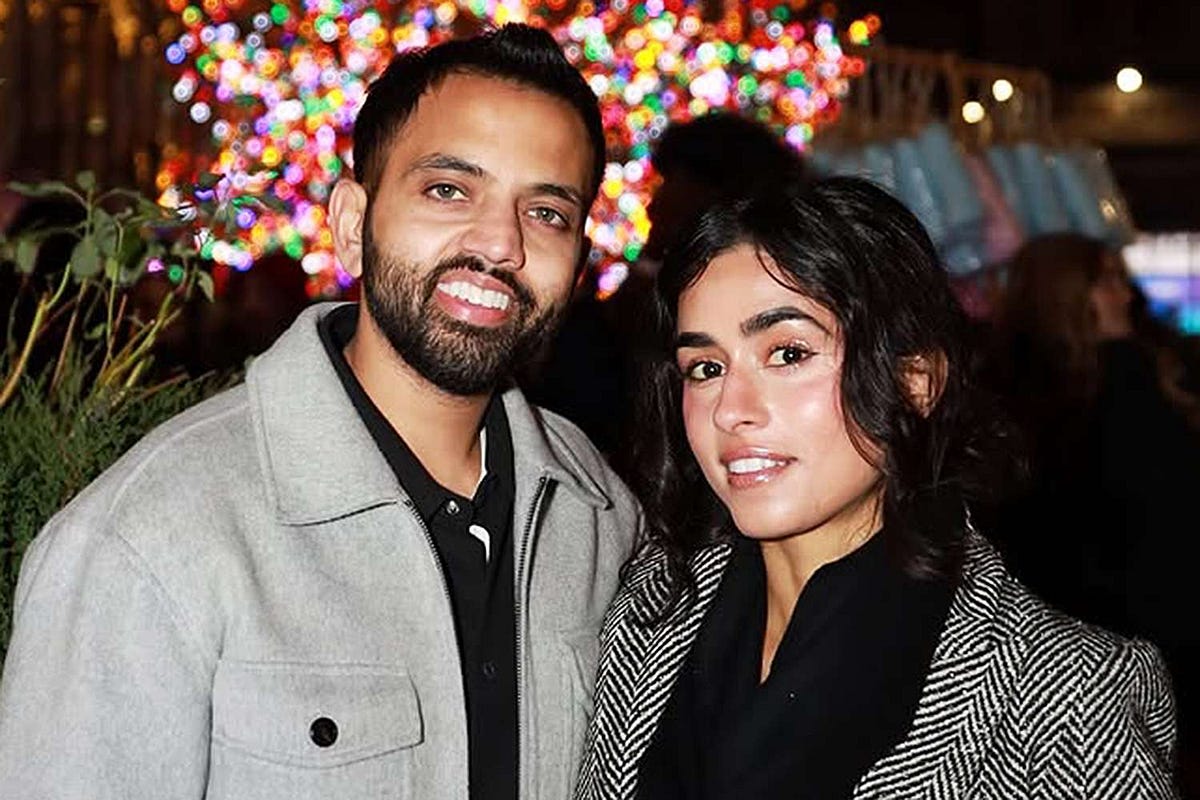
At the centre of the discourse is Jasleen Singh — Akaash's wife, and a woman who became the subject of online commentary that tells you considerably more about the commenters than it does about her. In late 2025, entertainment coverage documented a public feud involving Jasleen, Akaash, and commentator Myron Gaines after clips from her podcast appearances circulated widely. The discussion mutated into gender-war theatre, which is usually where nuance goes to die under fluorescent lighting.
The more useful story is not whether strangers can scientifically prove Jasleen Singh ruined Akaash Singh's career, as though this were an FBI behavioural unit with ring lights. The more interesting story is why a huge portion of the audience believes she damaged the brand — and what that belief reveals about how podcast fandom actually works.
"The modern podcast fan does not merely listen. He audits. He compares tone, posture, upload frequency, marital energy, and whether the boys still feel like the boys."
— Brewtiful LivingWho Is Akaash Singh?
And Who Was He Before the Discourse?
The comedian, the career, and the very specific kind of appeal that podcast fandom builds around.
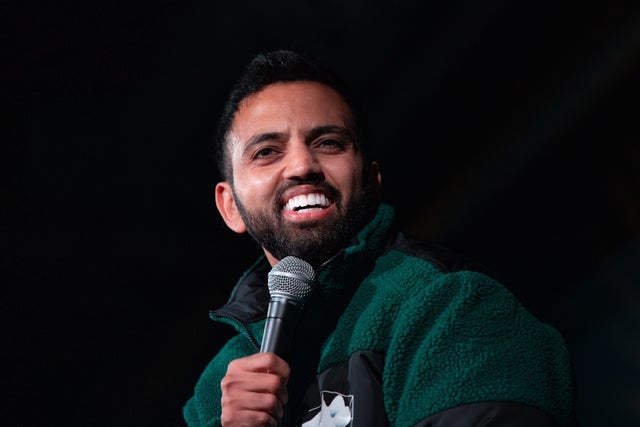
Akaash Singh is an American comedian, actor, and podcaster known for his stand-up specials Bring Back Apu and Gaslit, his appearances on Wild 'n Out, and his long association with the Flagrant podcast with Andrew Schulz. Of Punjabi descent, he built his brand on a very specific kind of comedic tension: polished enough to move professionally, loose enough to still feel dangerous in the room.
That balance matters in comedy podcast culture. The audience is not only responding to jokes. It is responding to chemistry, social hierarchy, masculine rhythm, and the particular feeling that everyone at the table might say something they should not. When that rhythm changes, fans rarely describe the shift structurally. They describe it emotionally. Something feels off. Someone seems different. The vibe changed. This is how online audiences talk when they sense a shift but lack the honesty to admit they do not know why.
Jasleen Singh is Akaash Singh's wife and a content creator of Punjabi background. She became a prominent topic of online discussion in 2025 after clips from her public podcast appearances circulated, generating a public feud involving commentator Myron Gaines. Her age has not been officially confirmed publicly. She is active on social media and has appeared on podcast content alongside and separate from her husband.
THE INTERNET NEEDED A VILLAIN.
The Wife Walked Straight Into Frame.
Podcast fandom is built on synthetic friendship. A host sits in your ears for hundreds of hours. He tells stories, argues, repeats bits, makes mistakes, mentions his family, contradicts himself, comes back tired, gets richer, gets married. The listener starts with entertainment and ends with a private ownership fantasy dressed up as media literacy.
When a male comedian's public energy changes, audiences rarely start with the boring explanations. Touring schedules. Business pressure. Platform growth. Creative burnout. A maturing brand. Age. Money. The natural decline of wanting to perform aggressive bachelor chaos forever. None of these are exciting enough for the internet, which prefers its cultural analysis with a suspect board and a woman's name circled in red.
This is the part that matters. Jasleen Singh is not merely being criticised as a person in these conversations. She became symbolic. Wife. Domesticity. Public embarrassment. The woman audiences blame for making the room less fun. But unlike a lot of invisible spouses dragged into internet narratives, Jasleen became part of the content ecosystem herself. The clips, the comments, the online arguments, the feud coverage — all of it gave audiences material to obsess over. Once that happened, the audience stopped treating her as background and started treating her as the jump scare.
"The wife becomes the easiest explanation because she gives the audience a body to blame for the disappearance of a feeling."
— Brewtiful LivingThis is not new and it is not subtle. Across sports, streaming, comedy, gaming, and music, male fans routinely blame romantic partners when male performers appear less reckless, less accessible, or less eager to keep entertaining strangers like it is 2019 forever. The wife is rarely evaluated as a full person. She becomes a storyline mechanic — the domestication agent who took the funny man and turned him into someone who knows what a diffuser is.
But Here Are
The Actual Receipts.
The specific incidents. Documented. Sourced. In order.
The internet's tendency to scapegoat wives does not mean this particular wife is without a case to answer. There is a difference between "the audience is being unfair to women" and "the audience noticed nothing real." In Jasleen Singh's case, they noticed several very real things. Each incident has been documented, covered by entertainment press, and is publicly available. Here they are, in order, without embellishment.
On her Main Character podcast, Jasleen made a comment that circulated immediately: "His money is our money, and my money is my money." When the backlash arrived, she doubled down — on the December 3, 2025 Flagrant episode she jokingly admitted she is a "gold digger" who "invested low and waited for it to go high," using Akaash as the asset. Andrew Schulz called her a hedge fund manager and Akaash a Bitcoin. Everyone laughed. Akaash laughed. The audience did not entirely laugh.
Her defence: she worked at Goldman Sachs and Deloitte, paid rent when they lived together early in the relationship, and supported him financially when he was not yet successful. That part is true and relevant. The "his money is our money" line, however, arrived without the footnote. The internet heard it without the Goldman Sachs context. That is the problem with making jokes that depend on context you have not yet provided to the audience currently listening.
Complicated — defended, but the original clip did the damage first Source: Primetimer, Complex, December 2025 Flagrant episodeThis one is the most damaging, not because of what it reveals about Jasleen, but because of what it reveals about how Akaash had publicly presented their relationship. Akaash Singh had repeatedly and publicly boasted that his wife was a virgin when they met — something he apparently considered meaningful and worth stating on record, multiple times, to large audiences. Then, on her Main Character podcast, Jasleen discussed her pre-marriage dating life in ways that contradicted this framing. She discussed having a "roster," hooking up in college, and sexual experiences, which audiences immediately cross-referenced against her husband's previous public statements.
The cleanup required a full Flagrant episode. On December 3, 2025, Jasleen came onto the show to explain that by "roster" she meant talking and flirting with two men at once, and by "hooking up" she meant making out. She stated that she often speaks in an "amplified and hyperbolic way." She and Akaash both maintained that she was a virgin when they met and they lost it together. Whether the audience believed the clarification is another matter. The episode exists. The original clips exist. Both are still searchable.
The specific damage to Akaash's brand: he had staked public credibility on a claim about his wife that her own podcast content then appeared to undermine. Regardless of what the truth is, he was the one who made it a public talking point in the first place. That is not her fault. It is, however, a brand problem that originated in his own previous statements — which the audience then blamed on her, because the audience was looking for somewhere to put the embarrassment.
Most damaging — required public damage control on Flagrant Source: Complex, Fandomwire, Primetimer, November–December 2025A video circulated showing Akaash proposing to Jasleen a second time — reportedly because the ring size had been a point of discussion. The audience noticed two things: that Jasleen appeared focused on the ring rather than the emotional gesture, and that when Akaash leaned in to kiss her after the proposal, she turned her face away. The botched kiss moment was clipped, shared, and placed in a very long thread of "evidence" that the internet was constructing about the relationship dynamic.
Jasleen did not address this specific clip directly. The dodged kiss is ambiguous — people turn their faces for reasons unconnected to their feelings about their spouses. But the context it arrived in — mid-controversy, during a period when audiences were actively compiling evidence — meant that ambiguous reads went to the worst interpretation. This is how internet discourse compounds. Each new piece of footage, however minor, gets read through the lens of everything that came before it.
Ambiguous — but context made it land badly Source: Fandomwire, India Times, November 2025On her Main Character podcast, Jasleen discussed the celebrities she had a "hall pass" for — Chace Crawford, Jacob Elordi, and Austin Butler were among the names cited. The concept of a hall pass is a fairly standard podcast bit, the kind of lightweight banter that fills the middle twenty minutes of countless relationship-focused shows. In isolation it is not remarkable. In the context of a woman whose husband had recently been publicly embarrassed by her virginity disclosure, whose money comments had gone viral, and whose entire podcast existence had become ammunition in a three-year-old feud — it landed differently.
The audience's response was not proportionate to the act. Hall passes are jokes. But audience response is rarely proportionate to the act when it arrives at the end of a long list of acts that have already set the temperature of the room.
Minor in isolation — compounding in context Source: Fandomwire, November 2025During an episode of the Main Character podcast, Jasleen and her co-host Nehal Tenany discussed — and laughed about — the private anatomy of Nehal's husband. The clip was included in compilations of Jasleen's podcast content that circulated during the controversy period. This one generated a specific kind of response: not the outrage of the money quote, not the confusion of the virginity discourse, but something more like secondhand discomfort. The kind of content that makes people feel they are watching something they were not supposed to see and would not have chosen to.
Again: podcast people say things. Edgy relationship content is a genre. None of this is illegal. The question the audience was asking — not always fairly, and often through a very biased lens — was whether a man who had publicly positioned himself as sharp, composed, and in a certain kind of relationship was actually in that relationship. The podcast content gave the audience material to answer that question themselves, without Akaash's input or consent.
Genuinely cringeworthy — gave audiences what they were looking for Source: Fandomwire, India Times, November 2025 coverageNone of these incidents individually would be career-altering for a woman who had never been attached to a public brand. The problem is the accumulation. Each clip, comment, and viral moment arrived during an active controversy, in a fandom already searching for a pattern. The audience found five pieces of evidence that, when stacked, told a story they already believed before the stacking began. That is how online discourse works: the conclusion precedes the evidence, and then the evidence is arranged around it.
Jasleen Singh is not on trial. But she did walk into a room where the jury had already filed in, and she brought her own exhibit binder. That is not entirely other people's fault.
Podcast Fandom Is Parasocial
With Better Audio Quality
The psychology under the mess.
Parasocial relationships are not internet slang. The term describes one-sided emotional bonds people form with media figures. A 2022 review in Current Opinion in Psychology describes them as nonreciprocal socio-emotional connections — the academic version of "you know everything about someone who has no idea you exist." Podcasting intensifies the effect because the medium is intimate by design. The host is in your car, kitchen, headphones, gym routine, and insomnia spiral. The format mimics companionship even when the content is comedy or argument.
Media psychology research consistently links parasocial connection with perceived intimacy, repeated exposure, and emotional identification. A 2025 Frontiers in Psychology study connects parasocial interaction with psychological mechanisms including emotional engagement and fear of missing out. Key findings relevant to podcast fandom:
- Repeated exposure creates the feeling of familiarity, even without reciprocity.
- Conversational content makes creators feel socially available.
- Fans may interpret creator life changes as disruptions to their own routine or identity.
- Romantic partners often become symbolic barriers between audience access and creator intimacy.
When a podcast host changes, listeners may not process it like a programming update. They process it like a friend stopped texting the group chat. That is why the "Akaash changed" discourse carries more emotional weight than it logically should. Fans are not simply assessing joke density. They are grieving a relational illusion. And marriage — unfairly and predictably — becomes the cleanest suspect. A messy, publicly visible marriage becomes the suspect holding the smoking gun.
"The internet does not hate change. It hates change that reminds it the performer has a life outside the audience's preferred version of him."
— Brewtiful LivingThe Jasleen Singh 2025 Feud
Was Never Just About Jasleen
What happened, what it became, and why the two things are not the same.
The 2025 discourse around Jasleen Singh escalated after clips and commentary from her public podcast appearances circulated online. Coverage from outlets including Complex, India Times, and The Times of India framed the controversy around her comments, the online criticism, and the broader feud involving Myron Gaines and red-pill-adjacent commentary spaces.
The details matter less than the speed at which they were metabolised. A woman says something provocative. Men online declare it proof of character. The husband responds. Commentators extract clips. Anonymous users build timelines. The story stops being about what anyone actually said and becomes a referendum on what kind of woman deserves loyalty from a man with public approval.
This is where the gender dynamic becomes impossible to ignore. Male comedians are allowed to be crude, impulsive, contradictory, and strategically offensive because the genre protects them. Wives are not extended the same protection. If they are quiet, they are controlling behind the scenes. If they speak, they are attention-seeking. If they joke, they are disrespectful. If they defend themselves, they are proving the audience right. A very efficient trap. Horrible interior design.
This article is not arguing that audiences must like Jasleen Singh, approve of her comments, or enjoy her public persona. Taste is allowed. Annoyance is legal. The problem is the leap from "I do not enjoy watching this person" to "this woman destroyed a man's career as a public service announcement from my basement." Those are two different claims with very different evidential requirements.
Three Stories Happening Simultaneously
- The career story: A comedian associated with a successful podcast brand appears to be navigating a different public phase.
- The fandom story: Longtime listeners feel a shift and are narrating it as loss — because it is a loss, of a relational illusion they built over years.
- The gender story: A wife becomes the symbolic explanation for that loss, because online masculinity prefers villains it can recognise and blame without examining itself.
The third story is the most revealing because it keeps happening. It happened before Akaash. It will happen after him. It happens whenever a male entertainer gets married, softens, becomes less chaotic, or refuses to remain permanently available to the men who liked him best when he seemed less settled. The wife-blame pattern is not about Jasleen Singh specifically. Jasleen Singh is just the current frame for a very old argument about what men are allowed to become.

Fans Do Not Just Miss Akaash.
They Miss A Room.
The most useful way to read this discourse is not as celebrity gossip but as emotional archaeology. Fans are digging for the moment the room changed. They remember an earlier Flagrant-adjacent atmosphere that felt looser, sharper, more chaotic, more theirs. Whether that memory is accurate matters less than the emotional authority they assign to it.
That is the cruel little joke of parasocial entertainment. The audience believes it is preserving authenticity, but it is often preserving a fossil. A performer cannot stay exactly as he was when the audience first bonded with him. Neither can a podcast. Neither can a friendship that goes professional, global, and wealthy on a ten-year timeline.
Jasleen Singh does not just mildly irritate people. A significant portion of the internet finds her deeply unlikeable — not in the glamorous way publicists claim is good for engagement, but more in the "why does every clip involving this couple feel emotionally exhausting?" way. Public figures who speak publicly are not exempt from response. And if enough viewers begin associating a comedy brand with secondhand embarrassment, defensive relationship discourse, and moments where the husband appears to absorb collateral damage with a smile that is doing very heavy lifting, that absolutely affects perception. The internet exaggerates everything. But it is not inventing those clips out of thin air.
Maybe the wife did not single-handedly change the man. Human beings are more complicated than that. But the wife discourse absolutely altered part of the fantasy — and podcast culture runs almost entirely on fantasy. Fans wanted the sharp, chaotic version of Akaash Singh. Instead they got dragged into endless discourse about a woman many of them cannot stand, in a way that made the whole brand feel heavier than it used to. That is not exactly a career-enhancing pivot.
The most useful advice for anyone watching this discourse: notice how quickly you reached for a human villain to explain a structural shift. Notice how the villain was a woman. Notice that you might be grieving a version of a man who was always going to grow up, regardless of who he married. That is the thing nobody online wants to sit with. It is also the only thing worth sitting with.