Mackenzie Shirilla Drove 100mph Into A Brick Wall And Killed Two People
MACKENZIE SHIRILLA
DROVE 100MPH INTO A
BRICK WALL AND
KILLED TWO PEOPLE.
THEN SHE ASKED THE OFFICER
NOT TO BREAK HER BRACELET.
She never spoke to police. She never testified. She did ask the arresting officer not to break her bracelet. Now Netflix has given her a camera. Here's the full story — with receipts.
WHAT ACTUALLY HAPPENED
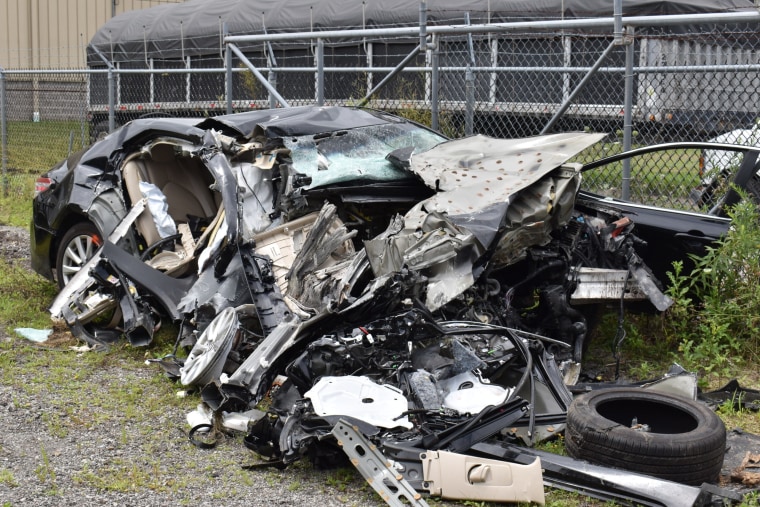
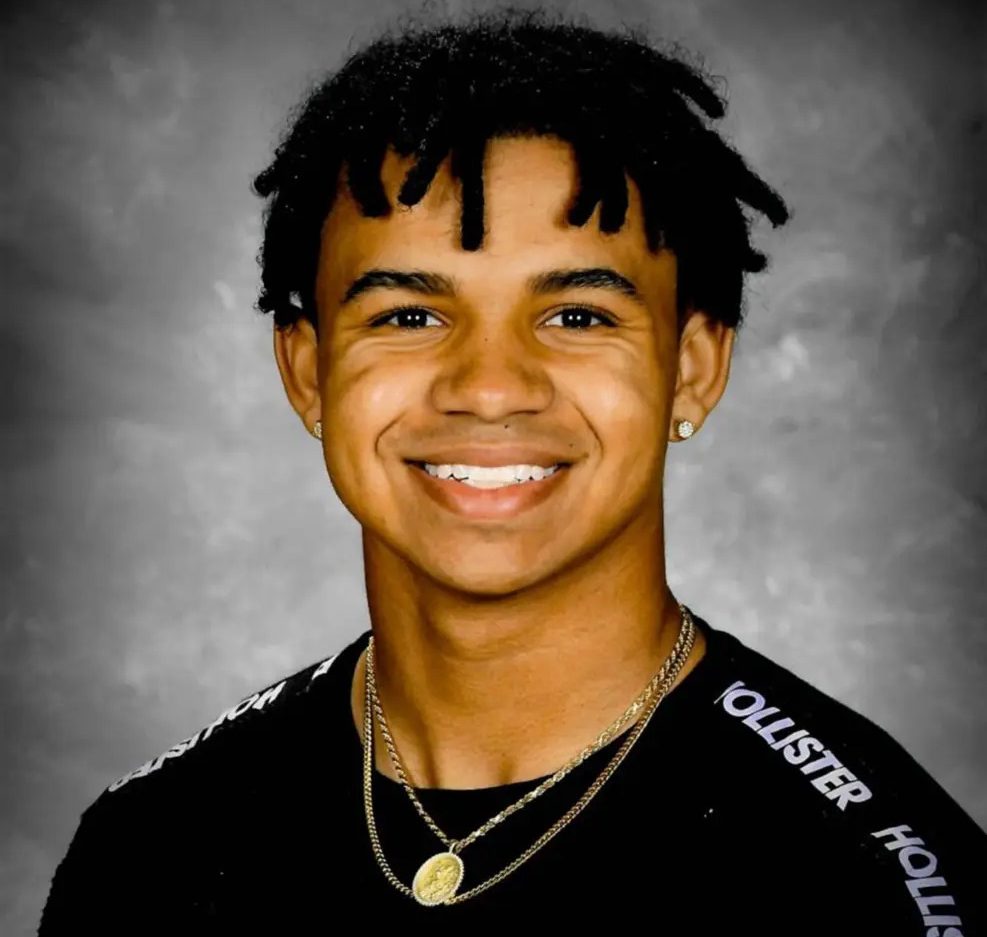
On the morning of July 31, 2022, Mackenzie Shirilla, age 17, decided that if she couldn't have her boyfriend, nobody could. So she pointed her Toyota Camry at a brick building, put her foot down, and drove into it at 100 miles per hour with two people in the car. One of them was her boyfriend Dom Russo, 20. The other was his friend Davion Flanagan, 19, who had the catastrophically bad luck of accepting a lift home from a party. Both were pronounced dead at the scene.
Shirilla survived. She was taken to hospital with serious injuries, which she then had the audacity to recover from. In the years that followed, she did not speak to police. She did not testify at her trial. She maintained — through lawyers, through her parents, through every available channel except the one that was sworn and under oath — that it was an accident. The dashcam, which does not have a PR team, showed her accelerating. Not braking. Accelerating. At 100mph. Into a wall. With two people in the car.
Judge Nancy Russo — no relation to Dom, and presumably exhausted by the entire situation — conducted a bench trial in 2023 and delivered a verdict that can be summarised as: we have all seen the footage, we have all done the maths, and no. Guilty on all 12 counts. Four counts of murder. Four counts of felonious assault. Two counts of aggravated vehicular homicide. Drug possession. Possessing criminal tools. The judge called her "hell on wheels" and sentenced her to 15 years to life. It did not bring Dom Russo or Davion Flanagan back. Nothing was going to do that. Whether 15 years is anywhere close to enough is a separate conversation — one this article is going to have.
:max_bytes(150000):strip_icc():focal(359x0:361x2)/christine-dominic-russo-082423-2-6e5c657ed8854387b3b300aa24b5163d.jpg)
"She planned and perfectly executed the crash. She was hell on wheels."
— Judge Nancy Russo · Sentencing, 2023THE FULL TIMELINE
WHAT THE TIKTOKS SHOWED
Before she was a convicted murderer, Mackenzie Shirilla was a teenager with a phone and a TikTok account, which is relevant only because she left a very detailed record of herself. The documentary uses social media footage extensively — and what it reveals, according to reviews, is a portrait of a 17-year-old who was not particularly subtle about who she was.
The videos show a girl who was confident, performative, and clearly accustomed to getting what she wanted. None of that is a crime. What the prosecution argued is that those qualities — the entitlement, the control, the inability to tolerate a no — translated directly into what happened on July 31, 2022. The theory is not that she was evil in a cartoonish sense. The theory is that she was a teenager who had never been told no in a way that stuck, who was about to be told the most significant no of her life, and who decided that if she couldn't control the outcome, she would control the ending.
The jury of one — Judge Nancy Russo, bench trial — found this theory more convincing than the alternative. The alternative being that a 17-year-old accidentally drove into a brick building at 100mph with no braking, no swerving, no visible attempt to avoid what was coming. The dashcam had an opinion about the alternative theory. The dashcam's opinion prevailed.
Her TikTok videos were played at trial. The victims' mothers sat in the courtroom and watched footage of the girl who killed their children performing for a camera. That is a sentence that should land. If you want another case of a woman who performed for the camera while the evidence disagreed, Kouri Richins is available on this site. Let it land.
THE BRACELET. ALL OF IT.
Let's be precise, because the imprecise version has been shared enough times that people have started to forget quite how bad the precise version is.
Two people were dead. Mackenzie Shirilla had been hospitalised after the crash with serious injuries. After her release, she was formally arrested. She was being transferred between police vehicles during the arrest when an officer began switching her handcuffs. At this moment, Mackenzie Shirilla's primary concern was the following: "Could you please be careful taking this one off so it doesn't break the bracelet, please?"
She was wearing six bracelets. The officer — a grown adult man who must have been having the shift of his career — said "I'm not going to tighten these, OK? I don't want to hurt you." He removed the handcuffs carefully. She did not ask about Dom. She did not ask about Davion. She did not ask if everyone was okay, or what happened, or express any visible awareness that two human beings had just died in her car. She asked about the bracelet. Six bracelets. She asked about the bracelet.
Her parents later explained that the bracelets were gifts from Dom, which is why she didn't want them broken. "It's got to be one of the dumbest things we heard," her parents said of the public reaction. "They were about Dom. They were from Dom." This explanation raises the question of whether, if the bracelets were so strongly associated with Dom, the appropriate response in the immediate aftermath of his death might have been to ask about Dom rather than the bracelets. We are not legal experts. We are just asking.
The bracelet is not, in isolation, evidence of anything. People in shock do strange things. The bracelet combined with the dashcam — the one showing her accelerating rather than braking in the seconds before impact — is what the court found compelling. The bracelets are just the thing the internet remembers. Possibly because they are unforgettable.
WHAT WAS HAPPENING BETWEEN THEM
The prosecution's case rested on motive, and the motive was this: Dom Russo was going to leave her. The relationship between Mackenzie Shirilla and Dominic Russo was described at trial as volatile. There were arguments. There was a dynamic that multiple people characterised as controlling on her part. Dom, by accounts from people who knew him, was pulling away.
The Netflix documentary leans into this — the toxic relationship is, according to reviews, its primary lens. And this is where things get genuinely complicated, because the documentary also acknowledges that Dom was not without his own issues. The Shirilla family's appeal included text messages they claimed showed Dom threatening Mackenzie. The court found those messages insufficient to change the verdict. The prosecution called the new evidence speculative. But they exist, and the documentary apparently does not ignore them.
Here is what we know with certainty: Dom Russo was 20 years old. He did not get to grow up and look back on this relationship from a distance. He did not get to leave, move on, and become a person who dated someone healthy in his twenties. He was in that car, and then he was not anywhere. Whatever was happening between them — whatever complexity the documentary uncovers — the ending of it was not his choice. It was hers. That is what the court found. That is what the dashcam shows.
The documentary's framing of "toxic relationship" as context is not wrong, exactly. Context matters. But context is not exoneration, and the documentary — to its credit, apparently — does not treat it as such. What it does is what all good true crime should do: show you the full picture and let you reckon with how complicated people can be, right up until the moment they stop being complicated and just become a choice someone made at 100mph.
Davion Flanagan had no part in any of this. He was getting a ride home. He had no history with Mackenzie. He was not the target, the motive, or the point. He was 19 and he was in the wrong car at the wrong time, and the Netflix documentary — and most of the coverage — has consistently treated him as secondary. His name was Davion Flanagan. He was someone's son. He deserved better from the coverage and considerably better from the driver.
DAVION FLANAGAN WAS NOT CARGO
The Netflix documentary describes Davion Flanagan as having been "just cargo in the backseat." That framing is meant to illustrate how he's been treated in coverage of this case — not how he actually should be thought of. And it's worth pausing on, because it's accurate and it's a problem.
Davion Flanagan was 19 years old. He was Dom Russo's friend. He was in that car because he was getting a ride home from a party, which is one of the most normal things a 19-year-old does. He had no part in whatever was happening between Mackenzie and Dom. He had no say in where that car went or how fast. He was, in the most literal sense, just a passenger.
The coverage of this case — then and now — has focused primarily on the Mackenzie and Dom relationship, because that's where the motive lives. The Netflix documentary does the same. Dom's family has been a consistent presence. Davion's family has been there too, but the coverage hasn't always reflected that. He was someone's son, someone's friend, someone who was just going home. He was 19.
ABOUT GIVING HER A CAMERA
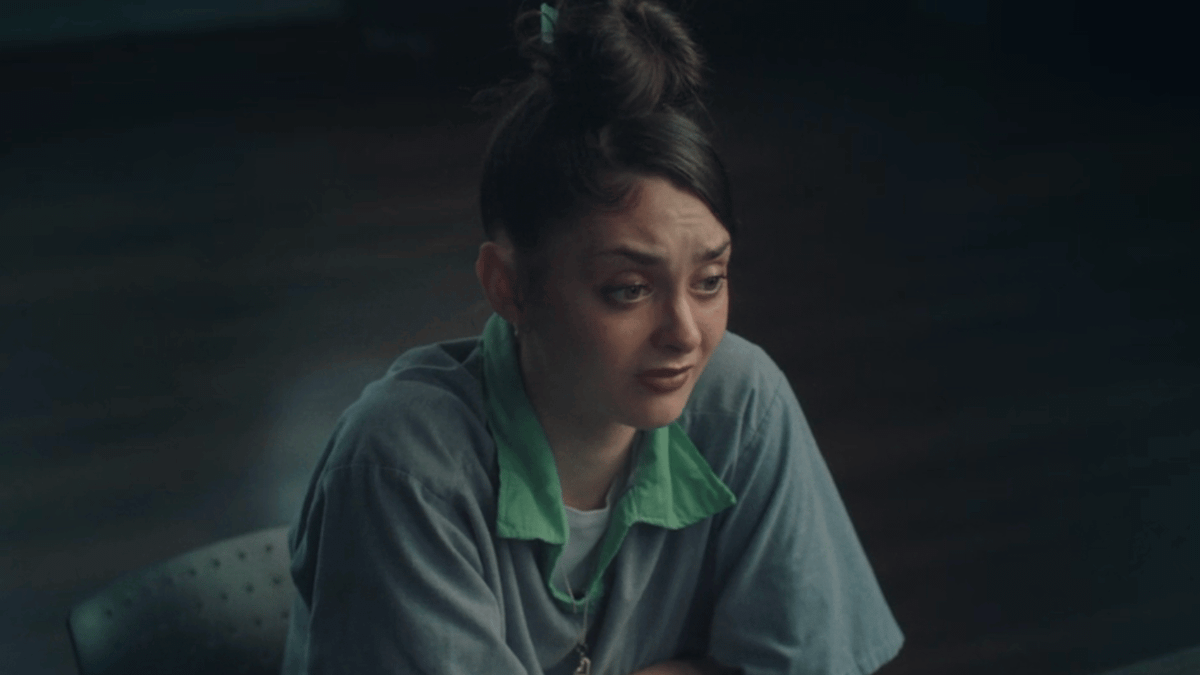
Mackenzie Shirilla never spoke to police. She never spoke under oath. She never testified at the trial where she was convicted of killing two people. She had, across four years of criminal proceedings and a failed appeal, maintained a very consistent position: she would speak on her own terms, or not at all.
Netflix's terms, apparently, were acceptable. The Crash features the first on-camera interview Shirilla has ever given — secured, say the filmmakers, after "considerable effort." We can only imagine what that effort looked like. What we do know is that she chose a Netflix documentary over a police interview, a sworn statement, or a single word of public testimony. Make of that whatever you like. She clearly did.
This is not a new debate in true crime. We have written about Geoffrey Paschel getting a full sympathetic edit on 90 Day Fiancé while a woman in Knoxville waited for her day in court. The question of who gets the camera and who gets the silence is one the genre keeps raising and consistently failing to answer.
The documentary frames this as giving viewers the chance to judge for themselves. Which is a generous description of what is, functionally, handing a convicted double murderer a camera and a production budget. The families of Dom Russo and Davion Flanagan did not get to decide whether this was a good idea. They did not get a vote on whether the woman convicted of killing their sons and brothers deserved a Netflix special. They got to find out when everyone else did. That's the part the documentary probably doesn't spend a lot of time on.
To be fair to the filmmakers: early reviews suggest The Crash doesn't exonerate her. The evidence is presented. The dashcam is there. The bracelet is there. Viewers can see what the judge saw. But there's something specifically galling about a person who refused to say a single word under oath being perfectly willing to say plenty of words once a streaming platform was involved. There's a word for people who only perform accountability on their own carefully managed terms. Several words, actually. We'll leave it there.
She never spoke to police. She never testified. Now she has a Netflix platform. The victims' families did not get to decide whether that was a good idea.
— Sara Alba · Brewtiful Living · CultureTHE PARENTS. OH, THE PARENTS.
Natalie and Steve Shirilla have not accepted the verdict. This is their right, and it is understandable — no parent wants to believe their child is capable of what Mackenzie Shirilla was found capable of. But the way they have not accepted it is worth examining, because it has been quite a lot.
They have given interviews. They have claimed new evidence. They filed a post-conviction appeal — which was rejected, partly because it was filed one day after the 365-day jurisdictional deadline. One day. Natalie Shirilla claims to have found text messages between Mackenzie and Dom's mother that showed Dom threatening Mackenzie. The Cuyahoga County Prosecutor's Office described this evidence as "speculative" and "lacking credibility." The court agreed. The conviction stands.
In their interviews, the Shirillas described their daughter's life in prison and their efforts to clear her name. They expressed hope that the sentence would be overturned. They talked about their daughter as a victim of the relationship, of the coverage, of the public reaction to the bracelet. They said the bracelet was about Dom. They said the text messages proved something. They said the dashcam footage has been misinterpreted.
The dashcam footage shows a car accelerating into a building at 100mph with no attempt to brake or swerve. There is a specific limit to how many interpretations that footage supports, and the court found it had reached that limit at approximately "guilty on all 12 counts."
We are not saying the Shirillas are bad people for believing in their daughter. That impulse is human. We are saying that their very public campaign to reframe a dashcam-documented double murder as a miscarriage of justice has occasionally made it difficult to hear from the people who actually lost something — the families of Dom Russo and Davion Flanagan, who did not choose to be in this story and cannot choose to leave it. History keeps repeating itself, and we keep calling it content.
THE RECEIPTS
THE BREWTIFUL VERDICT
Mackenzie Shirilla is 21 years old. She has been convicted of 12 felony charges. She is serving 15 years to life at the Ohio Reformatory for Women. She cannot apply for parole until 2037, at which point she will be 32. This is the consequence of what she did. Whether it is sufficient is a different question entirely — and one that the rest of this section is going to answer.
She is not a monster in the way that word is usually deployed to make us feel safe — to reassure ourselves that people who do terrible things are a different species entirely, operating by different rules, recognisable by some mark the rest of us don't have. She was a teenager in a volatile relationship who wanted control of a situation she was losing, and she chose the most extreme, irreversible, unforgivable method of asserting it. That is not unknowable. That is not mysterious. That is just a very bad person making a catastrophically bad choice, with two innocent people paying for it permanently.
What makes Mackenzie Shirilla specifically infuriating — beyond the crime itself, which is its own category of infuriating — is the consistency of the entitlement across every stage of this story. She didn't speak to police. She didn't testify. She let her lawyers and parents do the talking while she sat in silence, which is her legal right and also a specific choice about who gets to bear the weight of this. She asked the officer not to break her bracelet — during her formal arrest, not at the crash scene, though the distinction does not substantially alter the vibe. She appealed — and filed the appeal a day late. She took the Netflix interview. Throughout all of it, there is the same quality: the world will accommodate her, or she will find a way to make it. Entitlement is not power. It's a very specific kind of fragility dressed up as confidence.
The world, for once, did not accommodate her. Judge Nancy Russo did not accommodate her. The dashcam did not accommodate her. The court of appeals did not accommodate her, even when the appeal was filed a day late, which is exactly the kind of error that happens when you are accustomed to consequences not applying to you. She is at the Ohio Reformatory for Women and she will be there until at least 2037.
Dom Russo is 20 forever. Davion Flanagan is 19 forever. That is the actual consequence of what she did, and no documentary, no appeal, no carefully managed Netflix interview changes it. The bracelet, presumably, is fine.
One more thing. Fifteen years. That is the minimum before she can apply for parole. She will be 32. She will have her whole life ahead of her — the years Dom and Davion do not get. The years their families will spend without them. She will be 32, and she will be able to walk out, and at some point she will probably make a TikTok about her journey. Two people are dead and Ohio decided that 15 years was the appropriate starting point for a conversation about whether she gets to leave.
We understand the legal framework. We understand that life sentences carry their own complications. We understand that 15 years to life is not the same as 15 years and done. We also understand that Dom Russo and Davion Flanagan did not get a minimum. They got zero. They got a car going 100mph and a driver who was more concerned with the outcome of the relationship than with the two human beings in the back seats. Fifteen years feels like a number that was decided by people who had not fully sat with that.