Parker Posey Didn't Look Mysterious. She Looked Mean
Parker Posey Didn't
Look Mysterious.
She Looked Mean.
White Lotus made her the moment. Then she sat down across from Blake Lively and the whole thing got complicated.
Parker Posey in White Lotus
Was Extraordinary.
Before we get to the interview, let's acknowledge what got everyone back in their seats. Parker Posey's performance as Victoria Ratliff in White Lotus Season 3 is some of the best work she has ever done — which is saying something for a woman whose career has been built on being the most interesting person in any given room since 1993.
Victoria Ratliff is cold, composed, and elegantly withholding. She is the kind of woman who delivers devastating observations in a register usually reserved for discussing the weather. She keeps the room at a certain temperature, and that temperature is hers to control. It is a masterful performance and it reminded a generation of younger viewers why Posey has always been treated as a kind of indie legend.
Cold. Composed. Elegantly withholding. Delivers devastating observations in the register of small talk. Controls the temperature of every room she enters. A masterpiece of controlled performance. Also, unfortunately, very recognizable as a personality type in the wild.
White Lotus is why people searched her this year. It is why this piece exists. And it is also why the Blake Lively interview became so much more loaded than it might otherwise have been — because suddenly the audience had a very specific frame for what Parker Posey looks like when she is performing disdain with intention. And then they watched her do it apparently off-script.
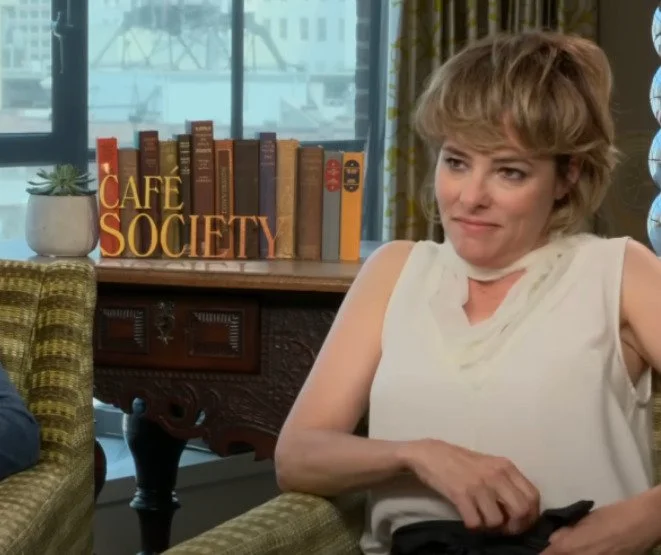
Everyone is talking about the Blake Lively interview, which is predictable, because the internet is constitutionally incapable of ignoring a familiar blonde in a press cycle. But the more interesting presence at the table was Parker Posey, who sat there radiating a very specific kind of disdain: not accidental, not subtle, and definitely not as clever as the internet wanted it to be.
The eye rolls were not wit. The smirks were not mystery. The long blinks were not some private art-house language only the culturally advanced could decode. They were just rude. Very visible. Very pleased with themselves. The sort of expression work usually performed by someone punishing a waiter for bringing sparkling water with the wrong emotional temperature.
And yes, Posey has earned a long, strange, interesting career. She has the indie legend aura. She has the voice. She has the face of someone who could make ordering soup feel like a character choice. But that is exactly why the interview felt so disappointing. She did not need to do all this. She did not need to sit there acting like basic human interaction was beneath her and then wait for the internet to call it iconic.
Still, here we are. The discourse machine is hungry. Someone made an expression. Nobody survived.
The internet keeps confusing female disdain with intelligence because apparently a woman can look bored in couture and everyone forgets rudeness exists.
— Sara Alba · Brewtiful LivingIt Wasn't Biting. It Was Just Unpleasant.
A distinction that matters.The first problem with the interview is that the reactions were too big to feel natural. A small glance can be funny. A tiny pause can be surgical. A perfectly timed blink can ruin a man named Greg's whole afternoon. That is performance. That is timing. That is craft.
This was not that.
Posey's face was doing a full shift. Eye rolls, smirks, little sour pauses, all deployed with the confidence of someone who thought she was elevating the room by making it more uncomfortable. Instead, the room just felt uncomfortable. A tragic distinction, but an important one.
There is a difference between having a dry sense of humor and making everyone around you manage your mood like it is a loose dog in a restaurant. Dryness has precision. This had temperature. Cold, specifically.
The reactions were so large they stopped feeling spontaneous and started feeling like sponsored content for contempt.
Every smirk arrived with the energy of someone already imagining the clip circulating online under the word "iconic."
If you are going to radiate superiority, it helps to bring an actual idea. Otherwise you are just decorating silence.
Those Eye Rolls Deserved Their Own Invoice
A full-service production with structure, pacing, and emotional arc.These were not micro-reactions. These were not private little tells. These were full-service eye rolls with a beginning, middle, and end. They had structure. They had pacing. They had the emotional arc of a regional theater production funded by a bitter aunt.
And because they were so visible, they raised the obvious question: what was the point? Was she bored? Fine. Interviews are boring. Press cycles are weird. But if boredom is the whole performance, eventually the performance has to justify itself. Otherwise it is just a woman letting the room know she would rather be elsewhere while continuing to sit there.
This is where internet culture gets embarrassing. People saw the eye rolls and immediately tried to make them mean something deeper. A critique of celebrity culture. A refusal to perform niceness. A reclamation of the difficult woman. Please. Sometimes the curtain is blue, and sometimes a woman is just acting like the interview personally interrupted a better conversation she was not actually having.
The Public Disdain Meter
Static assessment · The numbers have been read · The results are inBlake Lively Was the Distraction. Posey Was the Weather System.
Everyone was too busy watching Lively to notice the actual climate event.Blake Lively became the discourse magnet because she always does. She enters a press cycle and suddenly everyone online starts sharpening tiny knives made of opinion. But in this particular interview, she was not the most interesting thing happening. She was the backdrop. Posey was the weather system.
You could practically watch the energy at the table curdle around her. Lively kept trying to move through the conversation, and Posey kept dropping little facial grenades like she was being paid per micro-expression. The result was not charming tension. It was secondhand social stress.
If this happened in an office, people would not call it iconic. They would call it "something we should probably discuss after the client leaves."
A dry, mischievous, older-Hollywood refusal to play the press junket game. Indie legend energy. A wink. A weaponized pause.
A woman visibly annoyed that other people were speaking, then pleased that everyone noticed she was annoyed.
The Internet Has A Weird Crush On Women Who Look Like They'd Hate Us
Detachment is not always depth.This is the bigger sickness. The internet loves a woman who looks emotionally unavailable. Not always. But often enough that we should probably take the temperature of the group chat. If a woman seems withholding, cold, bored, or faintly disgusted, people start projecting intelligence onto her like they are decorating a rental apartment.
The beautiful detached woman. The woman too exhausted by mediocrity to engage normally. The woman silently judging everyone while saying very little herself. The internet eats this alive, then asks for seconds.
But detachment is not always depth. Sometimes it is just bad manners with better cheekbones. Sometimes the person is not communicating a complex critique of celebrity culture. Sometimes they are just making the table weird.
We romanticize avoidant people. We glamorize withholding. We confuse meanness with power because kindness now scans as embarrassing. It is the same cultural reflex that makes people call toxic behavior "boundaries" and passive aggression "vibes." For more on that particular social disease, see why narcissists are not the scary powerhouses you think they are.
Nothing says effortless mystique like making sure every person in the room knows how much effort you are putting into seeming unimpressed.
— Sara Alba · Brewtiful LivingMean Is Not The Same Thing As Magnetic
A final observation.There is something faintly depressing about watching a woman once associated with chaotic, unpredictable brilliance flatten herself into frosty detachment. Parker Posey does not need to fight for mystique. Her White Lotus performance is already there. Her entire career is already there. That is what made the whole thing feel especially tired.
Bitterness is not charisma. Boredom is not automatically intelligence. And "I'm over this" is not a meaningful position unless you bring something sharper than your cheekbones to back it up.
Real power is not eye rolling your way through a room and hoping the internet mistakes it for wit. Real power is presence. Timing. A little danger, yes, but not the kind that makes everyone else reach for their emotional coat.
This was not brave. It was not especially interesting. It was just another reminder that the meanest woman in the room is not usually the sharpest one. She is just the most visibly bored.
And bored is not a personality. Not even when the lighting is excellent.