Brewtiful Living

MINDFUL
ISH.

Wellness without the toxic positivity. Roughly, sort of, more or less.

Sara Alba Sara Alba

It's 4pm on Sunday. Monday Is Already in the Room

You can feel it, can't you. That specific shift in the light. The way the afternoon got heavier without asking. A guide for surviving the next 16 hours that is not going to tell you to journal.

It arrives at the same time every week with the reliability of a bill you forgot about and the emotional weight of a conversation you've been avoiding. Research actually pinpointed it: the average Sunday Scaries hit at exactly 3:54pm. Which means if you're reading this right now, you are not imagining it. The dread is real, it is punctual, and it has been waiting for you since Friday.

About 82% of American workers report suffering from Sunday Scaries, rising to 92% among Gen Z. So whatever you're feeling right now — the low hum of anxiety, the vague sense that you forgot something important, the way Monday feels like it's already standing in the corner of the room with its coat on — you are not alone. You are, statistically, part of an overwhelming majority of people who are also staring at the ceiling of their Sunday afternoon and feeling some kind of way about it.

The internet's solution, if you've had the misfortune of googling this today, is: journal. meditate. exercise. set boundaries. consider whether your job is the right fit. adopt a positive mindset.

We are not going to do any of that.

First, Let's Acknowledge What's Actually Happening

The Sunday Scaries are not a personality flaw. They are not a sign that you need to quit your job, restructure your life, or download a mindfulness app. They are what happens when your brain associates Monday with stress so consistently that the mere proximity of Monday triggers your fight-or-flight response — a real stress reaction to a threat that hasn't happened yet and may not be as bad as your 4pm brain insists it will be. brewtifulliving

Your nervous system is not broken. It is doing exactly what nervous systems do — preparing you for something it has learned to treat as a threat. The problem is it starts preparing approximately sixteen hours early, which means you spend Sunday evening in a state of low-grade emergency for a Monday that has not yet had the opportunity to be fine.

The most common triggers are unfinished tasks left over from the previous week, looming deadlines, a calendar packed with meetings, and — the one nobody puts first but probably should — the simple, bleak reality of Monday existing.

None of this is fixable with a journal. Let's move on.

The 4pm Inventory (Takes Four Minutes, Costs Nothing)

Not a to-do list. Not a planner. An inventory. There is a difference.

A to-do list is a document of everything you haven't done, which at 4pm on Sunday will make you feel considerably worse than you already do. An inventory is a quick audit of what Monday actually contains, which is almost always less catastrophic than what your brain has been quietly constructing for the past hour.

Open your calendar. Look at Monday. Actually look at it — not the version in your head, which has been exaggerated by anticipatory dread and the specific despair of a Sunday afternoon, but the actual calendar. Count the meetings. Read the subject lines. Note the one or two things that actually need to happen tomorrow, as opposed to the ambient sense that everything needs to happen tomorrow.

Research consistently shows that people who close out their work week on Fridays by writing down a Monday agenda feel measurably less anxious on Sunday night — not because the tasks disappear, but because the brain stops trying to hold all of them at once. If you didn't do that on Friday, do a version of it now. Three things. That's it. The three things that are real tomorrow. Write them down and then close the tab and do not open it again until you are physically at work.

Monday is not all things. Monday is three things and then some stuff around it.

Stop Trying to "Fix" Sunday Night

Here is the thing that every wellness article about the Sunday Scaries quietly gets wrong: they treat Sunday night as a problem to be solved by productivity. Prepare more. Plan more. Optimise the transition from weekend to week. Treat the last hours of your Sunday as an extension of your Monday preparation.

This is, with respect, the wrong direction entirely.

The two most effective things people actually do to reduce Sunday anxiety are: limiting work-related thoughts during the weekend, and setting clearer boundaries between personal and professional life. Both of these things are about less, not more. Less engagement with Monday on Sunday. Less bleeding of work energy into personal time. Less treating your free hours as preparation for the hours that aren't free.

What this means practically: Sunday night is not for getting ahead. Sunday night is for being somewhere, entirely, that is not Monday. Watch something ridiculous. Order something you don't have to cook. Text the group chat. Do the thing you've been saving for "when you have time" because you have time right now and it expires in approximately three hours.

The Sunday reset — and we have written about what a real one looks like, the unglamorous, actually useful version — is not about preparing for Monday. It's about reclaiming the last few hours of the weekend for yourself before Monday comes and takes the week.

That reclaiming is the whole point.

The Monday Morning Bribe: Non-Negotiable, Non-Negotiable

This is the one tactic that has actual evidence behind it and that nobody frames correctly: give yourself something to walk toward on Monday morning, not away from.

Not a reward for surviving Monday. Something specifically placed at the beginning of it. Gifting yourself a Monday treat — a specific coffee you don't usually get, a podcast you've been saving, a route to work that goes past something you like — directly reduces the negative associations your brain has built around Monday mornings.

It sounds almost embarrassingly simple. It works because your brain is running on pattern recognition, and right now the Monday pattern is: dread, stress, obligation, repeat. You are not going to dismantle that pattern by meditating on Sunday night. You are going to start dismantling it by giving Monday morning a different first data point, consistently, until the pattern shifts.

This is not self-care content. This is basic conditioning. It is the same mechanism that makes you associate a particular song with a particular feeling. You are rewriting the association. You are doing it with a coffee order. It counts.

The 10pm Rule, Which Is Actually About Self-Respect

At 10pm on Sunday, whatever is not done is not getting done tonight.

This is not a productivity tip. This is a boundary with yourself, which is — as we have written about at length in the context of other people's behaviour, but which applies equally to your own — the foundation of not being consumed by things that don't stop taking. Monday will arrive at the same time whether you spend the next two hours anxiously refreshing your email or watching something that makes you laugh. The work does not care what you do with your Sunday night. It will be there either way.

What changes is you. How rested you are. How much of your nervous system you've burned through on anticipatory dread versus actual events. How much of Monday you've already spent before it started.

Close the laptop. Put the phone face down. The inbox will be full in the morning regardless. You might as well go into it with some sleep.

The Actual Guide, In Ruthlessly Plain Language

4pm: Do the four-minute inventory. Three real things about Monday. Close the tab.

5pm: Stop preparing for Monday. Start being somewhere else.

6-9pm: Do literally whatever restores you. Not what improves you. Not what prepares you. What restores you.

Before bed: Decide your Monday morning treat. Commit to it.

10pm: Whatever isn't done, isn't getting done tonight. This is a decision, not a failure.

Monday 7am: Get the treat. Lead with it. Start the pattern.

That's it. That's the guide. Sixteen hours between you and Monday morning and the only thing you owe yourself between now and then is to actually be in them.

The light has shifted. Monday is in the room.

But it hasn't started yet, and right now, that still counts for something.

— BrewtifulLiving.com | Brutal truths, Brewtifully packaged.

Read More
Sara Alba Sara Alba

One Pixel a Day: The Journal That Changed My Year

writing in a pixel journal

Photo credit

Let me be blunt: I’ve never been a “dear diary” girl. I tried gratitude journaling. Bullet journaling. Even one of those overpriced habit tracker apps that pings you like an emotionally needy ex. But nothing stuck—until I found the pixel journal.

One square. One color. One feeling per day.

That’s it.

And yet, twelve months later, I have a whole year of my life—emotions, patterns, and lowkey epiphanies—documented on a single page. Here's how this deceptively simple system changed the way I process time, memory, and myself.

What Is a Pixel Journal, and Why Does It Work?

A pixel journal is a visual mood tracker where each day of the year gets its own square. You fill that square with a color that represents your dominant feeling or state that day—anxious blue, joyful yellow, shut-down grey, rage red, etc. At the end of the year, your page is a mosaic of emotion. A living, breathing quilt of who you were and what you survived.

Why does it work? Because it’s stupidly simple. No overthinking. No paragraphs. Just color-coded honesty. It's the minimalist therapy session your inner chaos didn’t know it needed.

This Isn’t Just Journaling. It’s Pattern Recognition.

Here’s where the transformation kicks in. About three months in, I realized I wasn’t just tracking emotions—I was tracking triggers. I saw that every time I spent time with a certain person, my pixel turned storm cloud grey the next day. I noticed my moods dipped predictably the week before my cycle, or spiked after long walks and Sunday resets.

The pixel journal didn’t just reflect my mental state. It taught me how to anticipate it.

How to Create Your Own Pixel Journal (Without Making It Ugly)

You don’t need fancy software or an influencer’s stationery stash. You just need a grid, some markers, and a key. Here’s how to start:

1. Choose Your Format

Go old-school with a blank notebook or download a printable year-at-a-glance pixel template. Personally? I use a bullet journal and draw a grid of 12 rows (months) by 30–31 columns (days).

2. Create a Color Key

Pick 5–10 moods or themes you want to track. Give each one a color. Don’t go full rainbow unless you want visual chaos—curate your palette. Think of it like an emotional Pantone.

Example key:

  • Joy = Yellow

  • Anxiety = Blue

  • Burnout = Grey

  • Motivation = Green

  • Anger = Red

  • Peace = Lilac

Optional: Use dots or symbols on top of colors to layer additional info (e.g., a star for “productive,” a slash for “sick day”).

3. Commit to One Pixel a Day

This takes 10 seconds, max. Do it before bed or during your morning coffee. Miss a few days? No guilt. Just fill them in retroactively or leave them blank. (Blank is a mood, too.)

Beyond the Grid: Make It Yours

This isn’t just a tracker. It can be an art project, a scrapbook, a personal protest. Add layers—collage, stickers, quotes, dried flower petals, old receipts from nights you almost forgot.

I once glued in a parking ticket from a day I felt crushed, and now it sits next to a hot pink square labeled “quit my job” like a battle scar. Messy? Yes. Honest? Also yes.

Want to go digital? Apps like Notion or Google Sheets can mimic the layout, but I swear there's something about the analog version that makes it hit deeper.

What I Learned After 365 Squares

  • Patterns repeat when you’re not paying attention.

  • Tiny changes are more powerful than big declarations.

  • You can feel multiple things at once. Color anyway.

  • Healing isn’t linear, but a pixel journal makes it visible.

I can now flip to a single page and see my year. The peaks. The spirals. The spaces where I disappeared and clawed my way back.

I didn’t write a memoir. I drew one.

Final Thought: One Color a Day Keeps the Spiral Away

The pixel journal isn’t magic. It won’t fix your trauma. But it will make you aware of it. And that awareness? That’s the power move.

So if your brain is a loud room you can’t escape, start here. One color. One square. One day at a time.

Because maybe you don’t need to write everything down. Maybe you just need to see it.

Let’s make emotional tracking the new self-care flex.

Read More
Sara Alba Sara Alba

Forget Probiotics—Your Gut Just Wants a Damn Pickle

delicious pickle

A crunchy, briny love letter to the underrated probiotic hero of your fridge.

Let’s not pretend this started as health research. You love pickles because they slap. Because they cut through the heaviness of a sandwich. Because they make you feel something when your salad doesn’t.

But it turns out your fermented little craving isn’t just a flavor bomb—it’s a full-blown digestive rescue mission. The kind that quietly supports your gut, your immunity, and—if we’re being honest—your sanity.

Here’s why your obsession is valid. Scientifically and otherwise.

1. Probiotic Power in a Crunchy Package

Fermented pickles are a probiotic goldmine. We’re talking live cultures. Gut-friendly bacteria. The microscopic inner peacekeepers you didn’t know you needed.
These aren’t just “snacks”—they’re your body’s defense team.

2. Digestion, But Make It Effortless

You know that sluggish, bloated, “why-did-I-eat-that” spiral? Probiotics help reduce that.
They regulate digestion. Support nutrient absorption. Turn your post-lunch regret into… less of a scene.

3. Immune System MVP

A huge chunk of your immune system lives in your gut. So the healthier your gut, the more badass your immune response. Pickles, via probiotics, help create a better, bolder gut environment—like immune resilience, but vinegary.

4. Pickles Actually Contain Real Nutrients (No, Really)

Vitamin K for your bones. Vitamin C for your skin and immune system. Low in calories, high in vibe. They’re not empty snacks—they’re mood-stabilizing, inflammation-fighting, crunchy little warriors.

5. Brine = Hydration With Attitude

Post-workout? Post-drama? A hit of pickle juice contains sodium + potassium, aka the electrolytes your body forgot it needed.
It’s a better recovery drink than whatever $14 wellness shot is trending on TikTok.

Ways to Incorporate Pickles Without Losing Friends

Let’s make it practical. Here’s how to live your best probiotic life without becoming that person who smells like vinegar at all times:

The Pickle Girl Starter Pack:

  • Straight from the Jar: Unapologetic. Iconic. Enough said.

  • Pickle Juice Shot: For when your gut needs backup and your personality needs edge.

  • Sandwich Stacking: Upgrade your lunch. Add crunch, bite, and low-key gut support.

  • Chopped Into Salads: A tangy twist your kale will thank you for.

  • Homemade Pickles: You, in control. Of ingredients. Of fermentation. Of your life (theoretically).

DIY Pickle, But Make It Moody

Because nothing says “I’m reclaiming my wellness” like fermenting your own damn cucumbers.

What You’ll Need:

  • Kirby cucumbers (they don’t get soggy, unlike your boundaries)

  • Fresh dill, garlic cloves

  • Sea salt, water

  • Optional: mustard seeds, peppercorns, red pepper flakes (a little chaos)

How to Do It:

  1. Brine It: 2 tbsp sea salt + 4 cups water = your base.

  2. Jar It: Stuff cucumbers, dill, garlic, and whatever emotional spice you want into a clean jar.

  3. Pour It: Brine goes over. Cucumbers should be submerged—unlike your coping mechanisms.

  4. Ferment: Leave it out for 2–7 days. Taste. Judge. Refrigerate once it hits the spot.

The Pickled Takeaway

They’re sharp. They’re loud. They’re misunderstood.
Pickles are more than a sidekick—they’re the gut-healing, emotionally stabilizing, flavor-packed icon you didn’t know you needed.

So yes—sip the juice. Eat the pickle.
Heal your gut. Feel something.

Read More
Self Care Sara Alba Self Care Sara Alba

The Stanley Cup Ruined My Gut

From bloating to belching, find out how this trusty hydration companion turned into a gut-wrenching nightmare.

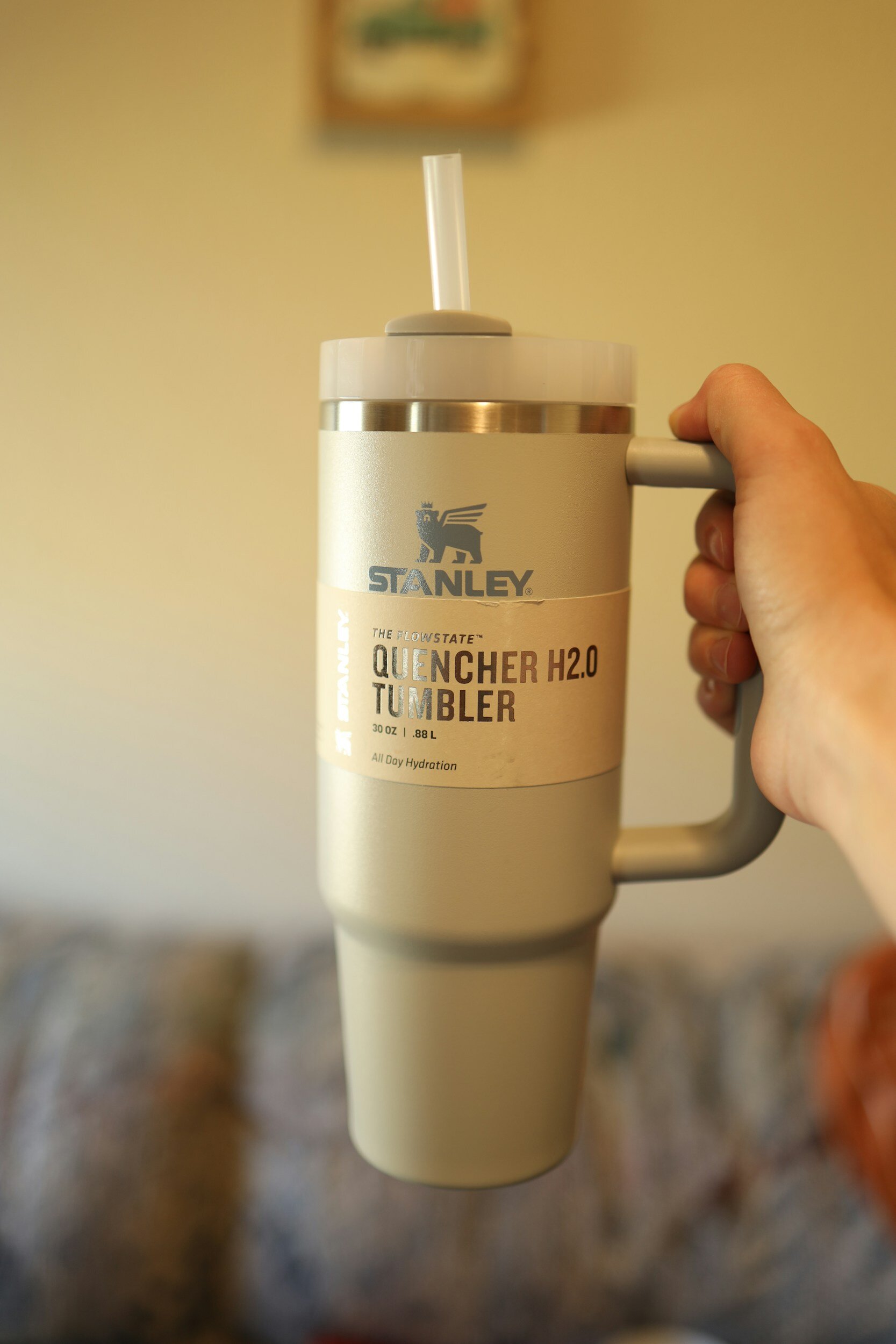
Stanley cup

How I accidentally sabotaged my digestive system with a trending water bottle.

For months, my Stanley Cup and I were inseparable. It had a thick straw, perfect pastel aesthetics, and the emotional support energy of a therapy session in cup form.

At work? It was there. On the couch? Still there. On long walks, short errands, desk meetings, existential spirals? Always there.

I drank water like it was my job. I thought I was thriving. Glowing. Hydrating like the wellness girlies told me to.

Until I wasn’t.

The Bloat Came First

At first, it felt like nothing. A little burping. A little discomfort. But then bloating became constant. My jeans stopped fitting by 3 p.m. My stomach made strange noises like it was trying to communicate distress in Morse code. I started blaming food. Hormones. Stress. Mercury in retrograde.

I never thought to blame… the straw.

Meet the Villain: Air

Turns out, when you sip through a straw—especially one as aggressively efficient as the Stanley Cup’s—you’re not just sipping water. You’re swallowing air. Constantly.

That air doesn’t just disappear. It travels through your system. It builds pressure. It gets trapped. It ferments. It throws off the whole damn digestive party. The result?
Bloating. Gas. Belching. And a stomach that felt like it hated me.

The Overhydration Plot Twist

Here’s the part no one talks about on wellness TikTok: overhydration is real. Especially if you’re pounding water while you eat. I thought I was helping my body digest. I was actually diluting my stomach acid—the very thing designed to break food down and help me absorb nutrients.

The result?

  • Less nutrient absorption

  • More acid reflux

  • A stomach that felt like a sloshing waterbed of regret

No, Switching to a Regular Cup Didn’t Fix It Immediately

Because by then, my gut was in full rebellion mode. Even sipping from a regular glass felt like a risk. I had trained my body into a pattern it didn’t love—and it wasn’t going down quietly. It took weeks of resetting to get back to a baseline. A non-burpy, non-ballooned baseline.

The Wake-Up Call

It wasn’t a doctor. It wasn’t a diagnosis. It was me, lying on the couch post-dinner, clutching my stomach and wondering why I felt so off, when I realized:

I’ve been hydrating like it’s a competition. And I’ve lost.

What I Do Now (The Not-So-Glamorous Fix)

  • I sip slowly from a regular cup. Like, actually sip.

  • I don’t drink water during meals—just before or after.

  • I treat my digestion like a delicate ecosystem, not a garbage disposal.

  • I stopped romanticizing “trendy hydration” and started listening to my body instead.

Final Thought: Maybe Simplicity Isn’t Boring—It’s Healing

The Stanley Cup didn’t ruin my life. But it did remind me of something I forget too easily: just because something is popular doesn’t mean it’s good for you.
Your gut doesn’t care about what’s trending. It cares about what’s working.

So if you’re bloated, gassy, refluxy, or just vaguely miserable—and you’ve ruled out food, hormones, and everything else—look at how you’re drinking. And maybe… ditch the straw.

Read More