Why Meghan Markle’s Outfits Keep Missing the Mark
Updated with fuller quiet luxury analysis, a Sound Off section, and a specific note for Angela — who was right about the pants. The pants were guilty. We are on the record.
THE MEGHAN MARKLE SUIT
THAT SAID ABSOLUTELY NOTHING
PanicOverall Read
There are certain things you expect from a public figure making a high-profile appearance: composure, presence, and — if the public figure has spent five years building a brand explicitly around aesthetic intelligence and domestic elegance — clothes that tell a story louder than the speech itself.
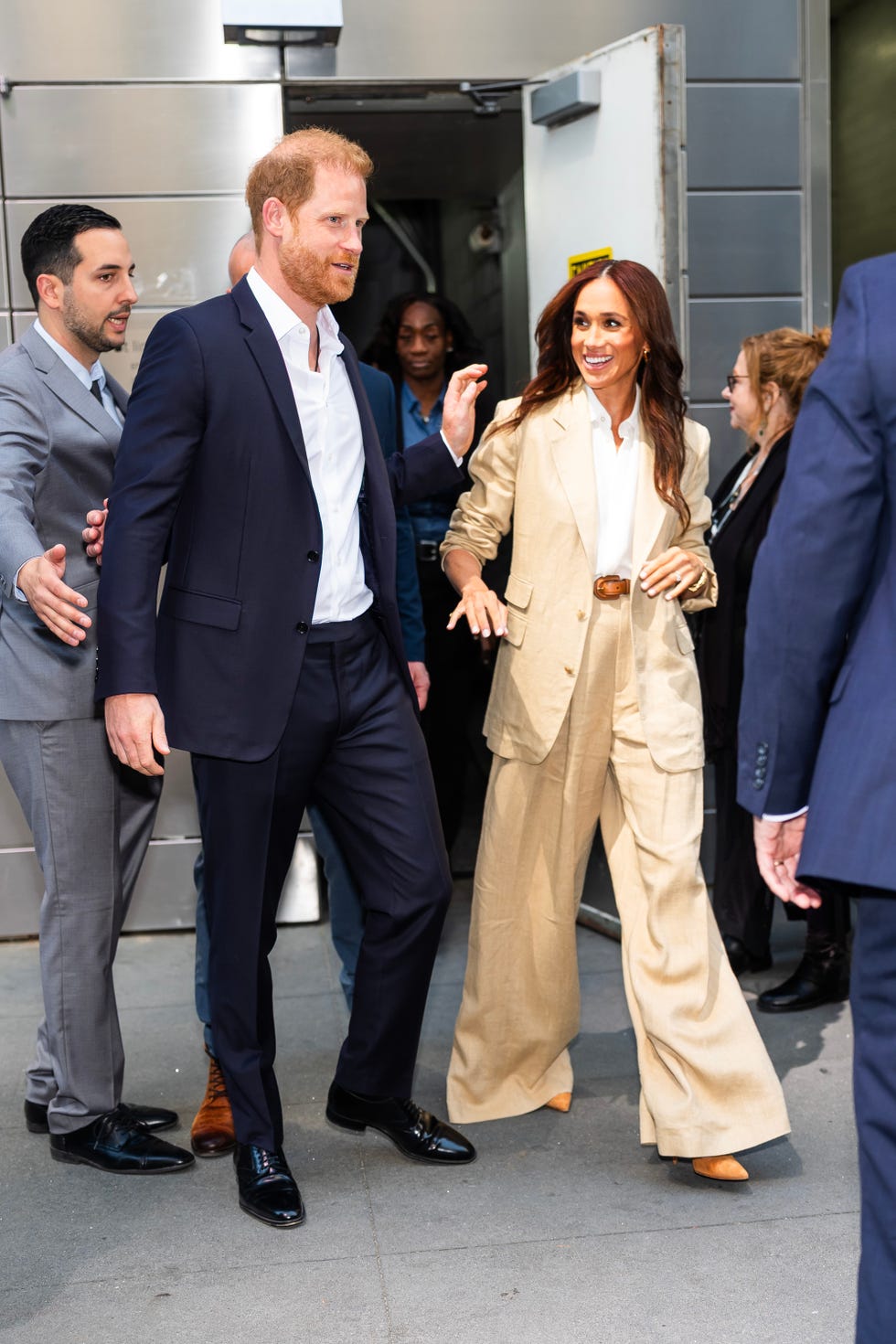
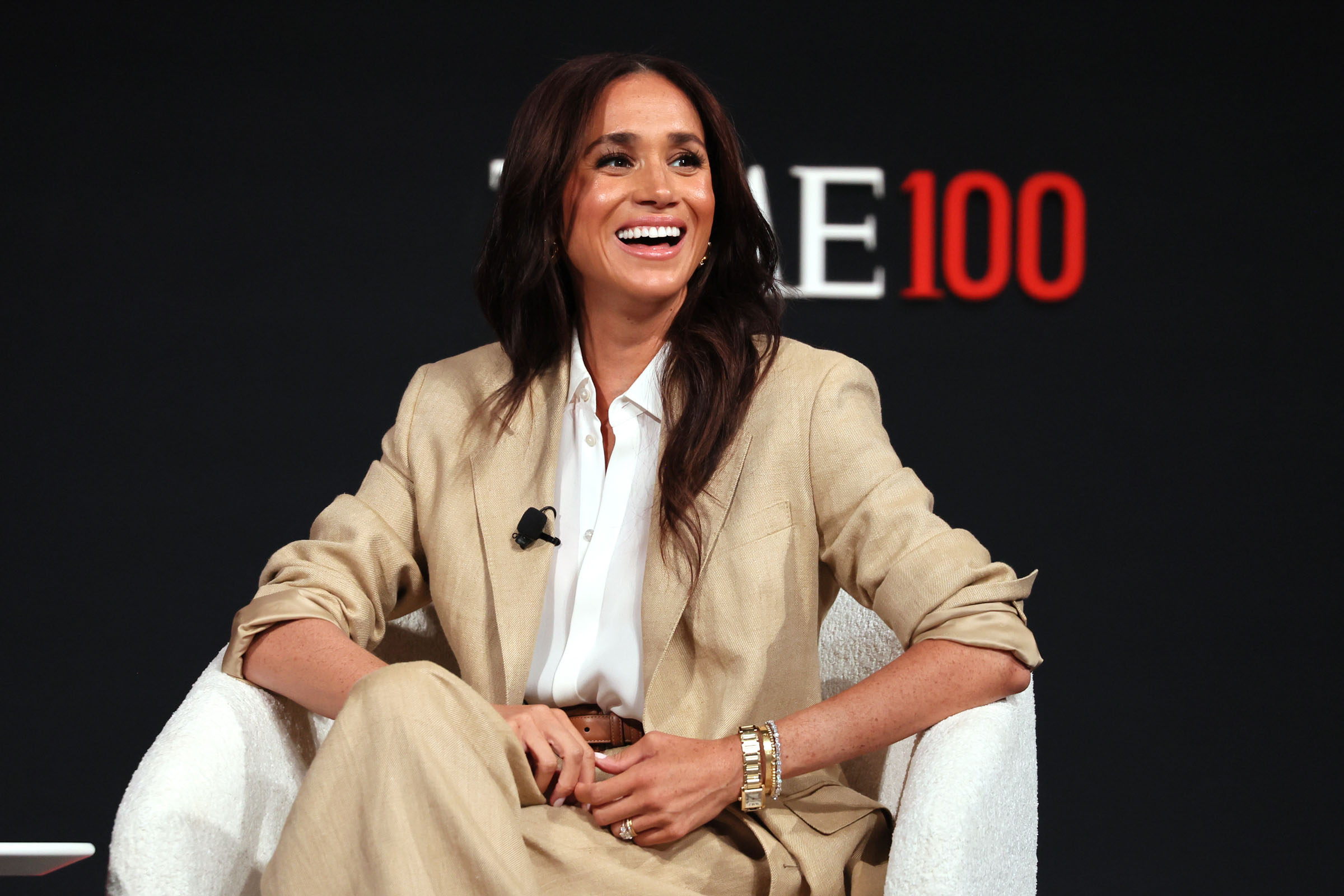
Meghan Markle recently stepped on stage in a tan Ralph Lauren suit allegedly intended to communicate sophisticated restraint. The kind of thing that gets called quiet luxury in a press release and gets called something else in the photographs. The jacket slouched. The trousers pooled. The blouse underneath was so aggressively neutral it constituted a form of surrender. The whole thing read less like quiet luxury and more like a half-steamed rental from a forgotten rack.
This is the report. We are begging for a steamer and a hem appointment.
Quiet Luxury?
Quiet luxury is a fashion aesthetic defined by understated, high-quality clothing that signals wealth through fabric, tailoring, and proportion rather than logos or embellishment. The Row built an empire on it. Loro Piana has been doing it since before the phrase existed. Brunello Cucinelli charges four thousand dollars for a grey cashmere jumper and the jumper is worth it because every millimetre of it is intentional.
The critical element that separates quiet luxury from simply expensive beige is intentionality. Every choice is deliberate. Every detail is executed without compromise. The garment itself is the message — which means when the tailoring fails, there is nothing else to hide behind. No logo. No embellishment. No drama. Just a suit that needed two inches off the hem and a fitting nobody apparently scheduled.
Quiet luxury that is not tailored is not quiet luxury. It is expensive confusion. And at this point, the confusion is the loudest thing in the room.
Garment by Garment
A forensic account. What went wrong and where.The shoulders were not where they were supposed to be. The lapels appeared to have given up approximately three hours before the event. This is what happens when a blazer has not been properly fitted and nobody checked it against the lights before the walk-on.
Wide-leg trousers require either perfect tailoring or perfect height. Unpinned hems puddle. Puddle says: I did not take this seriously enough to attend to the detail. The detail is always the difference between quiet luxury and expensive approximation.
So beige it could have doubled as conflict resolution. Nothing about it committed to a position. In a different context — beautifully fitted jacket, sharp trouser — this works. As the most visible element of an outfit where everything else had conceded, it became the void.
The outfit did not whisper. It mumbled. Quiet luxury whispers deliberately. This one mumbled accidentally — which is the difference between intention and oversight. In fashion, that gap is everything.
Fashion is not separate from authority. It is part of how authority is staged, received, and interpreted at scale. When someone with a global platform gets up to speak — about leadership, about empowerment, about any of the conference-approved abstractions that fill these events — the fit, proportion, and presence of what they wear becomes part of the argument being made. This is not a superficial observation. It is how image communication actually works.
Meghan, more than most public figures, understands this intellectually. She has demonstrated, repeatedly across enough documented instances to constitute a pattern, that she thinks carefully about what she wears and what it signals. The Zelda Wynn Valdes reference at the Fifteen Percent Pledge Gala was researched and intentional. The chartreuse at Carey Mulligan's party was chosen. The clothes are never accidental. Which is exactly what makes a suit this poorly executed so difficult to understand.
Punishes Imprecision.
The Rachel Zane era — Meghan's character in Suits — has become shorthand for what her best style phase looked like. Not because it was the most expensive, but because it was the most intentional. Sharp shoulders. Clean lines. Clear silhouette. Clothes that said: I know exactly where I am and what this room needs from me. The current California post-royal era has delivered something almost opposite: clothes that look like they know what they want to be but have not quite committed to becoming it.
Zendaya exists. Tracee Ellis Ross exists. California cool can still be completely deliberate. Meghan's current vibe is less Malibu ease and more "I forgot this was today." And that is a problem — because forgetting, for someone whose entire brand proposition is aesthetic intelligence, is not a neutral quality. It is evidence against the brief.
"If you want to talk about leadership, start by dressing like you are not afraid to take up space."
The Deeper Fashion Desk Notes
Click each for the full analysis.Why clothes matter — yes, still, in 2026
The counterargument to fashion analysis of powerful women is always the same: we should be discussing what she said, not what she wore. This argument has merit when applied to politicians being questioned about their hemlines instead of their policies. It has considerably less merit when applied to a woman whose entire brand proposition — As Ever, With Love Meghan, the $64 birthday candle — is built explicitly on the claim that aesthetic intelligence is her core competency. If the clothes are the brand, the clothes are available for analysis when they fail.
The beige problem — why it keeps failing her
Beige is not the problem by itself. The entire Bottega Veneta quiet luxury era demonstrated that a single neutral worn with absolute conviction can dominate a room. Meghan's issue is that she uses beige as camouflage for indecision. The result is not subtlety. It is absence. When the fit is uncertain and the tailoring is imprecise and the blouse commits to nothing — the beige stops being a sophisticated choice and becomes the brand's broader problem in fabric form: warmth and softness that dissolves the moment you look for something underneath it.
The PR machine and the sad pantsuit
Here is the part that glossy coverage always tiptoes around: the machine keeps pushing her forward regardless of whether the execution justifies the push. Events are booked. Outfits are approved. Appearances are managed. And somewhere in that management chain, somebody signed off on sending one of the most photographed women in the world onto a stage in a suit that had not been properly fitted, without steaming the trousers, without checking the hems. That is a failure of care at the operational level. Too much approval. Not enough finish.
Rachel Zane would never — on Meghan's best style era
The Suits years produced a specific visual language that Meghan carried into the early royal period and has been slowly abandoning ever since. Sharp tailoring. Clear proportion. Intention visible in every element. It was not always expensive — it was always committed. That commitment read as confidence. The confidence read as authority. The current era has substituted softness for commitment. The result reads less like a woman who has found herself and more like a brand that is still deciding what it wants to be. The suit is the latest garment evidence.
Tailoring is not optional at this level — specifically
The suit is Ralph Lauren. The brand is not cheap. The fabric is not bad. What the suit required was a tailor, a fitting, and someone with the authority to say: the trousers need to be two inches shorter, the blazer shoulders need to come in, and we are not leaving this room until the hem is pinned and steamed. This is a solvable problem. It requires only attention to the final stage — the stage where the photograph is taken of the actual person in the actual garment under the actual lights and someone makes a call. That stage appears to have been abbreviated. The photographs were the visible consequences.
The Meghan Markle Style Timeline.
Sharp shoulders. Clean silhouettes. Clothes that knew exactly what they were doing in the room they were entering. The styling was the argument.
Baggy beige. Creased trousers. Blazers that seem emotionally unavailable. Strategic restraint has become full style indecision.
Quiet luxury does not mean sloppy. It means deliberateness at a softer register. Ease as a style choice requires a stylist and an executed vision.
The Zelda Wynn Valdes reference gown at the Fifteen Percent Pledge Gala: historically researched, intentionally contextualised, perfectly executed. That is what Meghan's style can be.

QUIET LUXURY THAT IS NOT TAILORED IS NOT QUIET LUXURY. IT IS EXPENSIVE CONFUSION. AND AT THIS POINT THE CONFUSION IS THE LOUDEST THING IN THE ROOM.
The Style Audit
Final scores by category.The budget exists. The finish does not. Someone abbreviated the final stage. The photographs recorded it.
No tension. No drama. Monochrome requires precision. This was monochrome without it.
The clothes did not amplify the speaker. They absorbed her.
The brand claims aesthetic intelligence as its core competency. This outfit does not support that claim.
One Fitting. That's It.
The suit is fixable. Two inches off the hem. The shoulders taken in. The blouse swapped for something with a point of view. A steamer applied to everything, once, carefully, before the walk-on. These are not revolutionary interventions. They are the difference between a suit that says something and a suit that says nothing. They are, in their own modest way, the same gap that shows up everywhere else in the Sussex operation: the distance between the vision and the finish.
✦ ✦ ✦Meghan Markle built a brand on the premise that she understands aesthetic intelligence better than most. As Ever exists because of that premise. When the clothes don't land, it is not just a styling failure. It is evidence against the brief. And the brief is the entire business model.
✦ ✦ ✦If you want to talk about leadership, start by dressing like you are not afraid to take up space. The suit, in all its pooled-hem, unsteamed, beige-on-beige glory, communicated the opposite. Not quiet luxury. Quiet confusion. Only one of those is a strategy. The editor's note stands: we are begging for a steamer and a hem appointment. The brand can survive both. It has survived considerably worse.
THE FASHION DESK
IS OPEN.
We have opinions. You almost certainly have opinions. The tan suit is right there. And Angela was right about the pants.
Is this a one-off styling failure or part of a consistent pattern of effort without finish?
Rachel Zane era vs current California era — which Meghan style era was actually better and why?
Is quiet luxury the right aesthetic for where the brand is right now, or does it need something with more personality?