The Wabi-Sabi Guide for People Who've Given Up on Perfection
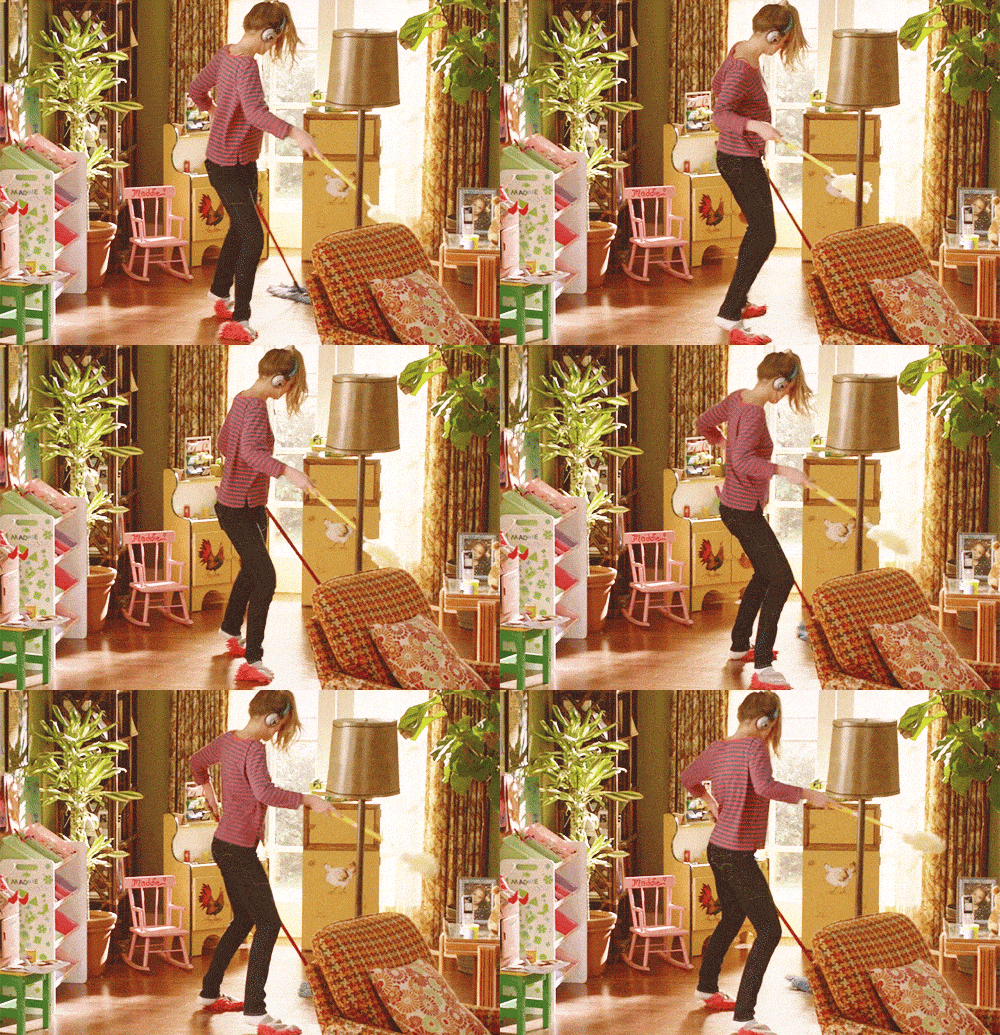
Wabi-Sabi is the only design philosophy that forgives your chipped mug.
Somewhere between your third Pinterest spiral and the moment you realized your home looked nothing like those suspiciously beige strangers’ homes, Wabi-Sabi arrived like a soft, slightly wrinkled permission slip.
It is the art of finding beauty in imperfection, impermanence, and incompleteness. Which is lucky, because perfection is expensive, tiring, and frankly has terrible energy.
Translation: your cracked bowl might not be a failure. It might just be the most emotionally developed object in the room.
What Wabi-Sabi Actually Is
Let’s clear something up before this philosophy gets blamed for a sink full of dishes. Wabi-Sabi is not a hygiene doctrine. It is not a spiritual coupon for grime. It is an aesthetic way of seeing, one that values simplicity, wear, age, irregularity, and the kind of beauty that doesn’t scream for attention.
Wabi gestures toward modesty, quiet, and the understated. Sabi speaks to the passage of time, the weathering, softening, and deepening that happens when an object is actually used instead of merely displayed. Together, they reject showroom perfection in favour of something warmer, more human, and less exhausting.
It is not filth, neglect, or “I haven’t cleaned in six weeks but make it philosophical.” There is a line. Your roommate knows where it is. So does your nose.
Because most people are tired. They are tired of consuming aesthetics instead of living inside their spaces. Wabi-Sabi gives them a way out that feels grounded instead of sloppy.
How to Know If Your Home Already Has It
Look around. Your home is already trying very hard to tell you something. The scratches on the floor. The mug with the hairline crack. The wrinkled linen bedding that has never once respected an iron. The bookshelf arranged by crisis rather than genre. According to Wabi-Sabi, this is not failure. This is evidence.
The lived-in home is the point. The moved picture frame that left a ghost on the wall. The table with water rings from guests who fear neither wood nor manners. The open shelf that never looks right in photographs but looks perfectly normal in the place where you actually eat soup.
Which object in your home has the most accidental soul?
The Wabi-Sabi Shopping List: Less Is More, and You Already Have Too Much
One of the few mercies of Wabi-Sabi is that it does not demand a haul. No starter kit. No matching ceramics from a brand that charges scandalous money for a bowl that looks accidentally theoretical. The whole point is that you stop buying for a second and start noticing.
If you are redecorating, fine. Handmade ceramics. Reclaimed wood. Raw linen. Chunky wool. Second-hand pieces. Uneven glazes. Knots in the wood. Surfaces that look like a person touched them instead of a factory trying to simulate sincerity.
Wabi-Sabi does not want decorative clutter with slogans on it. It wants one object with a pulse. A stone from a walk. A handmade bowl. A stool with visible wear. Something that looks specific, quiet, and real.
Buy less
Brave concept. Rare in the wild.
Buy less
The philosophy works best when you stop treating your home like it needs a seasonal rebrand.
Choose texture
Rough wood, slubby linen, imperfect glaze.
Choose texture
If it looks too polished, too symmetrical, or too eager to be photographed, it may be missing the point.
Keep the odd thing
The rock. The old stool. The inherited bowl.
Keep the odd thing
Rooms get interesting when they contain objects that weren’t chosen by algorithm and trend report.
A Room-by-Room Guide to Accepting What You’ve Got
Kitchen
Leave the wooden spoons out. Let the pan age. Stop apologizing for the open shelving that looks bad in photos but fine in a human life.
Living Room
The blanket will never sit perfectly. The stack of books on the floor is not a crime scene. It is curated overflow with slightly worse PR.
Bedroom
The unmade bed is not always failure. Sometimes it is simply proof that you slept, which is currently a luxury hobby.
Bathroom
The unevenly burned candle is doing performance art. The rusted hinge is aging. The grout mismatch is basically a timeline with plumbing.
The Deeper Problem With Perfection
The perfect home does not actually want you in it. The pristine sofa wants distance. The coffee table books want admiration, not fingerprints. The matching candle set wants a camera, not a flame. Perfection is often just hospitality for anxiety.
Wabi-Sabi offers the opposite. A home that softens when you enter it. A space that can tolerate coffee cups, muddy boots, tired bodies, and the usual evidence of being alive. That is not a lowering of standards. It is a correction.
How to Actually Start: One Decision, No Mood Board Required
Do not begin by shopping. Begin by choosing one imperfect thing you already own and deciding that it stays. Not because you are broke. Not because you forgot. Because it is, in its exact wear and wonkiness, right.
The cracked bowl. The dented pot. The chair with the wobble everyone notices and nobody fixes. These are not signs that your life is unfinished. They are signs that your life has happened. Which is more than can be said for half the homes on the internet.
Nothing stays perfect. Nothing is supposed to. Wabi-Sabi does not ask you to adore mess. It asks you to stop treating the absence of mess as the highest possible virtue.
Your chipped mug has a better personality than most trend cycles.
That is the real comfort here. You do not need to become neater, richer, or more photogenic to have a home with presence. You need a little restraint, a little honesty, and perhaps fewer decorative objects with scripted fonts.
Keep the bowl. Keep the texture. Keep the room human.