Book reviews. Culture commentary. Unfiltered thoughts. No dynasty is safe.
Nonfiction Review · The Bookshelf
AskNot
Maureen Callahan, the Kennedy women, and the pretty little corpse called Camelot.
Maureen Callahan didn't write a biography. She wrote a reckoning. Subtle, in the way a brick through a window is subtle.
By Sara AlbaApril 3, 2026Book Review
Ask Not
Maureen Callahan · 2024
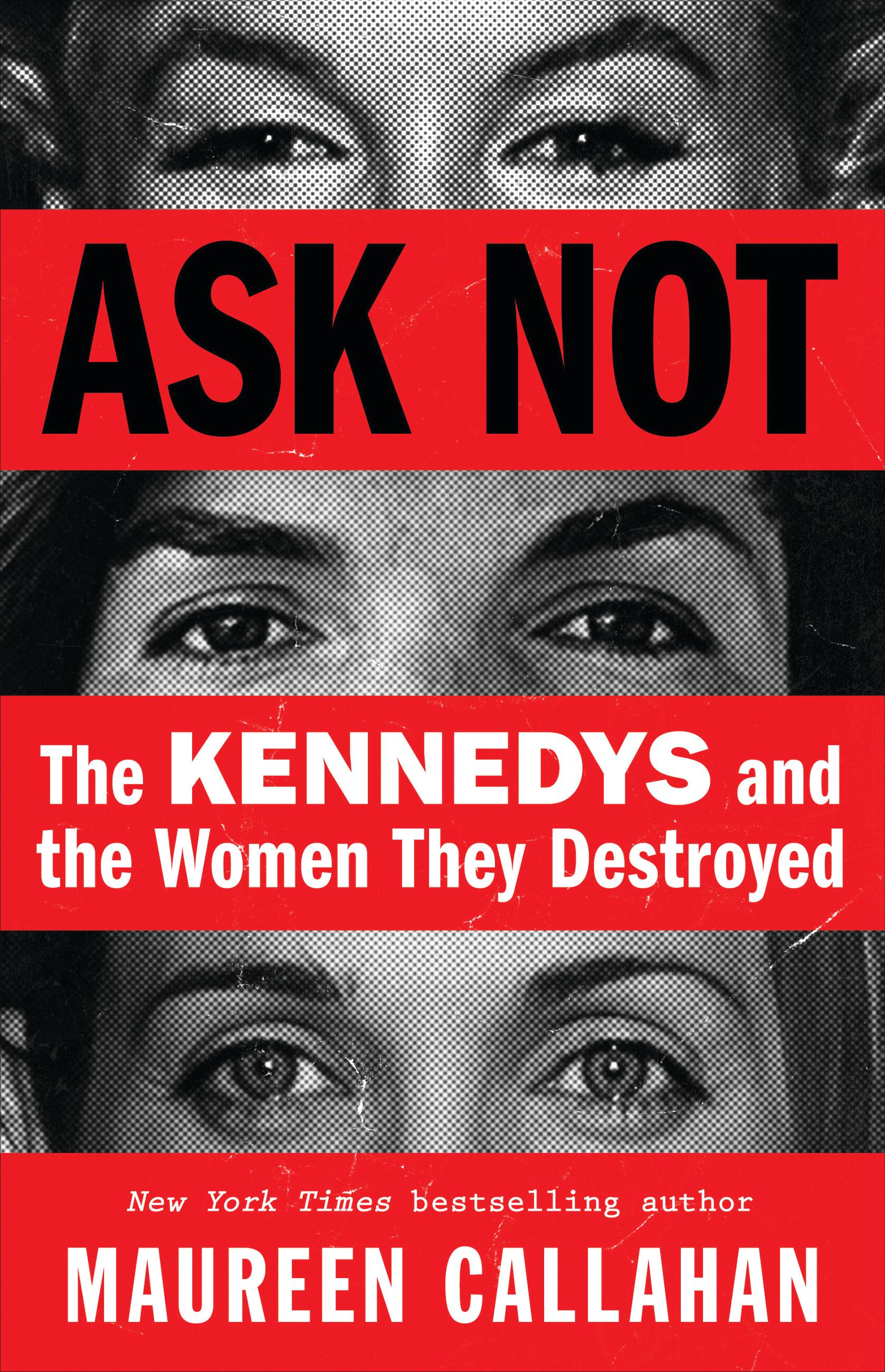
Ask Not: The Kennedys and the Women They Destroyed
Maureen Callahan · Little, Brown and Company · Nonfiction
Ask Not BookMaureen CallahanKennedy WomenBook ReviewBook Club
This isn't biography. It's exhumation. A line-by-line dismantling of America's most romanticised political dynasty, told through the voices history tried to erase.
Ask Not by Maureen Callahan Summary
Ask Not examines the Kennedy family through the women who were harmed, erased, managed, or turned into accessories for the family myth. Instead of polishing Camelot until it blinds everyone again, Maureen Callahan looks at the women left under the rubble: Jackie Kennedy, Marilyn Monroe, Mary Jo Kopechne, Joan Bennett Kennedy, Carolyn Bessette-Kennedy, and others who became collateral in a dynasty built on charm, access, and very expensive silence.
We were taught to idolise JFK and Jackie. The perfect couple. Grace under fire. The American fairy tale. What Callahan reveals is that Camelot was a PR campaign, manufactured to distract from a pattern of abuse, control, and coverup that ran through the Kennedy family for generations. The men got to be reckless, ambitious, adored. The women beside them were expected to look good while quietly absorbing the wreckage.
Quick Verdict
Read it if you want nonfiction with momentum, fury, and receipts. Skip it if you need the Kennedys preserved under glass like museum saints. This book does not do that. It brings a hammer.
This question echoes through every chapter: why didn't we know? Because it wasn't convenient. Because it didn't fit the brand. Because women's pain has never gotten the PR treatment. The Kennedys weren't just powerful. They were untouchable. And when the truth threatened their image, it was redacted quietly, over time, until the lie became legacy.
Ask Not Book Review: Is It Worth Reading?
Yes. Annoyingly yes. The kind of yes that makes you keep reading even when your tea has gone cold and your mood has gone somewhere legally inadmissible.
Most Kennedy books eventually orbit back toward glamour: the compound, the boats, the hair, the teeth, the tragic lighting. Callahan's achievement is staying with the women without letting the mythology perform its usual rescue mission. She doesn't write about what the women wore at state dinners as if that explains their lives. She writes about what they were told to absorb.
The result is not dry historical detachment. It is nonfiction with heat. That will bother some readers. Fine. There are already enough polite books about powerful men behaving terribly while everyone compliments the tailoring.
Power doesn't erase women. It buries them quietly, then rewrites the burial as glamour.
Sara Alba · Brewtiful Living · On Ask Not
The Camelot Timeline: What They Didn't Tell You
The myth didn't build itself. Here's how Camelot was constructed, maintained, and what Callahan found underneath. Click each entry to expand.
1953JFK Marries Jackie +
The perfect match. The press eats it up. What happens behind closed doors takes decades to fully surface: the affairs, the staff complicity, the White House quietly managed like a personal playground. The marriage was a business arrangement so seamless it passed for love.
1962Marilyn Sings Happy Birthday, Mr. President +
The birthday dress. The whispered affairs. Three months later, Marilyn is dead. Callahan's timeline of her final weeks is one of the most disturbing sections of the book. Not a conspiracy. A pattern.
1963Jackie Keeps the Bloodstained Suit On +
She wore the pink suit for hours after Dallas. Callahan returns to this moment as the key to understanding Jackie: not as icon, but as strategist and survivor. The grief was real. The performance was deliberate. All three things were true simultaneously.
1969Chappaquiddick and Joan's Silence Deepens +
Ted Kennedy drives off a bridge. Mary Jo Kopechne drowns. Ted survives, waits nine hours to report it, and is never charged with anything serious. Joan Kennedy is expected to stand beside him. She does.
1996Carolyn Bessette Marries JFK Jr. +
She was a publicist. A fashion insider who knew how image worked. She was not prepared for what marrying into this family would cost her: isolation, scrutiny, and the pressure to be palatable but interesting, elegant but not aloof.
1999The Plane Goes Down +
JFK Jr., Carolyn, and her sister Lauren die when John's plane crashes off Martha's Vineyard. The mythology survived intact. Carolyn's story did not receive the same courtesy.
2024Callahan Publishes Ask Not +
The women get their names back. It is a long overdue reckoning, and one that changes how you see every Kennedy photograph, every Camelot reference, every admiring profile you've read before it.
Who Are the Women in Ask Not?
Callahan covers thirteen women. These are the ones whose stories hit hardest and whose erasure was most deliberate.
Jackie KennedyFirst Lady · Strategist · Survivor
Survived, Barely+
Jackie knew exactly what was expected of her: be beautiful, be silent, be strategic. Callahan doesn't mock Jackie's silence. She explains it. The myth she helped build also became the myth she could never fully escape.
Marilyn MonroeConfidante · Liability · Erased
Erased+
We know the headlines. What Callahan does differently is give Marilyn back her agency, then show how quickly agency becomes threatening when powerful men prefer women decorative, grateful, and quiet.
Carolyn has become a ghost-fairy of '90s minimalism. But behind the iconography was a woman in pain, trapped inside a family myth that needed her image more than it protected her life.
Joan Bennett KennedyTed's Wife · Public Humiliation · Discarded
Edited Out+
Married to Ted Kennedy meant public humiliation on a loop. Callahan gives Joan's story space and weight. It is one of the quieter sections and one of the most devastating.
Mary Jo KopechneChappaquiddick · Killed · Forgotten
Killed and Forgotten+
Mary Jo Kopechne drowned in Ted Kennedy's car in July 1969. She was 28. Callahan refuses to let her remain a footnote in a powerful man's redemption arc. That is the most necessary thing the book does.
The Hot Takes: Unfiltered
Most Kennedy books, even the critical ones, eventually circle back to the glamour. Callahan's achievement is refusing to let the glamour rescue the men from the record. She keeps the camera on the women. Rude of her, apparently. History prefers a flattering angle.
One of the book's most startling facts is that Camelot was a narrative Jackie helped create after the assassination. Callahan treats this as both strategy and survival. The branding worked so well that people are still trapped inside it.
The myth required maintenance. The press provided it. Access journalism, editorial restraint, proximity to power, all the usual tiny violences dressed up as professionalism. The erasure was not accidental. It was assisted.
How Angry Should You Be? The Scores
Interactive · Honesty AssessmentThe Rage-O-MeterBars animate on scroll. The scores are not negotiable.
JFK, The Charisma Weapon91 / 100
The myth did not need more cologne. It needed accountability.
Bobby, The Moral One78 / 100
The halo looks different when someone turns the lights on.
Ted, The Lion of the Senate96 / 100
Mary Jo was 28. That sentence should be harder to bury than it was.
JFK Jr., The Golden Boy62 / 100
The mythology survived. Carolyn's personhood got the usual treatment.
The Press88 / 100
A dynasty needs decorators. Apparently journalism volunteered.
Ask Not Book Club Questions
This book is built for a book club that wants the group chat to get immediately unstable. In a productive way. Mostly.
How does Ask Not change the way you think about the Kennedy family's Camelot image?
Which woman's story stayed with you the longest, and why?
Does Callahan write with too much rage, or is the rage part of the book's force?
How did the press help create and protect the Kennedy myth?
What is the difference between legacy and public relations?
Did the book make you reconsider Jackie Kennedy's role in shaping Camelot?
Why do powerful families so often turn women into symbols instead of people?
What parts of the book felt most relevant to celebrity culture now?
Books Like Ask Not
If you want the same combination of glamour, rot, power, and women being asked to smile through their own erasure, try books that examine celebrity, dynastic mythology, media complicity, and the machinery behind public image.
On Brewtiful Living, pair this with pieces on Carolyn Bessette-Kennedy's style legacy, Jackie and Joan, and book reviews that pick apart image-making, performance, and who gets protected when the story becomes profitable.
Read It or Skip It?
Read it if you...
Grew up idolising Camelot and want to understand what it actually was
Want nonfiction that reads with the propulsion of a thriller
Are interested in how power constructs and protects its own mythology
Have ever wondered why women disappear from their own famous stories
Skip it if you...
Need the Kennedys to stay heroic
Are looking for balanced, both-sides traditional biography
Maureen Callahan didn't write a biography. She wrote a reckoning. The receipts are all there. The rage is earned. The women deserved better. This book gives them, if not justice, then at least their names back, spoken clearly, without apology, without the mythology getting in the way.
Sara Alba · Brewtiful Living · The Bookshelf · April 3, 2026
Ask NotMaureen CallahanKennedy WomenNonfiction ReviewJackie KennedyCarolyn BessetteMarilyn MonroeBook Club Questions
More reads worth your time. And a few that weren't.