Book reviews. Culture commentary. Unfiltered thoughts.
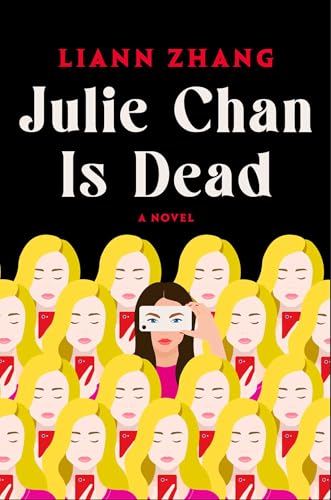
Book ReviewJulie ChanIs DeadReview, spoilers, ending explained, and the mirror test for everyone who has ever looked at their phone and thought, this cannot be healthy.
There are books you read for fun, and there are books that make you question your own reflection. Julie Chan Is Dead is the latter. It doesn't want to be your favourite book. It wants to get under your skin and stay there.
The novel opens with Julie Chan — not an influencer, not a star, just a supermarket cashier and invisible girl — finding the dead body of her estranged identical twin sister, Chloe Van Huusen. Chloe was everything Julie wasn't: rich, beautiful, sponsored, seen. She was a fashion-forward internet personality with brand deals and curated brunches. Julie, by contrast, exists in the margins — not in the romantic, main-character-energy kind of way, but in the forgettable, ignored kind of way.
So when she finds Chloe lifeless in her apartment, what does Julie do? She logs into Chloe's phone. She answers her messages. She uploads a post. She becomes her. And what follows is not a classic switcheroo or a glamorous impersonation story. It's slow-burn psychological horror disguised as a coming-of-age narrative.
Breaking It Down: What Each Layer Is Really About
The Setup
One Dead Influencer. One Living Twin. A Lie That Grows Louder Every Day.
Julie doesn't become powerful when she steps into Chloe's life. She becomes haunted. She isn't playing dress-up — she's committing identity fraud with emotional stakes so high you'll find yourself sweating through benign sentences. As she steps into Chloe's designer shoes, she doesn't just mimic her sister's routines. She starts inhabiting the version of Chloe that the internet wanted to believe was real.
Don't expect a tight plot wrapped in red string and police tape. There's no detective chasing Julie. No cliffhangers every chapter. The real suspense comes from watching her lose herself — slowly, expertly, and with chilling precision. Each chapter peels away a piece of Julie's identity until you're left wondering who she even is anymore. And whether that was the point all along.
The Prose
Sharp Enough to Leave Paper Cuts
Liann Zhang's prose is quiet, clipped, and devastating. You won't find purple flourishes or indulgent metaphors. You'll find restraint that feels almost surgical. Every sentence is intentional. Every pause is loaded. There is no wasted space in this novel, which makes every word feel like a clue.
Reading Zhang feels like reading someone's carefully crafted apology — one they'll never send. The tension simmers in the silence between what Julie feels and what she says, between what she reveals and what she edits. The result is a novel that reads like a curated Instagram feed: perfectly filtered and deeply unsettling. It reminded me of Yellowface by R.F. Kuang — the same ice-cold precision, the same merciless gaze turned on the machinery of image-making.
The Argument
An Autopsy of Influencer Culture That Cuts Deeper Than Likes and Follows
This isn't just a thriller. It's an autopsy of how easily we collapse a person into a brand. How someone's pain becomes part of their "story arc." How tragedy, when well-lit, becomes engagement. Julie doesn't know how to be an influencer — she just knows how to copy one. As she fakes her way through brand meetings, beauty launches, and Instagram captions, Zhang keeps asking a question no one likes to say out loud: is there a real person under all this content? And was there ever?
Julie's performance of Chloe is only slightly more conscious than what most influencers do every day. That's the part that makes you put the book down for a moment and look at your own phone differently.
The Underneath
This Isn't a Mystery. It's a Disintegration.
The real horror isn't that Julie gets away with it. The real horror is that you understand exactly why she does it. Not the fraud, necessarily — but the craving underneath it. The craving to be seen. To be loved. To be envied. To matter. Zhang builds this craving so carefully and so precisely that you catch yourself rooting for Julie — and then feel immediately dirty about it.
Is she trying to become Chloe? Or is she trying to erase herself? The book refuses to answer cleanly. There's no resolution that lets you off the hook. Just silence where the answer should be. And that silence, as Zhang deploys it, is genuinely deafening.
"You'll understand the hunger to be looked at — even if it means disappearing in the process."
— Sara Alba · Brewtiful Living · On Julie Chan Is Dead
The Hot Takes: Unfiltered
Opinions that required a warning label. Click to uncover.
Julie Chan Is Dead gets shelved with thrillers because of the dead body in chapter one and the identity fraud premise. But this is not a thriller. There is no mounting dread toward a reveal. There is no twist. What there is instead is a psychological disintegration so precisely observed that it functions more like literary fiction with thriller scaffolding. The category sells it to the wrong reader and lets down the right one. If you go in expecting Freida McFadden pacing, you will be frustrated. If you go in expecting to be unsettled by something slower and more surgical, you will not put it down.
Chloe is dead before the novel begins. We only ever know her through Julie's observations of her archived content, her apartment, her drafts folder, her DMs. And yet she's more vivid than almost any living character in the book. Zhang does something precise here: she shows us Chloe the way the internet showed us Chloe — curated, cropped, selective — and lets the gaps speak. What Chloe was actually like, what she actually felt, who she actually was when the phone was down: none of that is accessible. Just as it wouldn't be to Julie. Just as it wouldn't be to us. The novel enacts the very thing it's critiquing.
The novel ends without resolution. Not ambiguously — conclusively unresolved, which is different. Zhang doesn't leave threads hanging by accident. She refuses resolution on purpose because resolution would be a lie. There is no clean version of what Julie did. There is no version of this story where she emerges healed, punished in a satisfying way, or transformed into someone coherent. She is still fractured. She is still performing. And the world — the internet, the brands, the followers — has largely moved on. Which is the most honest ending this story could have had, and the most uncomfortable one to sit with.
The Structure: How It Unfolds
Click each stage to expand. The last two contain spoilers — flagged clearly.
Before EverythingJulie, Invisible. Chloe, Everywhere. +
We meet Julie in her margins — supermarket shift, one-bedroom rental, no particular trajectory. We understand Chloe only through what Julie has seen from a distance: the feed, the deals, the curated life that exists in parallel to the one they both came from. The contrast isn't dramatic. It's the specific quiet of someone who has watched someone else become everything they couldn't. Zhang establishes the hunger before the crime.
The BodyJulie Finds Chloe. Then Picks Up Her Phone. +
Chloe is dead. Julie calls no one. She doesn't panic in the expected way — she observes. And then, with a clarity that is both chilling and entirely human, she unlocks the phone. A notification. A DM. A brand asking for a post. Julie answers it. The decision happens in a sentence. Zhang doesn't dramatise it. That restraint is the most frightening choice in the book.
The PerformanceInfluencer Chloe Is Alive. Online, At Least. +
Julie moves into Chloe's apartment. Wears her clothes. Attends her meetings. Posts her content. She is not a natural — she is methodical, reading Chloe's drafts like instruction manuals, studying her captions like scripts. The followers don't notice. The brands don't notice. The algorithm certainly doesn't notice. Zhang is making a specific argument here about what it actually means to be "authentic" online, and it is not a comfortable one.
⚠ SpoilersThe Fractures Begin +
⚠ Spoiler content aheadPeople who knew Chloe start to notice the gaps. Not the big ones — those are surprisingly easy to paper over — but the small ones. The wrong reference. A different cadence. The absence of a particular kind of warmth that apparently Chloe had and Julie has never been able to manufacture. Julie doesn't panic. She adjusts. She edits. She iterates. The performance becomes more rigorous the more it's tested, which is its own kind of horror.
⚠ Major Spoilers — Ending ExplainedWho Is Julie Now +
⚠ Major spoilers — ending explained aheadThe novel's final movement asks the question it has been building to: is there a Julie left? She has been Chloe for long enough that the original version of herself feels like a persona she used to perform. Zhang doesn't give you a clean reckoning — no arrest, no confession, no cathartic moment of self-reclamation. What you get instead is something quieter and more disturbing: Julie, still going. Still posting. Still performing. The world moving around her, indifferent. The question of who she is left deliberately, permanently unanswered.
The Mirror Test
Interactive · Self-AssessmentAre You More Julie or Chloe?This book holds a mirror up. Let's see what it finds.
Question 1 of 5
01
You're at a party. Someone takes a group photo. Your first instinct is —
02
You see someone living the life you want. Your reaction, honestly —
03
Your online presence vs. your actual life —
04
Something bad happens to you. Your first thought is —
05
This book will make you feel —
You're Julie.The Invisible One · The Watcher · The Hungry Ghost
You exist in the margins, and you know it. You're not invisible because you have nothing to offer — you're invisible because you never quite found the right language to announce yourself, and by the time you did, everyone else was already talking. The craving in this book is your craving. The envy is yours. The moment Julie picks up that phone and becomes her sister? You'll understand it completely, even if you wish you didn't. This book was written for you. Read it at 2am. You already know you will.
You're Chloe.The Brand · The Surface · The One Who Was Also Drowning
You know how to perform. You know how to frame things. You have thought about your "story arc" more than once and you're not fully comfortable with how natural that came to you. Here's what this book will do: it will make you wonder if anyone actually sees you, or just the version of you that you've made available. That's not a warning. It's a promise. You will finish this book and look at your own feed differently.
You're Both.The Honest Answer · The Uncomfortable One · The Most Interesting Reader
You're aware of the performance and you do it anyway. You know the gap between your life and your feed and you maintain it anyway. You understand Julie's hunger and Chloe's armour because you've deployed versions of both. This makes you the most interesting reader this book will have — and the one who will sit with it longest after it's done. Zhang wrote this for exactly you. It will not be comfortable. Read it anyway.
The Part That Will Stay With You
Julie Chan Is Dead isn't about death. It's about erasure. It's about the ways women disappear — behind usernames, behind aesthetics, behind more successful sisters. It's about the version of yourself you killed off quietly, hoping someone might mourn her.
This book won't give you closure. It won't make you feel better. It will make you think. And then, when you're alone, scrolling mindlessly and comparing your life to someone's carefully cropped grid, it will whisper: remember me?
The question at the heart of this novel — is there a real person under all this content, and was there ever — is not one Zhang answers. She just keeps asking it in different ways until you feel sick. Which is, as it turns out, exactly the right approach.
Read it if you…
Have ever felt invisible next to someone who seemed to have everything
Think about your online persona more than you're comfortable admitting
Loved Yellowface and want something equally unsparing about image and identity
Can handle a book that asks questions and refuses to answer them cleanly
Skip it if you…
Need plot momentum and neat resolutions to stay engaged
Are in a fragile place — this book about erasure won't soften that
Want a thriller, specifically — this is slower and more literary
Are on a social media detox and don't want it disrupted
Best Read With
The Full Atmosphere. You'll Need It.
Leftover takeout and a vague sense of dread that you can't quite place.
Your phone turned face-down, because this book makes you hate your own feed.
A playlist of songs that remind you of your worst decisions. You know the one.
The text you almost sent at 1:52am last week. The one that's still in your drafts.
A willingness to sit with questions that don't resolve. This book doesn't do resolution.