The Housemaid’s Secret Review, Summary & Ending Explained | Brewtiful Living
Book Review · The Housemaid Series
I Called It a Snore Fest. Then The Housemaid's Secret Turned Around and Slapped Me.
I stopped halfway, wrote it off, and moved on. Then I went back — and the second half did something I did not see coming. Now I'm 62% into The Housemaid Is Watching, and Enzo is testing every charitable instinct I have left.
By Sara Alba · Brewtiful Living · April 2026
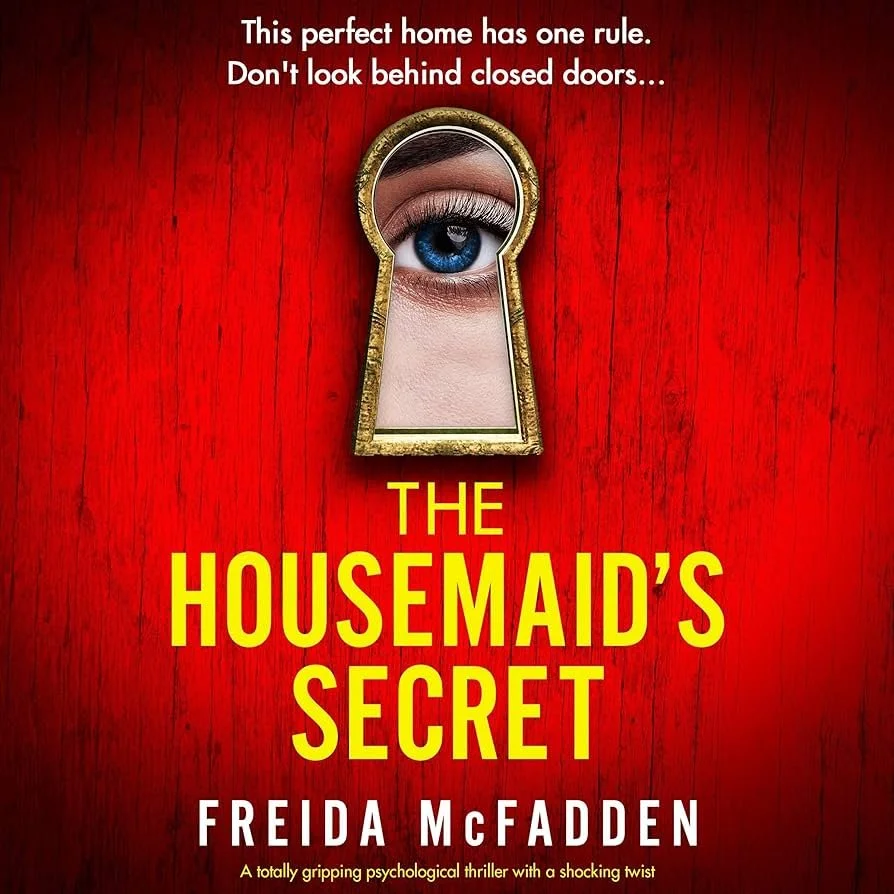
Image via Brewtiful Living / Squarespace media library
Let me be honest with you, because that is sort of the whole point of this site. I picked up The Housemaid's Secret by Freida McFadden fully expecting to love it. I had already read and reviewed the first book in this series, and I called it psychological sabotage in the best way. So naturally, I assumed the sequel would be more of the same.
It was not. At least, not at first.
The first half of this book is, and I said this out loud while reading it, a snore fest. There. I said it. I am not taking it back. The pacing dragged. The setup felt repetitive. I kept waiting for the floor to drop out the way it had in book one, and it just... did not. I put it down. I posted about it. I moved on with my life.
Then I went back. And right in the middle — like, almost exactly at the halfway point — something cracked open in this novel that I was completely unprepared for.
Quick answer
Is The Housemaid’s Secret worth reading? Yes, but only if you are willing to survive the slower first half. The middle had me accusing the book of crimes against pacing. The second half made me continue to book three. Annoying, but persuasive.
The Housemaid’s Secret Summary
Millie is back, now working as a housekeeper for Douglas Garrick and his wife Wendy — a woman who seems to be living a picture-perfect life behind very thick, very locked doors. Wendy rarely leaves the apartment. She flinches. She apologises constantly. She is clearly in danger.
Millie, being Millie, cannot walk away. What begins as a slow, overly cautious domestic thriller pivots around the midpoint into something genuinely unsettling. McFadden does what she does best: she makes you question the person you thought you understood — and then she makes you question yourself for questioning them.
Here is what I think McFadden was doing with that slow first half, now that I have the benefit of having finished it: she is conditioning you. She is teaching you how to read Wendy, and she is doing it deliberately and patiently, because the payoff requires you to have made certain assumptions early on. The snore fest was, in retrospect, a trap I walked straight into wearing clown shoes and literary confidence.
"McFadden builds her women the way a good con artist builds trust: slowly, deliberately, with just enough warmth to make you forget you should be suspicious."
— Brewtiful Living
That is both the frustration and the genius of this book. You cannot rush it. The things that bored me in the first half are the exact things that made the second half work. She earns the twist the hard way.
Who Is Wendy in The Housemaid’s Secret?
There is a character in this book — Wendy, the wife — who stuck with me long after I put it down. She is the kind of woman who looks, on the surface, like a victim. Soft, quiet, perfectly maintained, married to money, rarely seen without a reason. Everything about her optics says: helpless.
I have written about a real woman who gave me a similar feeling.
Kouri Richins is a real Utah woman charged with allegedly poisoning her husband with fentanyl in a Moscow mule — and then, while under investigation, publishing a children's book about coping with losing a father. I wrote about her in depth because, like Wendy, she is a case study in the kind of woman we collectively fail to read correctly. The performance of grief, the manicured exterior, the way money and domesticity can function as camouflage.
Wendy is fictional. But the archetype she represents is not. And McFadden, intentionally or not, has written a portrait of that archetype that will make you look twice at the next woman you immediately categorise as a victim.
The Wendy Archetype vs. The Real World
Fiction and true crime collide in the most uncomfortable ways
Without giving away every beat: Wendy is not the passive victim Millie — and the reader — has been trained to see. The dynamic between Wendy and Douglas is revealed to be something far more complex and far more disturbing than simple domestic abuse. McFadden flips the script on who holds power in that apartment, and she does it in a way that feels earned rather than cheap.
What lands hardest is not the reveal itself but what it says about how quickly we assign the role of victim to certain women — and how that assumption can be weaponised. Wendy knows exactly what she looks like. She has cultivated it.
That is the line where fiction and true crime blur uncomfortably. And it is the reason I immediately went and bought book three.
Is The Housemaid’s Secret a Sequel?
The first book is tighter. More claustrophobic. The kind of read that makes you paranoid in the best way. If you have not read it yet, or if you watched the Amazon movie adaptation and are wondering how different the book actually is, I covered all of that in my deep-dive comparison.
The Housemaid's Secret is a slower build, and it asks more patience from the reader. But I think it is doing something slightly different from the first book. Where book one manipulates through claustrophobia, book two manipulates through misplaced empathy. It is a different weapon and it cuts differently.
The Housemaid’s Secret Characters and Pacing Problem
My honest reading experience, mapped
Engagement 0–25%
7/10
Engagement 25–50%
4/10
Engagement 50–75%
9/10
Engagement 75–100%
10/10
My advice: if you hit 50% and feel nothing, give it ten more pages. The turn is close.
Push through the middle. That is the only advice I have. If you are at 40% and thinking about putting it down — I see you, I was you — just push to 55%. If you are not hooked by then, it is genuinely not for you. But if McFadden's writing works on you the way it worked on me, you will not put it down again.
Women who perform what the world expects
This is a theme that keeps surfacing in the things I write about, whether fiction or real life. The Idaho murders. The Baldoni lawsuit and the narrative machinery around it. Kouri Richins with her grief book. And now Wendy, standing in a penthouse apartment performing helplessness for whoever is watching.
What McFadden keeps returning to — across both books — is the question of who gets believed and why. It is not just about gender, though gender is always somewhere in the room. It is about the stories we have been taught to recognise. Victim looks like this. Abuser looks like that. Guilt looks like the other thing. And then reality walks in and scrambles the whole template.
That is uncomfortable. It is supposed to be.
The Housemaid’s Secret Ending Explained
Spoilers, spiritually. The ending works because it weaponizes your empathy. You think you know what Wendy represents. You think Millie knows too. Then McFadden turns the lights on and lets you see the trap from a different angle. It is not subtle, but it is effective, and frankly subtlety is not why any of us are standing here with book three already open and actively provoking me.
Should You Read The Housemaid’s Secret?
Yes — but with this caveat: do not go in expecting book one. This is not the same pace, the same claustrophobia, or the same kind of psychological assault. It is slower, quieter, and in some ways sneakier. The first book makes you paranoid. This one makes you complicit, which is ruder because now you have to sit with yourself.
And I am now 62% into The Housemaid Is Watching, which means McFadden has done her job and I have once again rewarded the behaviour. Enzo, however, is on thin ice.
Series update
Book three is now in progress: I am 62% into The Housemaid Is Watching and Enzo is genuinely testing me. The series deserved a better send-off than whatever this is currently doing. Naturally, an upcoming post is coming soon, because apparently I enjoy being emotionally inconvenienced by fictional men.
The Housemaid's Secret earns its twist the hard way — by boring you into the wrong assumptions first. Push through the middle. Wendy will make it worth it.