20 Fun Facts About The Little Mermaid (Including the Alyssa Milano Connection)
20 Fun Facts About
The Little MermaidThat Still Feel Fake
Including the Alyssa Milano connection nobody talks about, the dark original fairy tale, Ursula's real inspiration, and trivia questions to settle every argument. The sea witch understood branding. We are still processing it.
Ariel · Ursula · Disney Renaissance · VHS Era · Alyssa Milano · Little Mermaid Trivia · 1989
Released in 1989, The Little Mermaid did not just give Disney a hit — it helped relaunch an entire era of animated obsession, introduced the world to a sea witch with theatrical instincts most Broadway directors would kill for, and made an entire generation emotionally over-invested in forks. Here are 20 fun facts about The Little Mermaid, including the ones that still feel made up.
There is a reason The Little Mermaid still gets treated like royalty in the Disney canon. It landed at exactly the right time, mixing fairy-tale drama with Broadway-sized musical ambition and visuals that felt lush, romantic, and just a little dangerous. Ariel was curious, impulsive, dramatic, and convinced she could make life-changing decisions with almost no information. In other words: iconic. The film gave every part of the story a memorable texture. The underwater world feels vivid. Ursula arrives with maximum menace. Sebastian is stressed in a way that reads across generations. And the songs are so embedded in culture at this point they barely count as soundtrack tracks. They are public property in the collective brain.
20 Fun Facts About The Little Mermaid
It kicked off the Disney Renaissance
The Little Mermaid is widely credited as the film that pushed Disney animation back into serious cultural relevance after a difficult decade. Its success gave the studio the confidence and resources to make everything that followed.
The original fairy tale is devastating
Hans Christian Andersen's 1837 story ends very differently. The mermaid doesn't get the prince, every step on land feels like walking on knives, and she ultimately dissolves into sea foam. Disney made some significant adjustments.
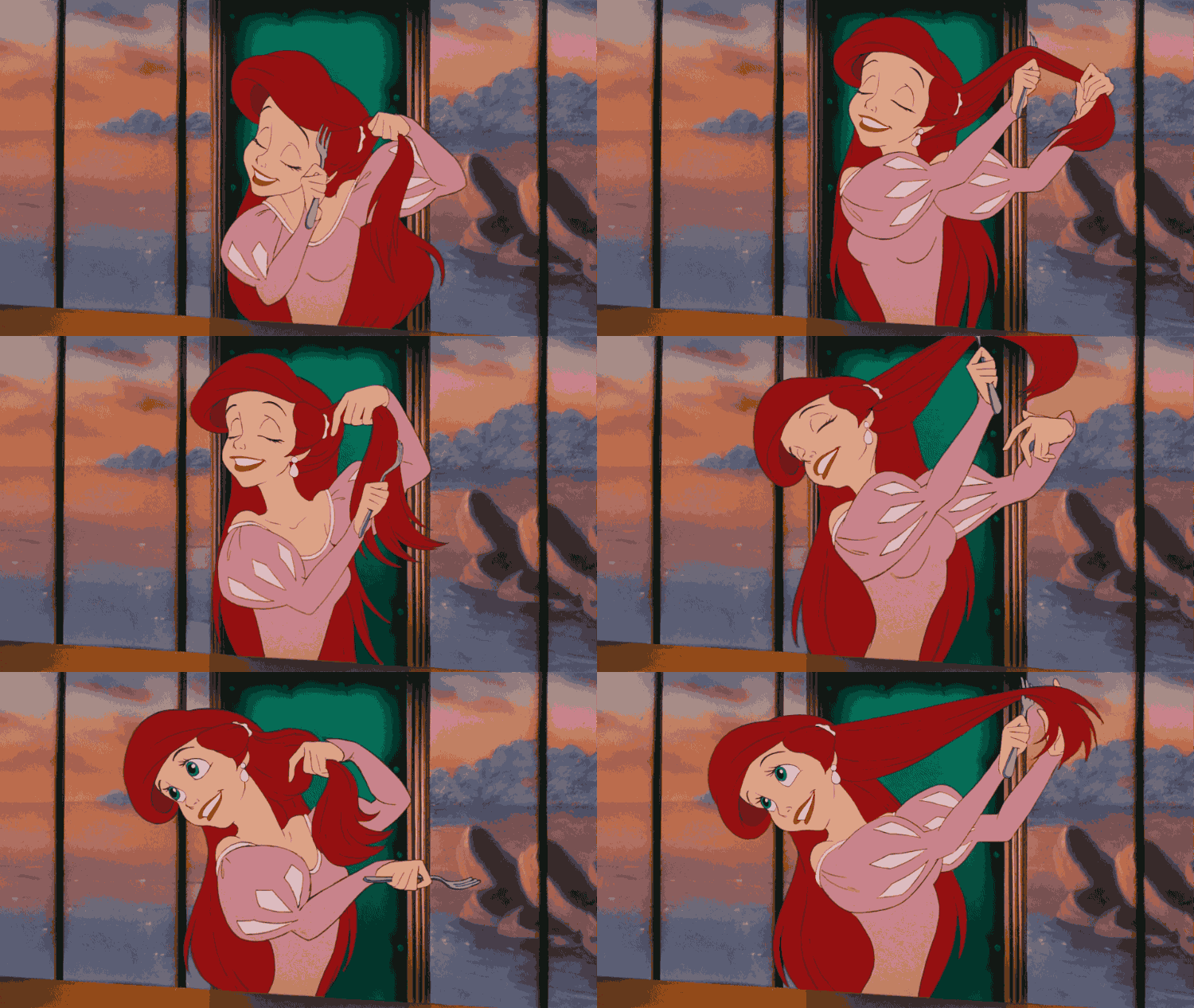
Ariel's red hair was completely deliberate
Animator Glen Keane made her hair bright red specifically so she would pop against the blue-green underwater palette. It worked. Few animated silhouettes are that instantly recognizable from a single glimpse.
Jodi Benson recorded in the dark
To capture the emotional isolation of "Part of Your World," the recording studio lights were turned off completely. The result is one of the most effective emotional performances in Disney history. Method recording works.
Computer animation made its Disney debut here
The ballroom scene — where Ariel and Eric dance — used early CGI to create the rotating chandelier. A quiet technical first that quietly changed what Disney could do with a camera.
It won two Academy Awards
Best Original Score for Alan Menken and Best Original Song for "Under the Sea" — which feels less like a surprise and more like the Academy doing the bare minimum. The music was always going to win something.
"Part of Your World" almost got cut
Studio executives reportedly felt the song slowed the film down. Howard Ashman fought to keep it. Given that it became one of the defining songs in the Disney canon, the executives were, diplomatically speaking, wrong.
Sebastian's accent changed everything
Sebastian was originally planned with a British accent. The Caribbean-inflected performance Samuel E. Wright brought to the role is what gave "Under the Sea" its entire musical identity. One decision. Completely different film.
Ursula was inspired by Divine
The drag icon Divine was the visual and energetic inspiration for Ursula's design — the oversized glamour, the theatrical entrance, the sense that she is performing for an audience at all times. The connection explains everything about why Ursula works so well.
A live-action model swam for Ariel
Actress Sherri Stoner acted out Ariel's underwater movements on film so animators could study realistic human movement. She is the uncredited reason Ariel's swimming looks as fluid and specific as it does.
Ashman wrote "Poor Unfortunate Souls" as a showstopper
Howard Ashman's theatrical background gave the song its structure — it functions like a Broadway villain number, complete with build, callback, and a closing note that makes absolutely sure you know Ursula has won the scene.
The directors went on to shape the whole era
Ron Clements and John Musker didn't stop here. They directed Aladdin, Hercules, The Princess and the Frog, and Moana — shaping Disney's musical storytelling across three decades.
It saved Disney animation
The studio's animation division had been underperforming for years. This film's commercial and critical success gave Disney the confidence to make the Renaissance films that followed — effectively rescuing the department.
Ariel's tail required custom colour mixing
The green-to-aquamarine gradient across her tail required a specific custom process to get right. Getting it to catch light correctly underwater while reading clearly in darker scenes took considerable effort from the colour department.
The animals in "Kiss the Girl" were deliberate
The fireflies, frogs, and birds that accompany the song were designed to feel like the natural world conspiring on Ariel's behalf — the scene was animated to feel romantically inevitable rather than staged or convenient.
The VHS sold 10 million copies
The home video release was one of the best-selling VHS releases of the era. A generation grew up watching this film on tape until the tape degraded, at which point they simply bought another one.
It turned mermaids into a lifestyle
Before 1989, mermaids were mythological creatures. After The Little Mermaid, they became an aesthetic, a costume category, a hair colour aspiration, and a personality type. Ariel did that essentially alone.
The composers had never scored a Disney film
Alan Menken and Howard Ashman were Broadway composers — this was their first animated feature score. The theatrical instinct they brought is precisely why the music feels bigger and more emotionally ambitious than standard animated fare.
Triton's trident needed its own colour logic
The gold lightning from King Triton's trident was chosen to contrast with the ocean's blue palette, and animators spent considerable time getting the energy to read as powerful and specific rather than generic cartoon magic.
People who haven't seen it in 30 years can still sing it
The real benchmark isn't awards or box office. It's whether the soundtrack survived thirty years in the brain without being maintained. It did. That is structural dominance, not nostalgia.
Was Ariel Based on Alyssa Milano?
Yes — partly, and the full story is actually better than the simple version. Animator Glen Keane assembled a vision board of real people while developing Ariel's look, and Alyssa Milano was one of the key references. At the time, Milano was 16 and starring in Who's the Boss? — she exemplified exactly what a relatable teenage girl looked like to late-1980s audiences, and Keane drew from her face shape and hairstyle while building the character.
Milano didn't know any of this while it was happening. She found out the following year when Disney contacted her to host the Disney Channel special The Making of The Little Mermaid. She confirmed the connection on The Wendy Williams Show in 2013: "I didn't know that when it was going on, but they asked me to host the making of The Little Mermaid and it came out that the drawing and likeness was based on pictures of me from when I was younger."
The nuance worth knowing: Milano wasn't the only reference. Christie Brinkley was also on the vision board, and Sherri Stoner served as the live-action movement model — she's the reason Ariel's underwater swimming looks the way it does. Ariel was built from multiple inspirations, which is actually more interesting than the single-person origin story that gets passed around. But yes — if you've always thought Ariel looked like a cartoon Alyssa Milano, you were correct, and it was not a coincidence.
Some Disney classics age into polite nostalgia. The Little Mermaid did something more annoying and more impressive. It stayed iconic.