What Is a Zaghrouta? Sabrina Carpenter's Coachella Arab Culture Moment Explained
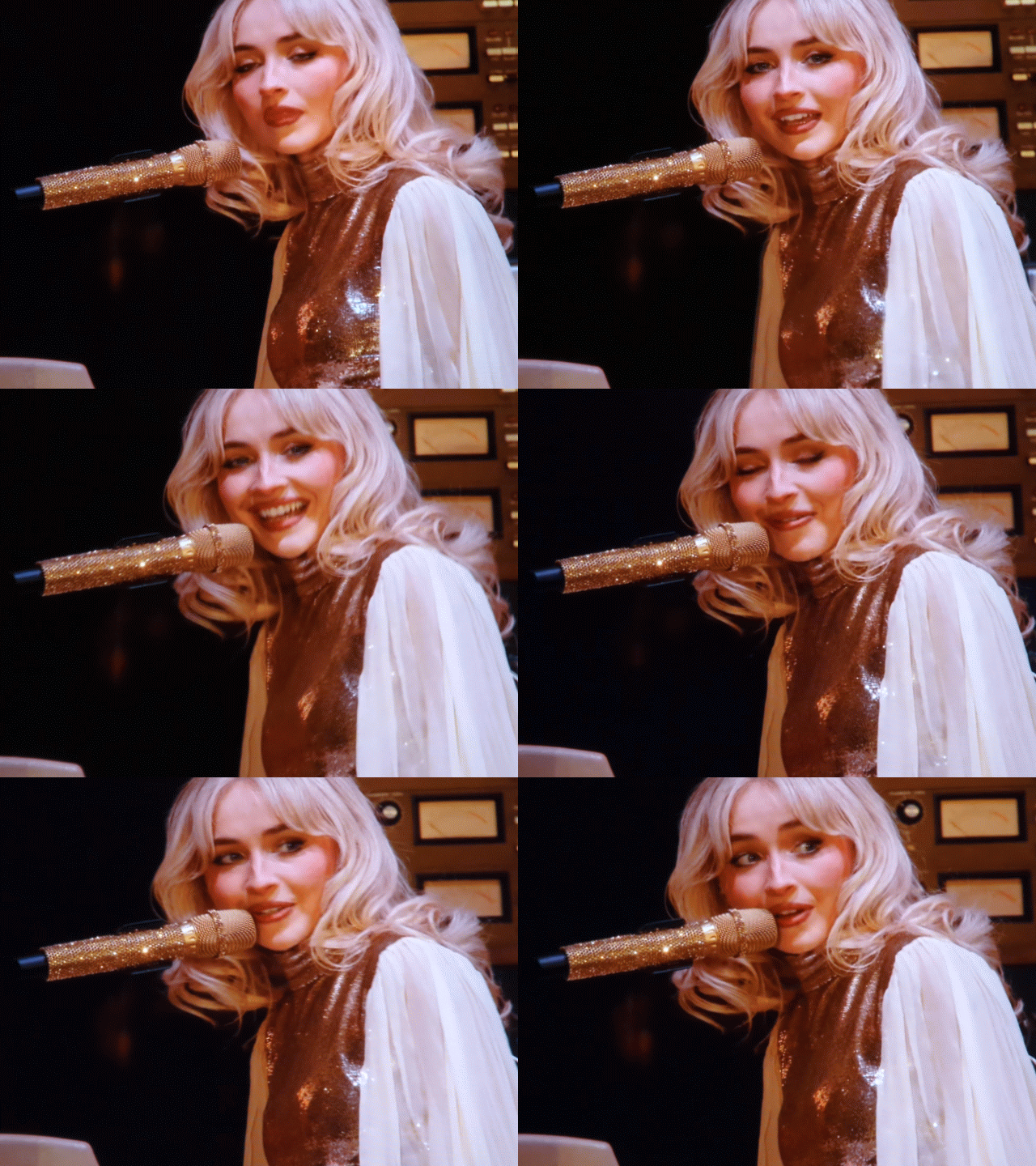
"I think I heard someone yodel"
What Is a Zaghrouta? Sabrina Carpenter's Coachella Arab Culture Moment Explained
She called it a yodel. It was a zaghrouta — an ancient Arabic and North African celebration sound. The full verbatim exchange, the apology, and the cultural history behind the moment.
Coachella Weekend 1 had no shortage of jaw-dropping moments: nuns, showgirls, Chippendale dancers, Sam Elliott, Will Ferrell, Susan Sarandon. But one unscripted exchange between Sabrina Carpenter and a fan in the crowd became the most-discussed moment of the entire festival. It did not involve pyrotechnics. It involved a sound.
A beautiful, ancient, deeply meaningful sound — one that has been ringing out across weddings, celebrations, and joyful gatherings from Marrakech to Baghdad for thousands of years. The zaghrouta (also called zaghareet, or ululation in English). And when it rose from the crowd at the Empire Polo Club on the night of April 10, 2026, Sabrina Carpenter had no idea what she was hearing.
So — what exactly is a zaghrouta?
Zaghrouta (زغرودة) · Zaghareet (زغاريط)A zaghrouta — plural: zaghareet — is a traditional Arabic and North African ululation: a high-pitched, wavering vocal sound produced by rapidly moving the tongue back and forth while emitting a sustained loud note. Used across the Middle East and North Africa at weddings, births, graduations, and festivals as an expression of collective joy, the zaghrouta predates Islam and is not tied to any religion. Arab Christians, Muslims, Jews, and Druze all celebrate with it. In English it is described as ululation, though that word captures only the mechanics — not the weight.
The Full Verbatim Exchange at Coachella 2026
Sabrina Carpenter headlined night one of Coachella 2026 on Friday, April 10 — a milestone she'd publicly predicted two years earlier when she ad-libbed "Coachella, see you back here when I headline" at a previous set. She delivered: Hollywood fantasy sequences, Broadway-style choreography, cameos from Sam Elliott, Will Ferrell, and Susan Sarandon, a seven-minute Sarandon monologue during a costume change.
Midway through the set, as Carpenter sat at her piano for a quieter moment, a fan in the crowd let out a zaghrouta — the traditional way of showing love and celebrating in Arab culture. Carpenter heard something unfamiliar. Here is exactly what was said:
The clip spread across TikTok, X, and Instagram within hours. The sticking point for many was not the initial confusion — nobody expects every artist to know every global cultural tradition — but that Carpenter continued to dismiss the sound even after the fan had explained it was a cultural celebration. The "this is weird" came after the explanation, not before. That's the line that landed differently.
We covered the full picture — the extraordinary set alongside the uncomfortable moment — in our complete Coachella 2026 analysis, including a breakdown of the apology and what it got right and wrong. Both things can be true simultaneously.
Sabrina Carpenter's Apology — The Full Text
"my apologies i didn't see this person with my eyes and couldn't hear clearly. my reaction was pure confusion, sarcasm and not ill intended. could have handled it better! now i know what a Zaghrouta is! I welcome all cheers and yodels from here on out"
— Posted on X, April 12, 2026
The apology landed mostly well. No PR-speak, no staged empathy, no blame-shifting — she owned the moment, said she had learned something, moved on with characteristic lightness. The "I welcome all cheers and yodels from here on out" even drew laughs from people who were otherwise frustrated. The criticism that remained: the apology explained the confusion but didn't quite name why the continued dismissal after the explanation was the specific problem.
"Nobody is saying she needs to know everything about every culture. But she continued to call it weird even after she was given a full explanation. That's the part."
— Fan response widely circulated on social media after the clip went viralWhat a Zaghrouta Actually Is — The Cultural Context
To understand why this moment resonated so deeply in Arab communities, you have to understand what the zaghrouta is to the people who use it. This is not a quirky trend or a novelty. It is a living expression of collective joy that predates most modern nations — and predates Islam itself, dating back to pre-Islamic rituals across North Africa and the Arabian Peninsula.
From Moroccan weddings to Lebanese graduation parties, from Egyptian family gatherings to Palestinian communities in diaspora around the world, the zaghrouta is how Arab women in particular have long said: we are happy, and we are here. It is a sound that carries generations of memory. The fan who performed it at Coachella was not doing something strange. She was doing something ancient — and directing it at the person on the stage as an act of love and celebration.
Crucially: it is not exclusive to any religion or ethnicity. Arab Christians use it. Arab Jews use it. Arab Muslims use it. Druze communities use it. It belongs to a culture and a geography, not a faith. Some social media posts following the Coachella moment erroneously described it as an "Islamic chant" — that is inaccurate and worth correcting.
Coachella 2026 produced another unexpected cultural moment the same weekend: the Justin Bieber "Hallelujah" set that also went viral and sparked its own conversation about crowd participation and what actually lands at a festival in 2026.
The Last Time a Zaghrouta Went Mainstream: Shakira at the Super Bowl 2020
This was not the first time a zaghrouta caught a Western audience off-guard and sparked a moment of global education. At the 2020 Super Bowl Halftime Show, Shakira — who is of Lebanese and Colombian descent — performed a zaghrouta mid-set, sending millions of viewers into an immediate and largely joyful Google spiral. What is that sound? Where does it come from? Why is it so striking?
That moment landed as celebration. This one landed differently — because the sound was not just encountered but actively dismissed, on a microphone, to a stadium and a global livestream, even after it had been explained. The Shakira moment was a discovery. The Coachella moment was a test of what you do with the unfamiliar when someone is watching.
The Bigger Conversation This Moment Opens
This incident is not really about Sabrina Carpenter. She is not a villain here. She is a 26-year-old pop star in the middle of one of the biggest nights of her career, reacting in real time to something she genuinely did not recognise. The confusion was authentic. The sarcasm was her default comedic register.
But the moment pulled back a curtain on something worth examining: how quickly "I've never heard this before" can slide into "this is weird," and how that slide — especially when amplified to a stadium and a global livestream — can feel dismissive to people whose identity is woven into that unfamiliar sound. For Arab fans in that crowd, and the millions watching at home, the zaghrouta is not exotic. It is home. Hearing it called "weird" in front of tens of thousands of people stings in a specific way, even if no harm was intended.
The loudest and most measured voices, including many Arab fans who said they loved Carpenter's music, landed in the middle: a learning moment, handled imperfectly, apologised for honestly, and hopefully absorbed. If there is a takeaway, it is this: cultural fluency is not about knowing everything. It is about what you do when you encounter something unfamiliar. Curiosity beats dismissal. "Tell me more" beats "this is weird."
The question of what accountability looks like in practice versus what it looks like in the comments section is one we keep returning to. Some of those stories end with a genuine reckoning. Some end with no apology at all. The Shireen Afkari case is instructive comparison.
The zaghrouta is not weird. It is wonder — if you know how to listen for it.
— Brewtiful LivingSomewhere in that crowd on Friday night, a woman let out a sound that meant joy. That meant: I see you, Sabrina, and I am happy to be here. The gap between how we think our reactions read and how they actually land on other people is worth examining — well beyond the celebrity context.
What's your read on this?
Tell us where you land on the Sabrina Carpenter / zaghrouta moment at Coachella 2026: