20 Ways to Make Your Bathroom Feel Like You’re Coping
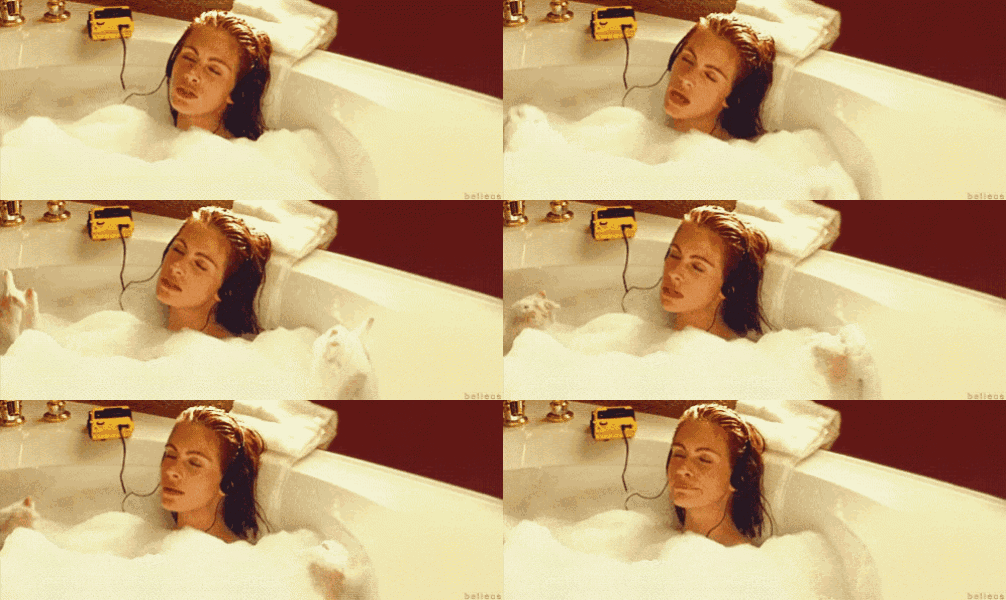
Your Bathroom Is Not a Spa.
It’s an Exit Strategy.
The modern bathroom has become less about hygiene and more about disappearance. Softer lighting, better towels, steam, scent, and a locked door. Civilization, but with grout.
The Bathroom Became the Last Socially Acceptable Place to Disappear
People say they want a spa bathroom. Usually, what they want is a room where nobody can ask them for anything. A spa sounds better because it has robes, citrus water, and a reception desk staffed by someone who whispers. But the actual fantasy is simpler and slightly less marketable: a door that closes, water loud enough to blur the rest of the house, and fifteen minutes in which no one expects you to perform usefulness.
The bathroom is strange because it is both ordinary and sacred. It is where people brush their teeth, rinse coffee cups they should not have brought in, cry quietly, inspect pores with the seriousness of a forensic unit, and stare at themselves under lighting that should legally require a warning label. It is the least glamorous room in the home and, increasingly, the one people are redesigning with the most emotional urgency.
This is not just a decor trend. The rise of spa bathroom ideas, everything showers, shower eucalyptus bundles, warm lighting, peel-and-stick tile, towel warmers, and hotel-inspired bathrooms belongs to a larger cultural pattern. People are exhausted by open-plan living, constant notifications, visible productivity, and the expectation that every domestic space should photograph well. The bathroom offers the rare permission to be unavailable. Not unreachable in a romantic way. Unreachable in the way a person hiding behind a locked door with wet hair and no patience is unreachable.
This same hunger for calmer rooms shows up across Brewtiful Living’s style coverage, especially in our pieces on home decor, dopamine decor, and the broader weirdness of interior trends. A bathroom is just the smallest room where the culture’s obsession with self-soothing becomes impossible to miss.
People say they want a spa bathroom. What they usually want is a room where nobody can ask them for anything.
That is why the old listicle version of the spa bathroom feels too thin now. A bamboo bath tray is not meaningless, but the object is not the story. The story is why we are suddenly desperate to stage private recovery inside the smallest room in the house. A bathroom retreat is not just about towels. It is about control. It is about sensory management. It is about turning one small room into a temporary border between the self and everyone else’s needs.
Research note: A UCLA study on home environments and cortisol found that women who described their homes as cluttered or unfinished showed flatter daily cortisol patterns, a stress-related finding that has been widely discussed in environmental psychology. The bathroom may be small, but visual clutter still matters because the nervous system does not politely ignore twelve half-empty bottles and a drawer full of expired skincare.
Why Everyone Suddenly Wants Their Bathroom to Feel Like a Boutique Hotel
Luxury hotel bathrooms have always understood something residential bathrooms forgot during the era of builder-grade everything: the bathroom is choreography. Good hotel bathrooms direct the body. The light is low, the surfaces are clean, the towel is too large, the shower pressure suggests someone has considered human suffering, and every object seems to exist because someone decided it should. Nothing is looking for its charger. Nothing is yelling from another room.
That hotel feeling is now bleeding into home design because people want domestic life to feel less improvised. Bathroom design trends for 2026 are full of language around spa sanctuaries, wellness features, ambient lighting, heated floors, smart storage, natural textures, and biophilic elements. The vocabulary is predictable, but the hunger behind it is real. People are not only upgrading bathrooms because they want nicer tile. They are trying to make one corner of their home feel less like an obligation.
Quiet luxury interiors helped push this along. A bathroom no longer needs to look flashy to signal status. In fact, the more expensive version is often calmer: warm stone, brushed metal, wood vanities, soft whites, concealed storage, a freestanding tub for people who apparently have time, and lighting that does not make everyone look like they have been summoned for questioning. It is wealth expressed as quiet function. Very tasteful. Very convenient. Very good at hiding the receipt.
A spa-like bathroom is not a room stuffed with “spa” products. It is a room that reduces friction. Better lighting, fewer visible labels, warmer texture, cleaner storage, and one or two sensory cues will do more than twenty decorative objects quietly collecting dust and resentment.
The Nervous System Design Trend Nobody Is Calling by Name
The phrase “nervous system design” sounds like something a wellness influencer would say before selling a $78 magnesium spray, but the idea underneath it is not ridiculous. Interior design has always affected mood. The current difference is that people are beginning to name the body’s response. A room can feel harsh, overstimulating, cold, cramped, cluttered, echoing, or exposed. A room can also feel warm, coherent, quiet, soft, breathable, and safe enough to let the shoulders drop.
The bathroom is especially powerful because it layers multiple sensory inputs at once: light, temperature, water, scent, sound, texture, reflection, privacy. That is why a bad bathroom feels so aggressively bad. Fluorescent lighting, cold tile, poor ventilation, cluttered counters, scratchy towels, and a rattling fan can turn five minutes at the sink into an unpaid clinical trial in irritation.
Why warm lighting feels safer
Harsh overhead lighting is not morally wrong, but it does seem personally committed to making everyone look unwell. Warm ambient lighting, low-watt bulbs, sconces, and dimmable fixtures make bathrooms feel less surgical because they soften contrast and reduce visual strain. Research into light and stress continues to evolve, but recent work from the University of California has examined how amber lighting may be associated with more relaxing physiological responses than harsher light conditions. Translation: the bathroom does not need to resemble an airport gate at 5:40 a.m.
Steam, heat, and the ritual of coming back into your body
Hot water has a boringly obvious appeal, which is probably why people underestimate it. A warm shower creates temperature change, sound masking, muscle relaxation, and tactile repetition at once. The everything shower trend has wrapped this in consumer language, but the structure matters. Wash hair, condition, exfoliate, shave, rinse, moisturize, robe, sit on the edge of the tub in silence like a woman in a Scandinavian crime drama. It is not only hygiene. It is sequencing. It gives the body a script when the mind is fried.
Why soft textures matter more than people admit
Texture is where a bathroom either becomes soothing or starts acting like a municipal facility. Turkish towels, waffle robes, soft bath mats, linen shower curtains, and an oversized bath sheet all change the sensory tone of the room. None of this is profound. It is just physical comfort, which has been weirdly rebranded as luxury because modern life keeps asking people to ignore the fact that bodies have opinions.
The rise of the everything shower says less about beauty and more about overstimulation.
The “Everything Shower” Is Not Really About Hygiene
The everything shower became a social media ritual because it offers a clean narrative: enter chaotic, exit restored. Of course, the internet made it aesthetic. The products lined up. The robe waiting. The candle lit. The hair mask doing whatever hair masks promise to do. The camera angle pretending this is all casual, which is how we know it is not.
Still, underneath the performance is a genuine need. The everything shower is a maintenance ritual, but also a decompression ritual. It creates a private sequence that belongs to the person doing it. No conversation, no productivity, no explaining. Just steps. In a culture where women’s routines are often treated as either vanity or discipline, the bathroom becomes a place where both things can hide inside something more basic: recovery.
This is where wellness culture gets annoying and occasionally useful. It packages ordinary human regulation into branded rituals, then sells back the feeling of having a body that is not under siege. The eucalyptus bundle, the towel warmer, the body oil, the scalp scrub, the amber bulb, the expensive-looking soap dispenser. Some of it is silly. Some of it works. Many things are both. A salt lamp can be scientifically overpromised and still make a room look less like a landlord’s afterthought. We contain multitudes. Unfortunately, so does the bathroom drawer.
What your nervous system should know: Aromatherapy is not a substitute for medical treatment, but reputable health sources including Cleveland Clinic and Johns Hopkins describe inhaled essential oils as a complementary practice that may support relaxation for some people. The scent is not magic. The brain simply takes smell personally.
What Actually Makes a Bathroom Feel Calm
Calm bathroom design starts before the decorative phase. The most effective upgrades usually belong to one of five categories: light, texture, scent, sound, and clutter. This is useful because it stops people from buying random objects and calling it a retreat. A bathroom does not become soothing because it contains a wooden stool and three amber bottles. It becomes soothing because the room’s sensory messages stop fighting each other.
Lighting
Replace cold bulbs with warm ones, add a plug-in sconce if the room allows it, or use a small lamp where safe. Candles are useful, but do not turn the room into a Victorian fire hazard. Restraint, unfortunately, remains undefeated.
Texture
Upgrade the things your body touches first: towels, robe, bath mat, shower curtain. A bathroom can look average and still feel generous if the textiles are doing their job.
Scent
Eucalyptus, lavender, rosemary, citrus, and cedar can all work, but ventilation matters. A calming scent should not feel like being trapped inside a candle aisle with ambitions.
Sound
A waterproof speaker, a quieter fan, or simple white noise can shift the room. Sound masking matters because privacy is not only visual. It is also acoustic.
Visual clutter is not morally neutral
Visible clutter is not a personal failure, despite what the internet’s most terrifying label makers would like you to believe. It is simply input. The more objects the eye has to process, the louder the room becomes. Bathrooms are especially vulnerable because products multiply quietly. One shampoo becomes three. One serum becomes a small unstable democracy. Suddenly the counter looks like a pharmacy with unresolved family tension.
Matching containers, closed storage, a slim cabinet, drawer organizers, floating shelves, and a ruthless edit can change the atmosphere quickly. This is not because minimalism is morally superior. It is because fewer visible decisions make the room easier to inhabit. The goal is not to erase personality. The goal is to stop the bathroom from reading you its inventory every morning.
The Renter-Friendly Bathroom Renaissance
Not everyone can install heated floors, a stone shower, or the kind of freestanding tub that suggests generational wealth and possibly a housekeeper. Most people are working with rental tile, limited storage, a medicine cabinet from a previous civilization, and lighting designed by someone who had never experienced self-esteem.
This is why renter-friendly bathroom upgrades have become their own design category. Peel-and-stick wallpaper, removable floor tiles, over-door hooks, tension shelves, adhesive towel rings, plug-in sconces, washable bath mats, and better shower curtains offer the pleasure of transformation without the legal thrill of losing a deposit. They also speak to a larger design shift: people want homes that feel emotionally specific, even when the lease says they are temporary.
If you are already circling the softer side of interiors, this belongs beside our coverage of cottagecore and home decor. The bathroom version is less pastoral fantasy, more “please let this rental tile stop ruining my mood before 8 a.m.”
Renter-friendly bathroom upgrades that actually change the room
- Peel-and-stick wallpaper: best for a powder room or one accent wall where steam will not immediately ruin the dream.
- Removable floor tiles: useful when the current floor looks like it has seen things and refuses to discuss them.
- A linen shower curtain: softer than plastic, less visually chaotic, and much better at pretending the room has a point of view.
- Plug-in warm lighting: especially useful if the overhead fixture feels hostile.
- Closed storage: because open shelving is only charming until it reveals every product you have emotionally purchased.
Twenty Bathroom Upgrades That Lower the Volume
These are not commandments. They are options. The point is not to buy all twenty and create a wellness bunker with a towel budget. The point is to identify the kind of discomfort your bathroom is currently producing and fix that first. Too bright? Start with light. Too cold? Start with texture. Too cluttered? Start with storage. Too emotionally vacant? Add art, scent, warmth, or a shower curtain that does not look like it was selected under duress.
Wellness Design Is Slowly Replacing Perfection Design
For years, the aspirational home was designed for being seen. Open shelves, bright white kitchens, minimalist bathrooms, identical amber bottles, neutral everything, no visible mess, no visible life. It photographed well. It also made ordinary existence feel like a set violation. The new bathroom trend is softer because people are tired of rooms that only perform calm. They want rooms that actually help them feel less activated.
This is why the best bathroom retreat ideas are not always the most glamorous ones. A quiet fan can matter more than marble. A warmer bulb can do more than a luxury soap. A cabinet that hides clutter can feel better than a shelf styled with objects nobody is allowed to touch. Good wellness design is not always visible. Sometimes it is the absence of irritation.
The 2026 direction in interiors is moving toward invisible wellness: better light, cleaner air, gentler materials, softer acoustics, natural texture, flexible routines, and rooms that support ordinary recovery without announcing themselves as healing environments. That last part matters. A bathroom should not need to declare itself a sanctuary. It should simply stop making everything worse.
Before buying decor, ask what the room is currently doing wrong. Too cold, too bright, too cluttered, too echoing, too sterile, too damp, too visually busy. Fix the irritation first. Add the pretty things after. Pretty things placed on top of irritation just become themed irritation.
A Bathroom Will Not Fix Your Life. It Might Lower the Volume.
No bathroom upgrade is going to resolve burnout, emotional labour, digital fatigue, bad boundaries, rising costs, or the fact that everyone now seems to need a password reset at the exact moment you sit down. A towel warmer is not liberation. A eucalyptus bundle is not therapy. A bath tray is not a personality reconstruction device, despite what certain product descriptions imply.
But a better bathroom can lower the volume. It can make the beginning and end of the day feel less abrasive. It can give the body softer information. Warm light. Clean surfaces. Good water pressure. A towel that does not feel like punishment. A scent that belongs to you. A place to put the products. A room where the door closes and the world is expected to wait.
That is the whole idea. Not a spa. Not a renovation. Not another performance of wellness. Just a small room that understands the assignment: let the person inside disappear for a while, then come back out slightly less feral.
How do you make a bathroom feel like a spa?
Start with sensory design: warm lighting, soft towels, reduced clutter, calming scent, better storage, and comfortable textures. A spa-like bathroom is less about buying themed products and more about making the room feel quiet, intentional, and easy to use.
What colours make bathrooms feel calming?
Warm whites, soft creams, muted blush, stone grey, sage, clay, mushroom, pale wood, and soft taupe tend to feel calmer than stark white or cold grey. The goal is to soften the light and reduce visual harshness.
What is the everything shower trend?
The everything shower is a longer self-care shower routine that can include hair care, exfoliation, shaving, body care, skincare, and decompression rituals. It is often presented online as beauty maintenance, but it also functions as a structured reset.
Why are wellness bathrooms trending?
Wellness bathrooms are trending because people are designing homes around stress recovery, sensory comfort, and privacy. The bathroom is one of the few rooms where solitude still feels socially acceptable, making it a natural place for decompression rituals.
What bathroom upgrades are worth it for renters?
Good renter-friendly upgrades include peel-and-stick wallpaper, removable floor tiles, better towels, a linen shower curtain, no-drill shelving, over-door storage, warm plug-in lighting, reusable soap dispensers, and a towel warmer.
Does lighting affect how relaxing a bathroom feels?
Yes. Lighting affects visual comfort, mood, and perceived atmosphere. Warm, dimmable, or layered lighting generally feels softer than bright overhead lighting, especially in bathrooms where mirrors amplify harshness.