I came to Freida McFadden the way most people do — reluctantly, then compulsively, then at 2am lying to myself about "just one more chapter." We've already written about why Freida McFadden reads like a drug and every word of it stands. The pacing is ruthless. The chapters are short. The unreliable narrator energy is dialled up to eleven. The Housemaid earned my loyalty. Which is exactly why The Housemaid's Secret feels like such a betrayal.
The Housemaid's Second Act Is a Snore
Brewtiful Living · The Bookshelf · Updated Review
The Housemaid's
An updated review, a partial retraction, and documented premature rage.
The Housemaid's
Snore Secret
Proved Me Wrong
An updated review, a partial retraction, and documented premature rage.
Freida McFadden · Book 2 of the Housemaid Series · Updated Review by Sara Alba · Brewtiful Living · February 2026
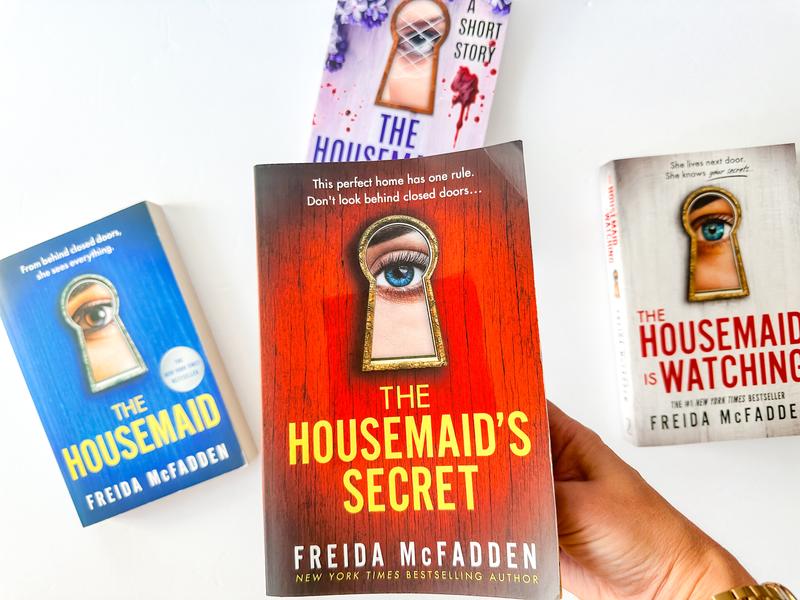
Image via Barnes & Noble customer photo archive
The Housemaid's Secret
zzz
Sara's Verdict
Coming from someone who got completely, embarrassingly addicted to book one — this hurts a little. The tension is gone. The dread is mostly absent. What remains feels vaguely procedural. Skip it.
Current Verdict After Finishing
The original verdict is staying below because it is funny and, at the time, sincere. But the updated verdict is this: The Housemaid’s Secret is not as strong as book one, and the middle still drags, but the ending does enough to make my earlier dismissal look premature. Annoying. Deeply inconvenient for my brand.
Let me be honest with you — because that is, quite literally, what this site exists for. The Housemaid's Secret is a disappointment. Not a catastrophe. Not unreadable. Just a slow, creeping snore of a book that I have put down three times and cannot bring myself to finish.
Future-Sara Annotation
This is the part where I need to add a correction without fully surrendering my dignity. I still understand why I reacted this way. The middle of this book does feel flatter than book one. But because I now have the follow-up piece, The Housemaid’s Secret Proved Me Wrong, this original review needs context. I was not entirely wrong. I was just standing too close to the middle and calling it the whole house.
Official Record · Times This Book Has Been Put Down
✕
Time 1 · Chapter 8 · Stakes feel lower
✕
Time 2 · Chapter 14 · Twist telegraphed
✕
Time 3 · Somewhere in the middle · Just... snoring
For comparison: The Housemaid (book 1) was put down zero times. It was finished in one sitting at an hour that should not have been a reading hour.
Book 1 vs Book 2 — What Got Lost
The Housemaid
VS
The Housemaid's Secret
Millie is someone you can't fully trust. Every page, a ticking clock.
Narrator
Millie returns. The tension around her mostly doesn't.
Slow-creeping, specific, earned. Lives in your nervous system.
Dread
Mostly absent. Replaced by something that feels procedural.
Felt genuinely dangerous. Something real to lose.
Stakes
Feel lower. Book put down at chapter eight.
Made you feel stupid for not seeing it coming. In the best way.
Twists
Telegraphed. Book put down at chapter fourteen.
Finished in one sitting. The book didn't ask. It demanded.
Pacing
Put down three times. Currently in a standoff on the nightstand.
The locked bedroom door. One of the best single thriller details in recent memory.
Signature detail
Nothing with that same punch. Not yet. Possibly never.
What Changed After I Finished The Housemaid’s Secret
The problem with reviewing a thriller before finishing it is that thrillers are rude. They wait. They let you get smug. They let you write several paragraphs about how the dread is gone, how the pacing has softened, how the whole thing feels procedural. Then the ending walks in and starts moving furniture around.
Finishing The Housemaid’s Secret did not erase every criticism. The book still takes longer than it should to become dangerous. The first book still has a stronger hook, a better single-location trap, and that locked-bedroom detail that remains obscenely effective. But the ending gives the sequel a second pulse. It makes the middle look less like dead space and more like delayed detonation.
What Still Stands
The sequel is slower. Book one is stronger. The middle does drag. I did put it down three times, and I am not retracting the evidence. There were witnesses. Mostly coffee cups.
What Changed
The final act sharpened the whole thing. It restored danger, reframed the structure, and reminded me that McFadden knows how to save the receipt until the exact most irritating moment.
"The dread that made book one so unsettling is mostly absent, replaced by something that feels vaguely procedural. That's the word. Procedural."
— Sara Alba · Brewtiful Living · The Housemaid's Secret · Honest ReviewThe first book worked because Millie was a character you couldn't fully trust, and that tension made every single page feel like a ticking clock. The Housemaid's Secret tries to recreate that energy and loses it somewhere around chapter eight. The stakes feel lower. The twists feel telegraphed. We broke down what made the original so effective — the intimacy, the trapped narration, the way it recruits you as an accomplice. Book two attempts the same recruitment and the machinery doesn't quite catch.
There is also the Sydney Sweeney problem. I watched the movie, or enough of it to have Sydney Sweeney permanently installed as Millie, and now I cannot read a single page without seeing those faces — which completely destroys the whole point of an unreliable narrator. Half the tension of The Housemaid comes from not knowing exactly what Millie looks like in your own imagination. Once Hollywood casts someone, your imagination has left the chat. The movie made $133 million at the box office, a sequel is confirmed, and I am being haunted by the casting every time I try to engage with book two. This is not Freida's fault. This is cinema's fault. I am choosing to be annoyed at cinema.
There is also a larger question lurking underneath all of this. Freida McFadden currently has six books scheduled for 2026 alone. Six. The hustle is enormous and deserving of respect. She had three of the top twenty bestselling books of 2025, which is genuinely staggering. But quantity and quality are not always the same thing, and with The Housemaid's Secret, what gave was the tension — the thing that made the first book feel dangerous and alive.
Did The Ending Save The Housemaid’s Secret?
Partially, yes. Not in a way that makes it better than The Housemaid, because let’s not say things just to feel alive. But yes, the ending improves the book in retrospect.
That matters because McFadden’s entire appeal is structural. She does not just write twists. She writes reading momentum. When she is at her best, you are not admiring the prose like a person in a tasteful sweater. You are flipping pages with the dead-eyed urgency of someone checking if the stove is still on.
The ending of The Housemaid’s Secret brings back some of that urgency. It does not fully fix the slower middle, but it explains why the book was withholding instead of failing. Those are different crimes. One gets a harsher sentence.
Why This Updated Review Needed the Follow-Up
The follow-up article, The Housemaid’s Secret Proved Me Wrong, exists because the final pages changed the reading experience enough that the original review needed a witness statement.
This page is now the archive of the first reaction. The follow-up is the retraction. Together, they are basically a two-part psychological thriller about a woman arguing with her own Goodreads energy.
The Divorce — Why Sara Is Still Pre-Ordering It
Being disappointed by a second book doesn't always mean you're done with an author. Sometimes it just means you're paying attention. And the premise of The Divorce sounds exactly like the kind of unhinged I need in my life right now.
Coming May 26, 2026 · Pre-Ordered. No regrets.
The Divorce
Freida McFadden · May 26, 2026 · StandaloneNaomi is living what looks like the perfect life — until her husband kicks her out, hires the best divorce lawyers in the city, drains their accounts, and immediately takes up with someone twenty years younger. Instead of accepting defeat, Naomi fixates. On the girlfriend. And then things get progressively darker in ways that sound both deeply unhealthy and extremely my business.
Why it works on paper
The obsession element that made the original Housemaid electric is back. A woman about to do something unhinged and arguably justified.
Why it matters that it's standalone
No second book waiting to disappoint. One contained, messy, domestic spiral from beginning to end. No sequels to haunt it.
What I'm hoping for
Proof that McFadden still has the tension. The dread. The thing that made book one feel dangerous. Book two lost it. The Divorce gets one shot.
What I'm prepared for
Confirmation that she's writing faster than she should be. Either outcome is interesting. Either way I finish it in one sitting and report back.
That is the pitch. It works every single time. The obsession element that made the original Housemaid so electric — the sense of a woman making a series of escalating decisions that are understandable and alarming in equal measure — is what's been promised. And crucially, it's a standalone. What makes McFadden work at her best is the self-contained trap — the locked room, the contained situation, the relationship with no obvious exit. The Housemaid's Secret had Millie's history spreading across two books, which diluted the claustrophobia. The Divorce starts fresh. That's the right move.
Mark May 26th in the calendar. The Divorce is either going to prove that McFadden still has it, or confirm she's writing faster than she should be. Either outcome is interesting. Either way I'll be reading it in one sitting and reporting back on The Bookshelf. That's a promise. And unlike Millie, I keep mine.
Should You Read The Housemaid’s Secret?
The Housemaid's Secret — Should You Read It?
Read it if you...
Are a completionist who genuinely cannot function without reading every book in a series, in order
Haven't seen the movie and your Millie is still entirely your own
Have lower expectations after reading this review and can enjoy it on its own terms
Want to form your own opinion and are deeply suspicious of my taste
Skip it if you...
Loved book one and want to protect that memory — life is short, your reading list is longer
Have already watched the movie and Sydney Sweeney is living rent-free in your head
Need a book that maintains momentum — this one doesn't
Can go straight to The Divorce in May — a standalone with a premise that actually sounds dangerous again
Also on Brewtiful Living
→
The Housemaid: Book vs Movie — What made book one work and what the film does differently
→
Why Freida McFadden Feels Like a Drug You Can Read — the nine reasons book one was so electric, and why they matter
→
Yellowface by R.F. Kuang — A better use of your reading time right now, according to me
→
Severance by Ling Ma — Will ruin you quietly and thoroughly. Also a better use of your reading time.
I no longer think you should automatically skip The Housemaid's Secret unless you are a completionist. That was the old verdict talking, and she was tired. Life is short. Your reading list is longer. There are still better books waiting, yes. But this one did more by the end than I gave it credit for. And The Divorce is coming in May — which is either going to restore my faith in McFadden's dangerous mode or confirm that the machine is running faster than it should. I'll be there either way, reporting from the other side of one sitting, with an honest verdict and a cold coffee going warm.
— Sara Alba · Brewtiful Living · The Bookshelf · February 2026
The Housemaid's Secret
Freida McFadden
Book Review
The Divorce
Disappointing Sequel
The Bookshelf
More reads worth your time. And a few that weren't.
Browse the full Brewtiful Living Bookshelf →