Taylor Swift Has A Friendship Pattern. Blake Lively Is The Latest Data Point
TAYLOR SWIFT HAS A FRIENDSHIP PATTERN.
BLAKE LIVELY IS THE LATEST DATA POINT.
Everyone keeps asking if Taylor and Blake are still friends. That is the wrong question. The right question is: what does Taylor Swift actually do when a friendship becomes inconvenient? Four case files. One pattern. An AI-powered forensics widget you can interrogate. Pull up a chair.
Let's establish something before we do anything else: "Are Taylor Swift and Blake Lively still friends?" is a terrible question, and the fact that it's the most-searched version of this story tells you something about how the media has decided to frame it. The question implies two equally-positioned people navigating the same situation. That is not what is happening here and it has not been what's happening for a while.
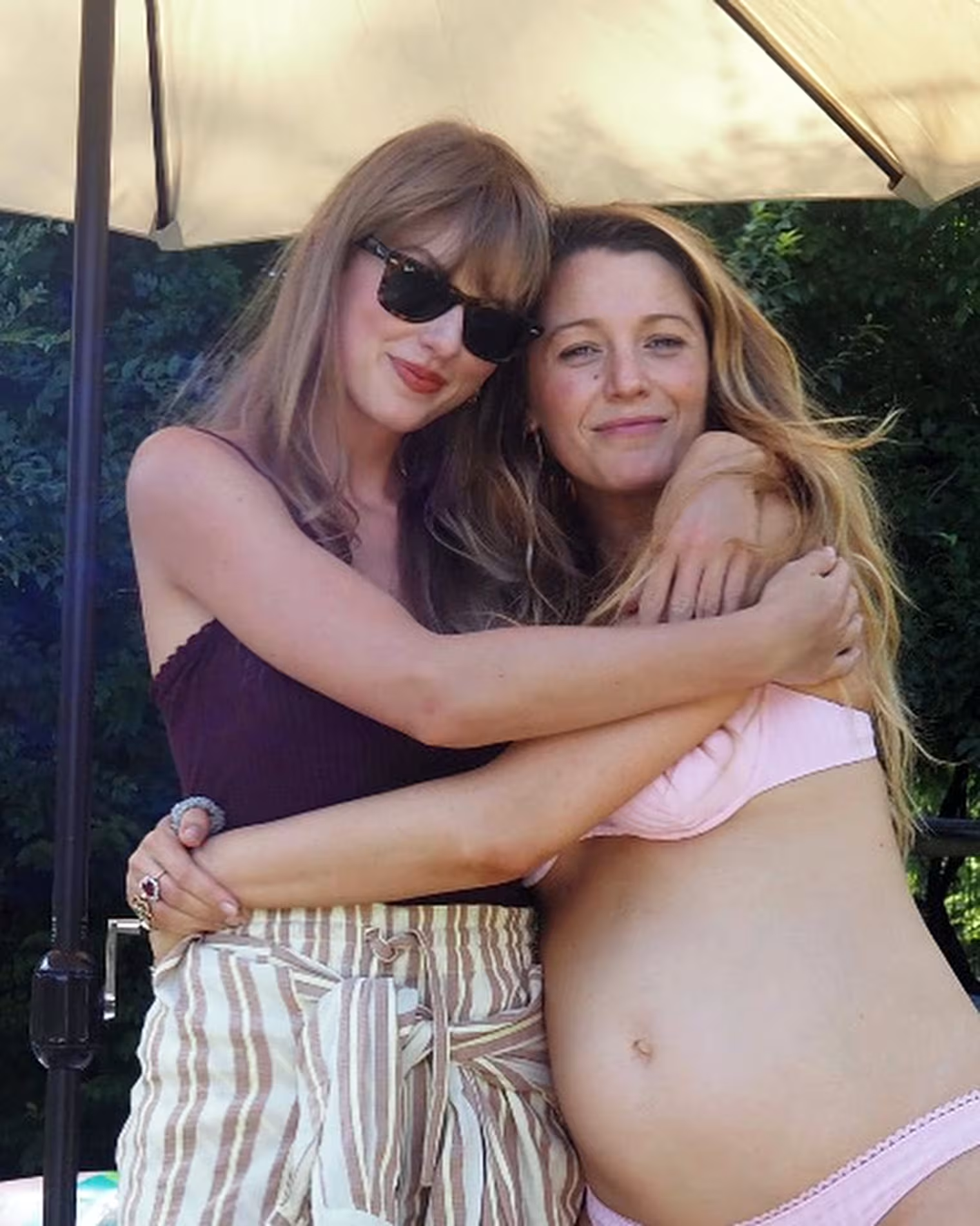
What is actually happening is more interesting. One source close to Blake Lively told the press that "losing Taylor's friendship is painful enough, but Blake's really scared about what it could mean for her career. Taylor has huge influence — if Hollywood were a high school, she'd be the head cheerleader. When she decides someone's out, everyone pays attention." Sit with that sentence for a moment. A woman is scared of the career consequences of losing a friendship. That is not a friendship between equals. That is an orbit. And one person is the sun.
The question worth asking is not whether Blake and Taylor are still friends. It is: what does Taylor Swift actually do when a friendship becomes a liability? Because we have four documented case studies now, and the pattern is specific, consistent, and remarkably well-evidenced.
"It's sad but sometimes when you grow, you outgrow relationships. You just have to figure out if they're healthy or not."
— Taylor Swift, Elle magazine, 2019. She wrote this. Keep it in mind.THE PATTERN —
Four Times, Same Playbook
Not a coincidence. A methodology.
Across Katy Perry, Karlie Kloss, Demi Lovato, and the 2024–2025 Blake Lively strain, the same sequence plays out with enough consistency to call it a system. First: the friendship becomes publicly associated with something Taylor finds inconvenient — a rival, a legal drama, a political alignment, an enemy's name. Second: Taylor withdraws quietly. No statement, no confrontation, just the slow absence of likes and text responses and public appearances. Third: the other person notices before Taylor addresses it. Fourth: the songs eventually tell the story she won't tell in words. Fifth: in some cases — Katy Perry being the most significant example — reconciliation happens, years later, when the inconvenient thing has sufficiently resolved.
None of this makes Taylor Swift a bad person. It makes her a very powerful one with a very specific operating system for friendships that acquire complications. The question is whether you're inside or outside that system — and Blake Lively, with a seventeen-month lawsuit that dragged Taylor into subpoenas and tabloids, spent most of 2024 and 2025 on the outside.
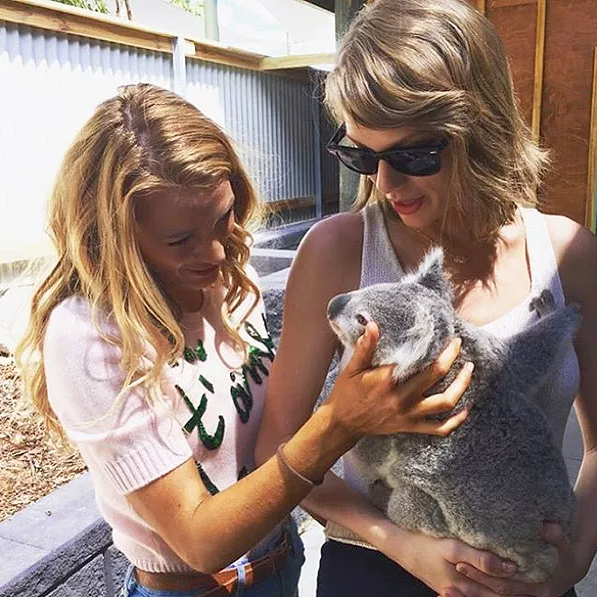
THE FRIENDSHIP WAS NEVER BETWEEN EQUALS. ONE PERSON HAS ENOUGH INFLUENCE TO AFFECT THE OTHER'S CAREER. THE OTHER KNOWS IT. THAT IS NOT A FRIENDSHIP. THAT IS AN ORBITAL RELATIONSHIP. AND TAYLOR IS THE SUN.
The Katy Perry case proves Taylor's system allows re-entry — but only after the offending party initiates reconciliation and sufficient time passes. Katy sent the olive branch. Taylor did not reach out. The lesson: if you want back in, you have to knock.
The Karlie case is the harshest in the file. The deeper the friendship, the colder the exit when the Scooter Braun connection was made. The fact that Karlie was moved from nosebleeds to VIP at the Eras Tour suggests some thaw — but the song "it's time to go" remains in the public record. Taylor's albums are the most honest thing about her. The albums say: this friendship is over.
The Demi case teaches us something important: Taylor's silence is not neutrality. When someone criticises the brand — not just Taylor personally, but the carefully constructed image — the silence is the severance. Demi criticised the squad. The squad stopped acknowledging Demi. Taylor never needed to say a word. The orbit just... closed around her absence.
Blake Lively is the only case in this file where the album evidence runs in her favour. "Cancelled" says: I like my friends when they're in scandal. That is Taylor staying. The lawsuit is over. The subpoena is over. The pattern says Taylor exits when the inconvenient thing is active — and re-enters when it resolves. Blake may have just had her Katy Perry olive branch moment, except Taylor wrote the song first.
THE ANSWER TO THE ACTUAL QUESTION
Are they still friends? Here is what the evidence says.Fine. You came for the answer, here it is: probably yes, probably rebuilding, probably privately. The Blake case is the only one in the forensics file where Taylor's album evidence runs in Blake's favour. "Cancelled" — widely interpreted as a song defending a friend in public scandal — is not the output of someone who has closed the door. It is the output of someone who is, in Taylor's characteristic way, making a public statement through a private-sounding medium.
The settlement removed the active lawsuit. The subpoena is gone. The main mechanism pulling Taylor into proceedings she didn't consent to enter no longer exists. The pattern suggests Taylor withdraws while the inconvenient thing is active and re-enters when it resolves. Blake's inconvenient thing resolved on May 5, 2026. We've tracked the full Baldoni timeline and the settlement changes the calculus entirely.
What will not recover is the dynamic. Blake now knows, with documented evidence, that she described Taylor's communication style as "a mass corporate email sent to 200 employees" in a text to Taylor herself. That sentence is in the legal record. It's the kind of thing you don't fully come back from, even if you come back. Some things get said during the strain and stay said even after the strain lifts.

THE PART THAT NOBODY WROTE
Why the "are they friends" question is the wrong frame entirely.Here is the thing that the four case files make clear when you read them together: Taylor Swift does not have friendships. She has a court. Some people are in it and some people are not. The people inside the court receive platform amplification, public endorsement, loyal silence during their scandals, and the occasional loyalty anthem. The people outside the court receive quiet disengagement, absence from guest lists, and — if they pushed hard enough to warrant it — a carefully worded lyric that the whole world will understand without a name ever being spoken.
This is not a criticism. It is a description. The court system is remarkably effective and it has produced genuine relationships — Travis Kelce's presence in her life looks, by every available measure, like actual love and actual partnership. Selena Gomez appears to be a genuine friendship that has survived genuine difficulty. But the squad-adjacent relationships — the Karlies and the Blakes and the Demis — function differently. They are proximate to power. And proximity to power is not the same as closeness.
Blake Lively is "scared about what losing Taylor's friendship could mean for her career." That sentence should be the headline of every article about this friendship. Not "are they still friends?" Not "what did the texts say?" The fact that one woman is genuinely afraid of the professional consequences of losing the friendship of another woman tells you everything about what kind of relationship this has been. And it tells you something about Taylor Swift's power in 2026 that is considerably more interesting than whether she liked Blake's Instagram posts.
Taylor Swift wrote in 2019 that "sometimes when you grow, you outgrow relationships." She wrote that sentence. She published it. It is now the most useful piece of evidence in the entire forensics file — not because it explains the Karlie situation or the Blake situation, but because it reveals the framework Taylor uses to process friendship exits. Outgrowing. Not failing. Not hurting someone. Outgrowing. As if the other person was a phase.
✦ ✦ ✦The forensics say Blake and Taylor are probably fine. The song defended her. The lawsuit is over. The orbit is likely open again. But the broader pattern — four case files, same playbook, consistent exit methodology — says something worth sitting with about what it means to be Taylor Swift's friend. Not whether she's a good person. She may be a wonderful person. But what it means, structurally, to be inside that orbit. To know that if you become inconvenient enough, the disengagement will be quiet, the songs will be coded, and the reconciliation, if it comes, will require you to send the olive branch first.
✦ ✦ ✦Blake Lively settled at breakfast and walked the Met Gala by dinner. That is not a woman in crisis. That is a woman closing one chapter and opening another. Whether Taylor is in that next chapter is a private matter. The public evidence says she probably is. The forensics say: with conditions. There are always conditions. That is what the pattern is.
THE FORENSICS
ARE IN. YOUR TURN.
Four case files. One pattern. One AI widget. You've done the reading. Now give us the take.
Is the "orbital friendship" model — where one person has enough power to affect the other's career — actually friendship, or something else entirely?
The album said "Cancelled" — Taylor defended Blake publicly through music. Does that settle the "are they friends" question or leave it open?
Karlie Kloss in the Eras Tour nosebleeds vs Blake Lively getting a loyalty anthem — what's the difference between these two friendships and why did they end so differently?
Blake being scared of career consequences from losing Taylor's friendship — is that a red flag about the friendship, or just an honest acknowledgment of how Hollywood power works?