Mackenzie Shirilla Is Smiling in Prison. Her Dad Lost His Job
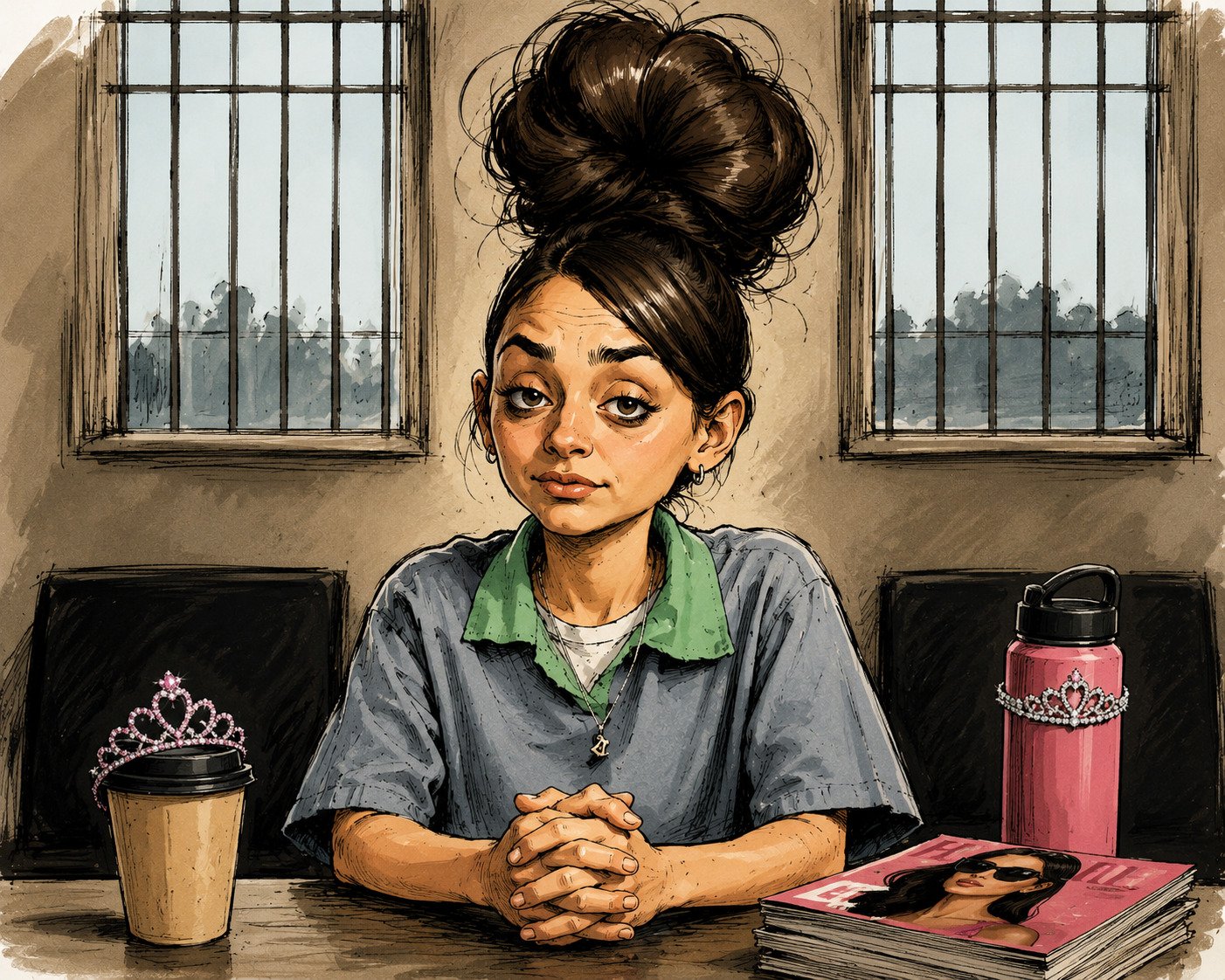
Mackenzie Shirilla Gave Netflix Remorse.
Her Parents Gave TMZ.
Everyone Else Got Receipts.
The Crash is streaming. A former inmate says Mackenzie was thriving behind bars. Her parents are doing interviews like this is a customer service dispute. Dominic Russo and Davion Flanagan are still dead. Let us document the circus.
If you have been following the Mackenzie Shirilla case, you already know the broad strokes. On July 31, 2022, in Strongsville, Ohio, a 17-year-old drove her Toyota Camry into a brick wall at 100 miles per hour without touching the brake. Her boyfriend, Dominic Russo, 20, and his friend, Davion Flanagan, 19, were killed instantly. Mackenzie survived — and so did her story, which has been buffed, polished, appealed, repackaged, and eventually handed to Netflix like a damaged luxury item being returned without a receipt.
In August 2023, Judge Nancy Margaret Russo found her guilty of 12 felony counts including four counts of murder, sentenced her to two concurrent 15-years-to-life sentences, and described her as "literal hell on wheels." She said Mackenzie had "a mission" and "executed it with precision." The mission, the judge said, was death.
The Ohio Supreme Court declined to hear her appeal. Her first parole hearing is scheduled for September 2037. She will be 33 years old. Dominic Russo would be 35. Davion Flanagan would be 34.
That was the ending everyone thought we had. Then Netflix dropped The Crash on May 15, 2026, and the whole thing cracked back open like a family group chat that should have stayed muted. If you're asking where is Mackenzie Shirilla now — she's at the Ohio Reformatory for Women in Marysville, with a parole hearing not until 2037. We've covered this case from the beginning — so here's everything that's happened since the cameras showed up.
The Netflix Documentary That Made Mackenzie Shirilla a Top-3 National Search
The Crash debuted at number two on Netflix in the United States. Within days, it was sitting at number one. For a case that had already been tried, convicted, appealed, and denied at the Supreme Court level, the internet was apparently not done with it.
The documentary's hook was that Mackenzie Shirilla had never spoken publicly. She never spoke to police. She never testified at her trial. In three years of conviction, appeal, and denial, she had said nothing on camera. Filmmakers Gareth Johnson and Angharad Scott spent months trying to change that. Under tight conditions — one hour, lawyer present off-screen — she agreed.
The result was not what she probably hoped for. It was less redemption arc and more recorded evidence that some people should never be given controlled lighting and a second narrative.
"I'm not a monster. I'm not saying I'm innocent. I was a driver of a tragedy, but I'm not a murderer."
Mackenzie Shirilla · Prison interview, The Crash (Netflix, 2026)She said she had no recollection of that morning. She said she had "excessive amounts of remorse." She said she was "big on the no intent." And at one point, she leaned off-camera toward her lawyer to ask whether she was coming across okay — whether she sounded "crazy" — before turning back to the lens to continue.
That moment — the lean, the check-in, the recalibration — said more than anything else in the interview. It was not a woman processing grief. It was a woman managing optics with the emotional temperature of someone checking whether her bangs looked weird on FaceTime. The filmmakers later revealed they were only permitted one hour with her, under conditions she negotiated in advance. She only said yes, it appears, if there were elements in her control. Which is always reassuring in a story about a 100mph crash into a brick wall. Very calming. Very normal.
What Former Inmate Kat Crowder Says Mackenzie Shirilla Was Really Like in Prison
The internet's reaction to the Netflix interview was largely the same: she doesn't seem remorseful. She seems coached. She seems fine.
Turns out, according to someone who spent six months in prison with her, fine is exactly right.
Kat Crowder, a former fellow inmate at the Ohio Reformatory for Women who has since become a social media influencer, gave an interview to People that landed like a second brick wall. Crowder spent six months alongside Mackenzie Shirilla in prison and says the version of her that appeared on Netflix bore no resemblance to the person she actually witnessed.
"From my observations of her in prison, she never had any behaviors that mirrored those of someone who was remorseful."
"She was always laughing, always smiling and happy — like it was never on her mind that she was serving two concurrent 15-to-life sentences because she killed two people."
"She thrived for fame. Even when I was in prison with her, she thought she was going to be the representative of the prison."
If Crowder's account is accurate, then the Netflix version was not a confession. It was a costume change. Same case, softer lighting, more controlled vocabulary, fewer inconvenient witnesses.
The representative of the prison. At 19. Serving life for double murder. Which honestly sounds less like remorse and more like a student council campaign sponsored by untreated main-character syndrome.
Crowder also noted that the version of Mackenzie who appeared in the Netflix interview — measured, emotional, quietly devastated — was "not the same Mackenzie that I witnessed in prison. The Mackenzie in that documentary is an entirely different girl."
Add to that the selfies and photos circulating online — the smiles, the full face of makeup, the general air of someone who has found her footing — and you have a portrait that does not align with the performance Netflix broadcast to the world. The woman in the documentary says she thinks about Dominic and Davion every day. The woman Kat Crowder describes sounds less like someone haunted by guilt and more like someone adapting extremely well to being the main character in a captive audience environment.
Steve Shirilla, The Dad: The Weed Comments, TMZ, and the Teaching Job He Lost
Unfortunately, we now need to discuss the parents. Specifically the part where they approached a double-fatality Netflix documentary with the energy of people defending a bad Yelp review.
Mackenzie's father, Steve Shirilla, was an art and digital media teacher at Mary Queen of Peace School, a Catholic school in Cleveland. He participated in the Netflix documentary alongside Mackenzie's mother, Natalie. The family's position throughout has been consistent: Mackenzie is innocent, the crash was an accident, and the justice system got it wrong. Their delivery has been less "devastated family seeking truth" and more "suburban crisis communications team accidentally locked itself in a room with Netflix."
In the documentary, Steve said this about his daughter's marijuana use:
"I don't have a problem with her smoking dope. If you're going to smoke a drug, that's the one I believe you should take."
Steve Shirilla · Netflix documentary, The CrashOn May 18, 2026, Mary Queen of Peace School emailed parents to inform them that Steve had been placed on administrative leave while the school investigated what it described as "poor judgement" in the documentary.
Steve then did what no grieving, image-conscious family should ever do under any circumstance: he went on TMZ Live and somehow made the situation worse. He explained that his comments had been taken out of context. He said the filmmakers had interviewed the family for two straight days and condensed it into short clips. He said he wasn't endorsing marijuana. He said, "Who am I to say who can smoke and who can't smoke."
He also called the prosecutor "lazy", comparing the case to a situation where a wife dies and investigators immediately suspect the husband. This is the kind of analogy you make when your internal PR department is a raccoon with a ring light. He said there was too much "omission of evidence." He said he didn't understand how marijuana use proved his daughter intentionally caused the crash.
The judge, in her verdict, said she could say exactly what caused the crash. She said Mackenzie had "a mission" and "executed it with precision." The mission was death. Steve Shirilla says the prosecutor is lazy. The Ohio Supreme Court says the conviction stands.
Steve Shirilla on TMZ: prosecutor is "lazy," comments were taken out of context, "who am I to say who can and can't smoke."
Natalie Shirilla in a follow-up 3News interview, asked whether Mackenzie should be in prison for aggravated vehicular homicide: shrugged her shoulders. Said "Not if it was medical."
Both parents, asked what they hope for Mackenzie's future: "That the truth will set her free."
The family seems determined to treat a double-murder conviction like a branding problem. Not a tragedy. Not two families permanently destroyed. A messaging issue. A Netflix edit. A prosecutor problem. A context problem. Anything, apparently, except the 100mph impact at the centre of the case.
It is one thing to love your child. It is another to build a public relations gazebo over two dead boys and ask everyone to admire the craftsmanship.
"Medical," she said, shrugging on camera like they were discussing allergy medication and not a 100mph crash that killed two teenage boys.
At a certain point, the public stops seeing a devastated family fighting for justice and starts seeing a suburban PR campaign that accidentally wandered into true crime.
What the Victims' Families Are Watching
While the Shirilla family does press, Dominic Russo's sister, Christine, is watching.
"She's a psychopath, a stone-cold psychopath. If you knew her and how self-absorbed she was in person and then you hear her calls now from prison, she has no remorse. She's continuing to lie. My family just wants to know what happened in the car that day."
Christine Russo · Dominic Russo's sister, WKYC interview, 2026Christine also said something worth sitting with: "She keeps appealing and appealing."
Dominic Russo's family will never know what happened in that car. Because Mackenzie Shirilla has never told them. Not in three years of hearings. Not in the Netflix interview. Not anywhere. She says she has no recollection. She says she can't explain it. She is, she says, big on the no intent.
Davion Flanagan's father, Scott Flanagan, is also featured in the documentary. Two families. Two sons. Two sets of parents who didn't get to watch their kids graduate, get married, build something. They got a documentary that hit number one on Netflix while the woman who killed them poses for photos in prison and her family tries to reframe the whole thing like a misunderstood semester abroad.
Mackenzie Shirilla's Sentence, Appeals, and the 2037 Parole Hearing
For anyone who thinks this story has a second act coming, here is the legal timeline.
What This Case Is Actually About
The Shirilla case sits at a very specific intersection that keeps coming up in true crime: the gap between what a person performs for the camera and what they actually are. We have now seen Mackenzie Shirilla perform remorse on Netflix. We have now heard from someone who watched her not perform remorse in prison for six months. We have seen her father perform outrage on TMZ. We have seen a Catholic school decide that performance had limits.
We have seen The Crash hit number one on Netflix, which means millions of people watched and formed opinions about a case that was legally resolved three years ago. And we have seen those millions of people collectively arrive at the same place: something is off. Something does not add up.
The math stopped mathing somewhere around the part where she leaned off-camera to check whether she was coming across okay. That was the moment the mask slipped, adjusted itself, and asked legal if the lighting was flattering.
Dominic Russo's family wants closure. They are not going to get it from Mackenzie Shirilla. She has made that clear across three years of silence followed by one hour of carefully managed interview time. The selfies are circulating. The Netflix cameras are rolling. Dad is on TMZ explaining context. Mom is shrugging through interviews. Meanwhile Dominic Russo and Davion Flanagan remain the only people in this story who are not being given a second draft.
Dominic Russo and Davion Flanagan are still dead.
File accordingly.