We Remembered Lilo. We Forgot Daveigh Chase
Culture
We Forgot Daveigh Chase. We Kept Lilo.
She voiced a Disney child, crawled out of a television set, and helped guide one of anime's most beloved heroines through a bathhouse full of spirits. Then the world stopped watching.
Quick Facts
- Died
- June 16, 2026, in Los Angeles, California
- Age
- 35
- Cause
- Sepsis linked to bacterial meningitis and a blood infection, following a hospitalization for malnutrition
- Known for
- Voice of Lilo in Lilo & Stitch; Samara Morgan in The Ring; voice of Chihiro in Spirited Away
- Other roles
- Samantha Darko in Donnie Darko; Rhonda Volmer on HBO's Big Love
Daveigh Chase died on June 16, 2026, in Los Angeles, at the age of 35. Her boyfriend, Roy Hernandez, told TMZ that bacterial meningitis and a blood infection had led to sepsis, and she had reportedly been hospitalized earlier that month for malnutrition. Her father, John David Schwallier, confirmed the death to the New York Times, saying Chase had been homeless and staying with her boyfriend near the hospital where she died.
Millennials spent two decades quoting "ohana means family" while somehow forgetting the woman who taught us the line in the first place, and then she died, and suddenly everyone remembered her IMDb page.
Daveigh Chase lived in that strange corner of childhood where Disney sweetness, anime wonder, and horror-movie trauma all shared a shelf. She was Lilo Pelekai in Lilo & Stitch. She was Samara Morgan in The Ring. She was the English-language voice of Chihiro in Spirited Away.
Then, like so many former child stars, she quietly slipped out of public consciousness, not because her life had stopped, but because our attention had.
It is a brutal sentence to read, because thirty-five is not an age that belongs in an obituary. It is an age for badly timed rent increases, group chats, leftover ambition, and pretending you are not tired when you are, in fact, clinically tired.
But the internet has a particular way of processing the death of a former child star. First comes the shock, then the side-by-side photos, then the sudden rediscovery.
Wait, she was Lilo?
Wait, she was Samara?
Wait, what happened to her?
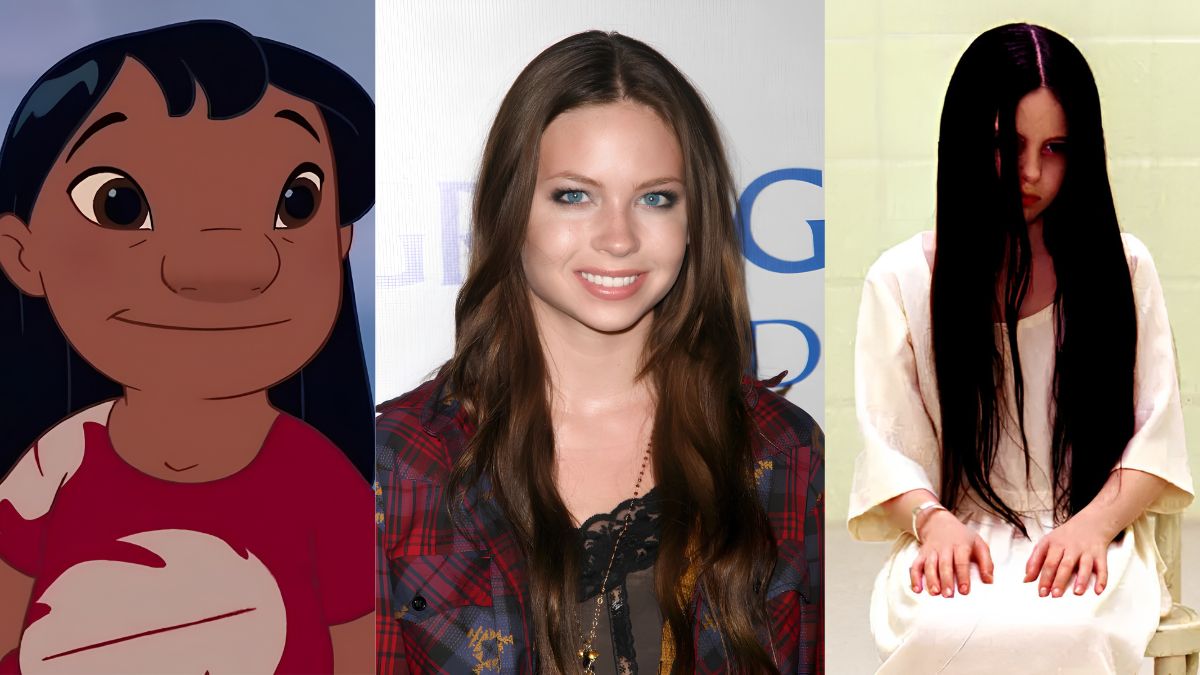
The internet has a grief assembly line now. Someone dies, and we post the same three stills, and we write "this one hurts" under a photo we have not looked at since Blockbuster still charged late fees, and then we return to arguing about celebrity nepo babies before dinner.
And that last question, what happened to her, is always the one that arrives too late.
One Year, Three Careers
Most actors spend an entire career chasing one role that defines them, but Daveigh Chase landed three in a single calendar year, and they could not have been more different from one another.
She had already been working for years by then. Born in Las Vegas and raised in Albany, Oregon, Chase started in commercials at seven and was booking guest spots on Sabrina, the Teenage Witch, Charmed, ER, and The Practice by the age of eight. In 2001, she appeared as Samantha Darko in Richard Kelly's cult classic Donnie Darko, holding her own opposite Jake and Maggie Gyllenhaal.
Then came 2002, the year everything happened at once.
The Disney Child
Chase voiced Lilo Pelekai, a character who was lonely, stubborn, strange, grieving, and completely lovable, in Disney's Lilo & Stitch. The film became one of the studio's most enduring modern classics, and Chase's performance earned her the 2003 Annie Award for Outstanding Voice Acting in an Animated Feature Production.
She went on to voice Lilo in Stitch! The Movie, Lilo & Stitch: The Series, and Leroy & Stitch. For years, she carried the voice of a little girl who made oddness feel tender.
The Horror Icon
That same year, Chase played Samara Morgan in The Ring, the pale, dripping-wet ghost girl who crawls out of a television set seven days after you watch her cursed videotape.
It remains one of the most recognizable horror images of the 21st century, and Chase's performance won her the MTV Movie Award for Best Villain. Her work was later reused as archival footage in The Ring Two and Rings, which means a performance she gave as a preteen was still haunting movie theaters fifteen years later.
The Anime Heroine
In the same twelve months, Chase also voiced Chihiro Ogino in the English-language dub of Hayao Miyazaki's Spirited Away. It is a quieter credit than Lilo or Samara, easy to miss if you are skimming, but it placed her voice at the emotional center of a film widely considered one of the greatest animated movies ever made.
In that one year, she was a Disney heroine, a horror villain, and the voice of an Oscar-winning anime protagonist.
There is something uniquely millennial about realizing the same girl who taught you about family, traumatized you with a videotape, and guided you through Studio Ghibli's most famous bathhouse all shared one voice. It feels less like trivia and more like discovering your emotional support blanket had a LinkedIn profile.
The Years After: Still Working, Just Not Watched
Here is the part that tends to get skipped in the "whatever happened to her" pieces: Chase did not disappear after 2002. She kept working.
From 2003 to 2004, she starred as Joyce on the Fox sitcom Oliver Beene. She appeared in Beethoven's 5th and Carolina. In 2006, she landed a recurring role as Rhonda Volmer on HBO's Big Love, a part she held through the series' run into 2011.
In 2009, she returned to the role that started it all, headlining S. Darko, the direct-to-video sequel to Donnie Darko. This time, she was not the kid sister; she was the lead.
"I just want to make something that I love and people will respect," Chase told Interview magazine in 2009. "I want to do things that will change someone's life, not something they'll forget about tomorrow."
Her final credited roles came in 2016, with the indie horror film Jack Goes Home and the drama American Romance. After that, the parts slowed, and then came the tabloid stories: a runaway relationship at sixteen, a public falling-out involving a mistreated pet, and a 2018 misdemeanor drug arrest.
This was the kind of coverage that quietly swaps a person for a punchline.
If that arc sounds familiar, it should, because it is the same shape that defines so many "where are they now" stories, including our own look at the cast of a different reality-TV generation: the breakout, the burnout, the silence, and then the headline nobody wanted.
Ohana Means Family. Hollywood Does Not.
There is a painful irony in the role Chase is most remembered for.
Lilo & Stitch is a movie about belonging, about broken households, about being difficult and still worth loving, about the idea that nobody gets left behind.
It is also, now, part of the public mourning around a woman who, by multiple accounts, had been struggling for years, with addiction her father says began at age thirteen, with homelessness, and with a painful falling-out from the family that once managed her career.
Her longtime manager, John Ryan, said she had been living a "tortured existence" in her final months, and that people close to her had hired a private investigator in 2025 simply to locate her and get her help.
It is tempting to look at a story like this and demand a simple explanation: drugs, Hollywood, family estrangement, mental illness, bad choices. Pick one and move on.
But homelessness rarely arrives all at once. It often looks less like falling off a cliff and more like descending a staircase in the dark: trauma, isolation, addiction, untreated mental illness, shame, pride, losing trust in the people trying to help you, wanting help one day and refusing it the next. A thousand small fractures eventually become a collapse.
What makes Chase's story especially unsettling is that, according to people close to her, she was not forgotten because nobody cared. Friends and family reportedly searched for years. They tried rehab. They hired a private investigator. They followed sightings and attempted interventions.
And yet she still ended up living near Skid Row.
That challenges one of the stories we like to tell ourselves about suffering: that if someone is loved enough, they will be saved.
Love is not always enough.
There is another uncomfortable detail that complicates the story. Depending on which outlet you read, Daveigh Chase's reported net worth ranged from modest to substantial, since celebrity wealth estimates are famously unreliable and more internet folklore than financial disclosure.
What appears to be more credible is the claim from Chase's former manager that she had access to a SAG trust account and significant unclaimed residuals from the work she did as a child actor. If true, it means this was not simply a story about someone "running out of money." It suggests that resources can exist on paper while stability remains painfully out of reach in real life.
We like to believe homelessness only happens when the bank account hits zero, but the reality is often more complicated. Addiction, trauma, estrangement, untreated illness, fear, and isolation can sever a person's relationship not only with other people, but with the very systems designed to help them.
Perhaps that is what makes Chase's story so difficult to process. The little girl whose voice echoed through Disney movies and Academy Award-winning animation may not have lacked value in the eyes of the industry. She may simply have reached a point where value itself could no longer bridge the distance between surviving and living.
Maybe the hardest truth is that Daveigh Chase was never meant to be a cautionary tale. She was not a lesson designed to reassure us that tragedy only happens to people who make the wrong choices.
She was a person.
And sometimes people disappear long before they die, even while others are still trying to find them.
That does not mean the movie failed, because movies are not social services, and Disney merchandise is not a safety net, although it does reproduce like one.
We sell childhood back to adults in collectible popcorn buckets, anniversary hoodies, live-action remakes, and limited-edition nostalgia drops, but the children who helped build those memories do not always get the same protections.
There is something unsettling about how easily pop culture can turn a child performer into a permanent emotional object while the actual person becomes increasingly invisible. It is the same dynamic we have circled before, watching true-crime stories turn real people into content. The narrative gets all the attention, and the human being gets whatever is left.
We remember the line. We remember the face. We remember the character's pain because it was packaged beautifully, scored properly, and resolved in under two hours.
Real pain is less convenient. It does not come with a third-act hug, and it does not test well with audiences. It just continues, usually offscreen.
The Internet Loves a Posthumous Realization
Every few months, the internet discovers that someone from its childhood was a person the entire time.
The reaction is always the same: grief, nostalgia, disbelief, and then a faint moral panic about where everyone went wrong. It is the same jolt that hits when you revisit a list of facts from the decade you grew up in and realize how much time has actually passed, except this time, the nostalgia comes with a body count.
We are very good at mourning people once the story has become simple.
She was a former child star, dead at 35, with three iconic roles in one year, tragic final years, and heartbroken fans.
It is clean. It is clickable. It gives us the feeling of reflection without requiring much from us, because we can post a still from Lilo & Stitch, write "this one hurts," and go back to lunch.
But the harder thought is not that Daveigh Chase died young.
The harder thought is that many people only remembered her once the obituary arrived.
Not just Lilo, not just Samara, not just Chihiro, but her: the Annie Award, the MTV Award, the Miyazaki film, the HBO years, the girl who kept working long after the internet stopped watching.
That is not a personal indictment of strangers online, because nobody can keep track of every actor from every childhood film. We all have laundry. We all have passwords to reset. Some of us still have one unread email from 2017 that has become part of the furniture.
Still, there is a pattern worth noticing.
Fame gives people visibility, but not necessarily care. Nostalgia gives them immortality, but only in the form we prefer. The child star remains young forever. The adult is allowed to disappear.
We Kept Lilo. We Lost Daveigh.
Daveigh Chase's performances mattered because they stayed with people, and that is not nothing.
To voice Lilo was to give shape to a child who made grief, rage, weirdness, and tenderness feel like they could all live in the same small body. To play Samara was to become part of horror history before most people are old enough to understand what horror history even means. To voice Chihiro was to help carry an Academy Award-winning masterpiece into the lives of children who did not know they were watching one.
To exist in the emotional hard drive of an entire generation in three different ways is a strange kind of legacy.
But legacy is not the same as being looked after, and that is the uncomfortable part.
We can remember someone beautifully and still have failed to see them clearly.
Daveigh Chase will probably always be Lilo to some people, Samara to others, and Chihiro to a quieter third group who did not even know they were thinking of her.
One character asked not to be left behind. Another haunted everyone who looked away. The third walked, scared and determined, through a world that did not make space for her to be ordinary.
Maybe that is the part that lingers now: not the shock of her death, but the quiet realization that she had been disappearing for years, and most of us only noticed once she was gone.
We kept replaying the VHS in our heads. We remembered the little girl, the ghost in the well, the child wandering through the bathhouse.
The woman carrying all three of them quietly slipped out of frame.
Then we looked up from lunch and called it a tragedy we never saw coming.
Frequently Asked Questions
How did Daveigh Chase die?
Daveigh Chase died on June 16, 2026, in Los Angeles. Her boyfriend, Roy Hernandez, told TMZ that bacterial meningitis and a blood infection led to sepsis. She had reportedly been hospitalized earlier that month for malnutrition.
How old was Daveigh Chase when she died?
Daveigh Chase was 35 years old when she died.
What roles was Daveigh Chase known for?
Daveigh Chase voiced Lilo Pelekai in Disney's Lilo & Stitch franchise, played Samara Morgan in The Ring, and voiced Chihiro Ogino in the English-language dub of Spirited Away. She also played Rhonda Volmer on HBO's Big Love and Samantha Darko in Donnie Darko.
Was Daveigh Chase homeless before she died?
According to her father, John David Schwallier, Chase had been homeless and was staying with her boyfriend near the hospital where she died. Her longtime manager said she had been living a "tortured existence" in her final months.
Sources: Reporting from TMZ, Variety, Deadline, The Hollywood Reporter, E! News, CBC, Page Six, and the New York Times confirmed Daveigh Chase's death at 35 on June 16, 2026, citing complications from bacterial meningitis and a blood infection that led to sepsis. Career details drawn from Variety, The Hollywood Reporter, Rotten Tomatoes, and prior reporting. Details about Chase's homelessness, disputed GoFundMe, SAG trust account, and unclaimed residuals are based on reporting from Page Six and related entertainment news coverage.