Yesteryear by Caro Claire Burke: 75 Pages In, I Have Thoughts
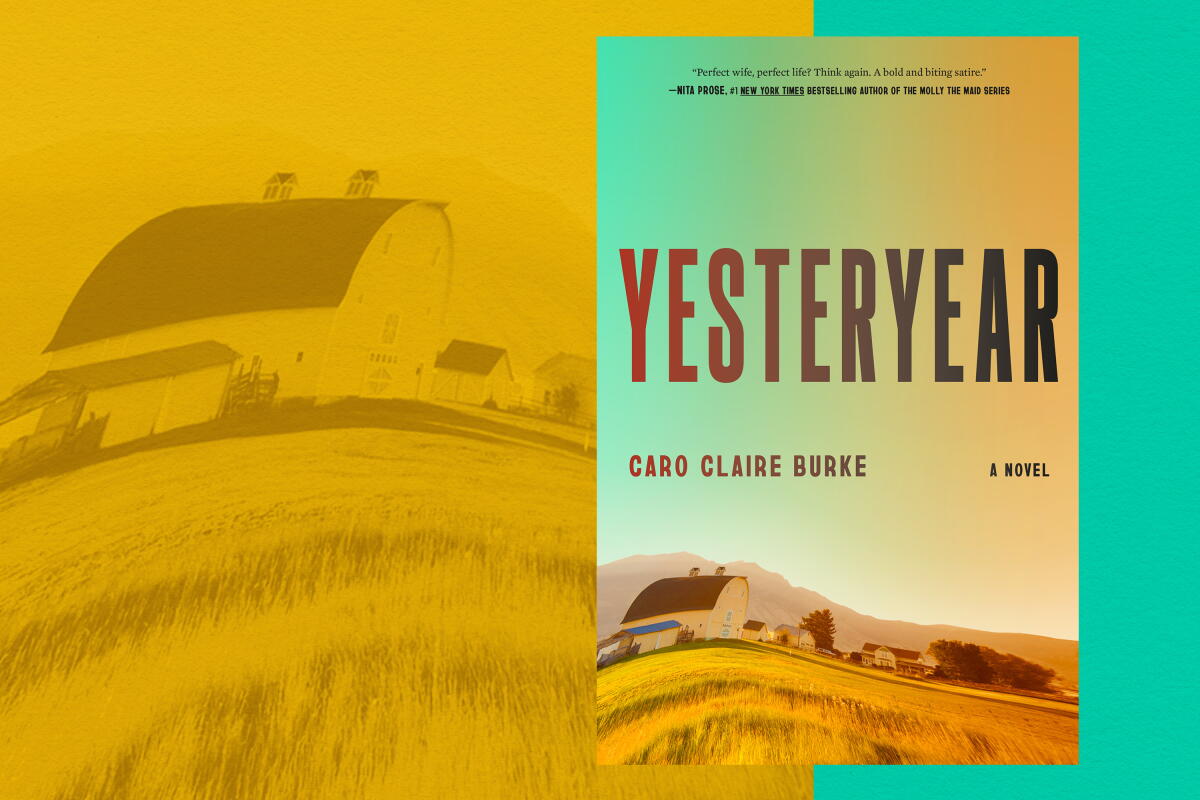
I Am Only 75 Pages Into Yesteryear and I Already Have a Lot to Say
The #1 NYT bestselling tradwife novel is 400 pages long and I am taking my time. Here is where we are: the writing is doing something genuinely unsettling, Natalie Heller Mills is a masterpiece of a narrator, and I will absolutely be finishing this book. Eventually.
Why This Book and Why Now
I picked up Yesteryear for reasons that will surprise nobody who has spent any time on this site this week. We have been writing about performance, curation, and the gap between the life people broadcast and the life they actually live for about eighteen consecutive hours now. The As Ever matcha discourse. The pitch deck nobody asked for. The entire wellness-as-content-strategy conversation. And then I looked at my bedside table and realised I had been carrying around a 400-page novel about a tradwife influencer who performs traditional domesticity for a living and has, in the first 75 pages alone, already made me feel more than I expected.
The timing is either perfect or suspicious. Possibly both. These things are not mutually exclusive.
Natalie Heller Mills Is the Most Unreliable Narrator I Have Met in Years
The thing Caro Claire Burke does in the first 75 pages that I was not prepared for is make Natalie deeply, specifically competent. She is not a fool. She is not naive. She knows exactly what she is doing and why, and she is very good at it. The performance of perfect domesticity — the sourdough, the homeschool curriculum, the five (soon to be six) children arranged at regular intervals like content — is not something happening to her. It is something she is actively, carefully, deliberately building.
This makes her infinitely more unsettling than a character who simply doesn't know better would be.
That opening line has been sitting with me since I read it. It is doing so much at once — the past tense that shouldn't be there yet, the specific choice of "perfect at being alive" rather than "good at life" or "happy." The word "perfect" positioned as a skill, a practiced thing, something you get better at rather than something you simply are. Burke is telegraphing the entire novel's thesis in eleven words and making it look effortless, which is, of course, exactly what Natalie herself does.
The Writing Is Doing Something I Can't Fully Name Yet
Here is my honest 75-pages-in assessment: I don't yet know exactly what Caro Claire Burke is building, but I trust her completely. The prose has the kind of precision that makes you slow down and read sentences twice — not because they're difficult but because they're doing more than you expected, and you want to catch it. The interior monologue in particular. The gap between what Natalie broadcasts (warmth, abundance, gratitude, faith) and what she's actually thinking in the moments between posts is where the dark comedy lives, and Burke has calibrated that gap so carefully that you're never quite sure whether to laugh or feel implicated.
Because you have liked a post like hers. We all have. That's the whole point.
Why It Is Taking Me This Long — An Honest Account
It's 400 pages. This is a fact I was aware of when I started it and underestimated in the way you underestimate a flight time when the destination sounds good. I knew it was long. I did not fully metabolise what 400 pages of this level of interiority would feel like to move through. It is not a slow book. The pacing is actually quite taut. But it's the kind of book you have to be fully present for — not because it's difficult but because it rewards attention, and reading it while distracted feels like a waste. So I have been reading it in the evenings, deliberately, with no notifications, which is the reading equivalent of the Natalie Heller Mills morning ritual and I would like to note that I have some thoughts about this.
Also: I am trying to savour it. Which is not something I say about many books. Burke's sentences deserve to be read twice. I am reading them twice. This takes time. I regret nothing.
Will I finish Yesteryear? Cast your prediction.
Why You Should Read It Too — If You Haven't Started
If you have spent any time this week reading about As Ever, or the matcha discourse, or wellness culture as performance, or the gap between the life someone broadcasts and the life they actually live — this is the novel for all of that. It is doing in 400 pages what a very good long-form essay would do in 4,000 words, except it also has the architecture to make you feel things rather than just think them. That's the novel's advantage over commentary and it is using it extremely well.
It is also — and I want to be clear about this — extremely funny. Not in a way that undermines the darker material. In the way that the darkest things often are: precisely observed, perfectly timed, and genuinely uncomfortable to laugh at because you recognise yourself in it somewhere.
I will update this review when I've finished it. That update will be called "Yesteryear: The Full Review, Eventually." I stand by the eventually.