"It's Me, Hi, I'm the Problem." At Tea Time, Everybody Agrees.

"It's Me, Hi, I'm the Problem."
At Tea Time, Everybody Agrees.
Taylor Swift put the words "covert narcissism disguised as altruism" in one of the most-streamed songs in history. The internet sang along without stopping to ask what that phrase actually means. This article stops. Here is what covert narcissism is, what every lyric in Anti-Hero is actually saying, and why the pattern maps — line by line, receipt by receipt — onto six years of watching Meghan Markle in real time.
Anti-Hero is Taylor Swift's song about finally recognising yourself as the source of chaos in your own life and in the lives of people around you. The chorus — "It's me, hi, I'm the problem, it's me" — is a confession of self-awareness arriving reluctantly, probably too late, and with great discomfort. The song names specific psychological behaviours: covert narcissism (explicitly, by name), altruism performed for image management, the inability to look in the mirror, and the moment a room reaches quiet consensus about what they've all been privately thinking. "At tea time, everybody agrees" is that consensus. It is not comfortable. It is a reckoning. Applied to Meghan Markle: the room agreed. The question is whether the subject of their consensus has yet heard it.
Why This Song and Why This Article
Taylor Swift released Anti-Hero in October 2022 as the lead single from Midnights. It debuted at number one in virtually every major market and spent thirteen consecutive weeks at the top of the Billboard Hot 100 — breaking Swift's own record. Hundreds of millions of streams. One of the most-heard songs of the decade so far.
Most people heard it as a confessional pop song about self-doubt and anxiety. That reading is correct. It is also incomplete. What Swift was actually doing — and she has said this directly, in interviews, with specificity — is naming the parts of herself she finds most uncomfortable to acknowledge. Not the flaws that generate sympathy. The ones that actually cause damage. The manipulation dressed as vulnerability. The self-promotion dressed as humility. The need for constant validation framed as authenticity. The compulsive tendency to make every situation about her own emotional experience while appearing genuinely engaged with others.
And the word she chose — very deliberately, with complete clinical precision — for one of those behaviours was covert narcissism.
That is not a throwaway lyric. That is a woman who has done the reading, sat in the therapy sessions, understood what she was looking at, and decided to name it out loud in front of an audience of hundreds of millions of people. It is an act of radical self-honesty. It is also an inadvertent act of diagnosis — because the pattern she named is specific enough to be recognisable wherever it appears. And it appears, with remarkable consistency and remarkable precision, across six years of publicly documented behaviour from the Duchess of Sussex.
This article is the full analysis. The lyrics, the psychology, the receipts, and the question the song ultimately leaves open.

First: What Is Covert Narcissism? The Clinical Definition.
Before anything else, it is worth being precise — because "narcissist" has become one of those words the internet uses so freely it has lost its meaning. Being self-centred is not narcissism. Being vain is not narcissism. Posting selfies is not narcissism. Narcissistic Personality Disorder is a recognised clinical condition with diagnostic criteria, and most people throwing the word around have none of it.
Covert narcissism specifically — also called vulnerable narcissism or introverted narcissism — is a subtype distinguished from the more familiar overt variety by its presentation. The overt narcissist is immediately recognisable: they brag, dominate, demand admiration openly, and have very little self-awareness about any of it. The covert narcissist is far harder to identify because they have the same core pathology — the same grandiosity, the same lack of genuine empathy, the same entitlement, the same fragile ego requiring constant external validation — packaged in its complete opposite aesthetic.
The covert narcissist presents as humble. As giving. As deeply sensitive and easily hurt. As the person who always tries hardest and is always let down. The grandiosity is expressed not through open boasting but through a quiet, persistent belief that they are more important, more deserving, and more misunderstood than everyone else — a belief that shapes every interaction without ever being stated directly.
This is exactly what Taylor Swift was describing. The congressman analogy is perfect: a politician performing public service whose actual motivation is power, status, and the perpetuation of their own image. The service is real. The altruism is real. The camera presence at the service is more elaborate than the service. The self is always, somehow, centred in the narrative of what they did for others.
Disguised as altruism
Like some kind of congressman?" — Taylor Swift, Anti-Hero · Midnights (2022)
Covert vs Overt Narcissism: The Distinction That Matters
The reason the covert variety is worth understanding separately is that it is far more socially acceptable — and far more effective at evading accountability — than the overt version. An overt narcissist walks into a room and everyone feels it within minutes. A covert narcissist can operate in a social or professional environment for years, leaving a trail of damaged relationships, bewildered colleagues, and exhausted supporters, while the general consensus remains that they are a wonderful, caring, generous person who is inexplicably surrounded by people who let them down.
The victim narrative is central to this. The covert narcissist is never, in their own account, the originator of a conflict. They are always the one who tried hardest, gave the most, and was failed by others who did not appreciate it. Every falling-out has the same shape: they brought everything to the relationship; the other person was inadequate, jealous, or cruel; there was nothing more that could have been done.
When you hear this pattern once, you believe it. When you hear it about the second person, you begin to wonder. By the third, fourth, fifth time — across multiple relationships, multiple institutions, multiple countries — the pattern becomes the story. The common denominator is the one who keeps describing themselves as the victim.
Loud. Obvious. Easy to clock.
Boasts openly. Dominates conversations. Makes grandiosity explicit. Demands admiration directly. Easy to identify because the entitlement is visible on the surface. Burns relationships quickly and visibly. The damage is loud.
Quiet. Packaged in softness. Hard to name.
Same grandiosity, entitlement, and lack of empathy — wrapped in apparent vulnerability, charity, and sensitivity. Appears warm, giving, deeply hurt by the world. The damage is quiet and long. Burns relationships slowly. Leaves people confused about what just happened. This is what Taylor named.
The Lyrics, Line by Line
Anti-Hero is not a standard pop song with a surface reading and a hidden meaning. It is a song that rewards close attention because every image is doing specific psychological work. Here is the full analysis, lyric by lyric, of what Swift was actually saying — and where each line lands when you hold it against the documented Sussex public record.
Midnights become my afternoons" Anti-Hero · verse one
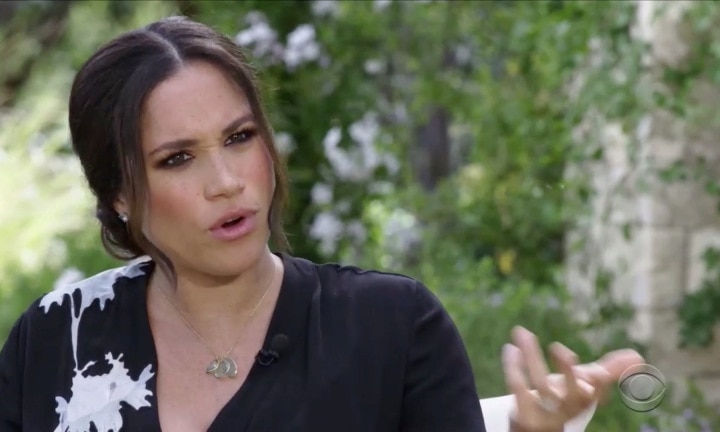
Eight traits. Eight lyrics. One pattern that plays on repeat across six years of documented public behaviour.
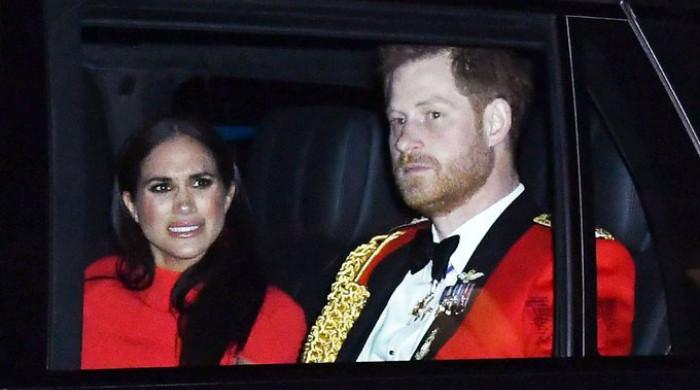
"At Tea Time, Everybody Agrees" — The Most Important Lyric in the Song
The chorus gets the attention. "It's me, hi, I'm the problem, it's me" is what you sing along to, what you make a TikTok about, what you use as your caption. But the line that does the actual work — the line that lands differently the more you understand about what the song is describing — is the one that comes immediately after.
"At tea time, everybody agrees."
This is not about a dramatic public confrontation. This is not a shout, an accusation, or a formal statement. It is something quieter and, in many ways, more final: the moment a room reaches private consensus. Not announced. Not published. Not litigated. Over tea. With the specific tired register of people who have been individually wondering about something for a long time, who are now collectively, quietly, arriving at the same conclusion.
Tea time is not Twitter. Tea time is not the Mail. Tea time is the palace drawing room. Tea time is the production meeting where nobody says anything on record. Tea time is the conversation between the charity board members after the dinner. Tea time is the family gathering where someone finally says the thing that everyone else nods at without surprise.
The power of the lyric is that it does not describe a verdict being announced. It describes the moment everyone realises they already reached one. Separately, quietly, inevitably, over tea.
Apply this to the Sussex story and the lyric becomes almost uncomfortably precise. The public narrative, maintained through a decade of interviews and documentaries, is that Meghan Markle is misunderstood — that bias, racism, jealousy, and institutional cruelty explain the consistent pattern of conflict she has experienced across every context. That reading is possible. It has been amplified across billions of streams of content.
And then there are the rooms where the cameras are not. The rooms where the palace staff discussed it after she left. The rooms where the Suits production team occasionally revisited certain recollections. The rooms where the charity boards, the Netflix producers, the Spotify executives, the As Ever partners have their own internal conversations that are not for publication. Tea time. Over and over again. With the particular exhausted nodding of people who know something the public discourse has not yet caught up to.
Not allegations. Documented public record. In chronological order.
- Multiple palace staff members filed or reported complaints about working conditions under Meghan during the royal years. The palace HR investigation was initiated before the Oprah interview aired. This is documented. The specific content of complaints is not.
- Thomas Markle — whatever his faults and however complicated that relationship — has not received a direct communication from his daughter in years. He watched her wedding on television. He has spoken publicly about this consistently. She has not refuted the core facts of his account.
- The Tatler article of 2020, widely considered sympathetic to Meghan at its original publication, contained quotes attributed to "friends of Meghan" that the palace found sufficiently alarming to issue a formal response. The magazine stood by its sources.
- Spotify ended the Archetypes partnership in 2023. The internal characterisation of the Sussex working relationship, per industry reporting at the time, was reportedly not flattering. The formal statement was diplomatic. The decision to not renew was not.
- Netflix, which signed the Sussexes to a reported $100M deal, has not greenlit a second major Sussex project since the Harry and Meghan documentary. Ted Sarandos unfollowed Meghan on Instagram in March 2026 — part of a broader Hollywood reckoning documented by the trade press, 24 hours before she appeared at a high-profile Beverly Hills charity gala.
- The consistent pattern across every institution, relationship, and professional context: arrival with enormous goodwill, followed by a period of intensifying difficulty, followed by a quiet departure or end of contract that is never fully explained on the record. We mapped this across sixteen squares of Meghan's public image history — seven ladders, six snakes, net +1.
The Song Is About Taylor. The Pattern Is Universal.
Here is where the analysis requires its fairness section, and where Brewtiful Living will deliver it — because receipts cut in all directions and this publication has a rule about that.
Taylor Swift wrote Anti-Hero about herself. She has been explicit about this. The covert narcissism she named is the covert narcissism she recognised in her own behaviour — the image management, the strategic vulnerability, the altruism that is also always, somehow, publicity. She wrote the song as an act of radical self-confrontation. She did not write it as a diagnostic instrument for evaluating other people.
The reason it can be applied to Meghan Markle is not because the song was written about her. It is because the pattern Taylor was describing is specific enough to be recognisable wherever it appears. Covert narcissism is not one woman. It is a constellation of behaviours that recurs across contexts, and when a meticulous songwriter maps those behaviours with clinical precision in a global hit, she creates something that functions as a mirror for anyone who encounters it.
The fairness point is also this: Meghan Markle has experienced real harm. The racial dimension of the coverage she received in the British press is documented and significant. The institution she entered had genuine structural problems with support and mental health that it was not equipped to address. These things are true and they matter and they do not disappear because a pattern of behaviour is also observable alongside them.
What covert narcissism analysis asks is not "did she experience harm?" but "does the harm she experienced fully explain the consistent pattern across every relationship, every institution, every context?" We ran the full investigative report on how the pattern started. We ask a similar question in the Shireen Afkari piece: at what point does the environment stop being the explanation and the person become it? That is a different question. It is the question the song asks.
They come with prices and vices
I end up in crisis
Tale as old as time" Anti-Hero · bridge
The Anti-Hero Who Saw Herself, and the One Who Hasn't
The most interesting part of the Taylor Swift comparison is not what Anti-Hero says about Meghan Markle. It is what Taylor Swift's decision to write and release the song says about Taylor Swift.
Swift is one of the most carefully managed public images in entertainment history — alongside, say, Ryan Reynolds' meticulously constructed nice-guy persona — the friendship patterns, the strategic alliances, the documented exits from relationships that no longer serve the brand have been covered extensively. She is also, by her own account in this song, someone who has done the genuinely difficult work of identifying and naming the parts of that management that are not strategic but pathological. The covert narcissism lyric is not clever wordplay. It is not a humble-brag. It is someone who looked in the mirror — the thing the song itself identifies as the hardest possible thing to do — and reported back what they found, in public, on purpose, without apparent expectation of a reward for doing so.
That is the real meaning of Anti-Hero. Not that the narrator is irredeemable. Not that self-awareness is sufficient. But that the first step — the necessary, non-negotiable first step — is the moment of clear-eyed recognition: "It's me, hi, I'm the problem, it's me."
The song leaves open the question of what comes next. Swift wrote the confession. She didn't write the resolution. Because the resolution is not a song. The resolution is the long, unglamorous work of changing the pattern. And the song knows — because the narrator knows — that recognising the problem and actually solving it are separated by an enormous and humbling distance.
Meghan Markle has not had her Anti-Hero moment. Not publicly. Not in any of the interviews, documentaries, memoirs, or podcasts of the past six years. The closest she has come is the meta-performance of vulnerability — which is itself, as any student of covert narcissism will recognise, a form of the same behaviour being named. The performed vulnerability that is designed to read as self-awareness. The confession that is actually an image rehabilitation. The "I've grown so much" that is followed by the same pattern in a new setting.
The Anti-Hero moment — the real one — looks like Taylor Swift's, not like the Sussex documentary. It sounds like an acknowledgement of specific harm to specific people, without the qualifier that explains why the harm was actually someone else's fault. It does not come with a film crew.

At tea time, everybody agrees
I'll stare directly at the sun but never in the mirror
It must be exhausting always rooting for the anti-hero" Anti-Hero · chorus
The People Rooting for the Anti-Hero
The last line of the chorus deserves its own section because it contains something the rest of the discourse consistently misses.
"It must be exhausting always rooting for the anti-hero."
This is not about the critics. The critics are never exhausted — they are energised by exactly the material this song describes. This is about the people who love the anti-hero. The supporters. The defenders. The ones who have given the most genuine investment, the most benefit of the doubt, the most energy toward believing in the version of this person that the person presents to the world.
Those people — the friends, the colleagues, the advocates, the Beliebers and Swifties and Sussex Squad — are the ones who carry the genuine emotional weight. We saw a version of this in the Taylor Swift and Blake Lively friendship forensics piece: the friend who keeps extending loyalty past the point where the receipts justify it. Because they are the ones who have to perform the constant cognitive work of reconciling the stated version with the observed reality. Who have to find new explanations for each new data point. Who have to maintain enthusiasm for a narrative that keeps running into the same problems in new settings.
Taylor Swift wrote about this from the inside — as the person generating the exhaustion in others. She has the self-awareness to understand that her people's loyalty is not free. It costs them something. The covert narcissist in the song knows this. Knows it is unfair. Cannot seem to stop doing it anyway.
The Meghan Markle version of this analysis is, ultimately, for her supporters to reckon with — not her critics. The critics are fine. They always were. It is the people who have defended, explained, and extended grace across six years who are carrying the weight of the exhaustion the song describes. And it is for them that the Anti-Hero moment — if it ever comes — will mean the most.
Taylor Swift wrote a song about the moment you finally see yourself clearly and do not like what you see. She named covert narcissism specifically, in clinical language, in the middle of a pop chorus heard by hundreds of millions of people. She described altruism performed for image. She described staring at the sun rather than the mirror. She described the exhaustion of the people rooting for you. And she had the uncommon courage to confess to all of it in the first person, without a qualifier, without an explanation of why it was actually someone else's fault.
The reason Anti-Hero maps so precisely onto six years of Sussex coverage is not that Meghan Markle is the subject of the song. The reason is that the pattern Taylor was describing is specific enough to be recognisable wherever it appears. Covert narcissism disguised as altruism does not have one face. It has a behaviour set. A set of consistent, documentable, recurring characteristics that show up across relationships, institutions, and contexts with a regularity that the "circumstances were different every time" explanation cannot fully account for.
The kindest reading of all of this — and it is a reading worth holding, because kindness is not weakness — is that Meghan Markle is someone who has not yet had her Anti-Hero moment. Not because she is incapable of it. Because it has not yet arrived. Because the mirror is still the one thing that goes unlooked-at.
The hopeful reading is that the Anti-Hero moment is still possible — and the research on whether narcissists can change suggests it requires precisely this kind of forced confrontation. Taylor Swift wrote it. She sang it into the most-listened-to pop song of 2022. She made it available to everyone who needed it. It is still available. The mirror is still there. The only question is whether, one day, someone in a Montecito house puts on Midnights and really listens to track three.
At tea time, everybody agrees.
Even the people who have been rooting for the anti-hero.